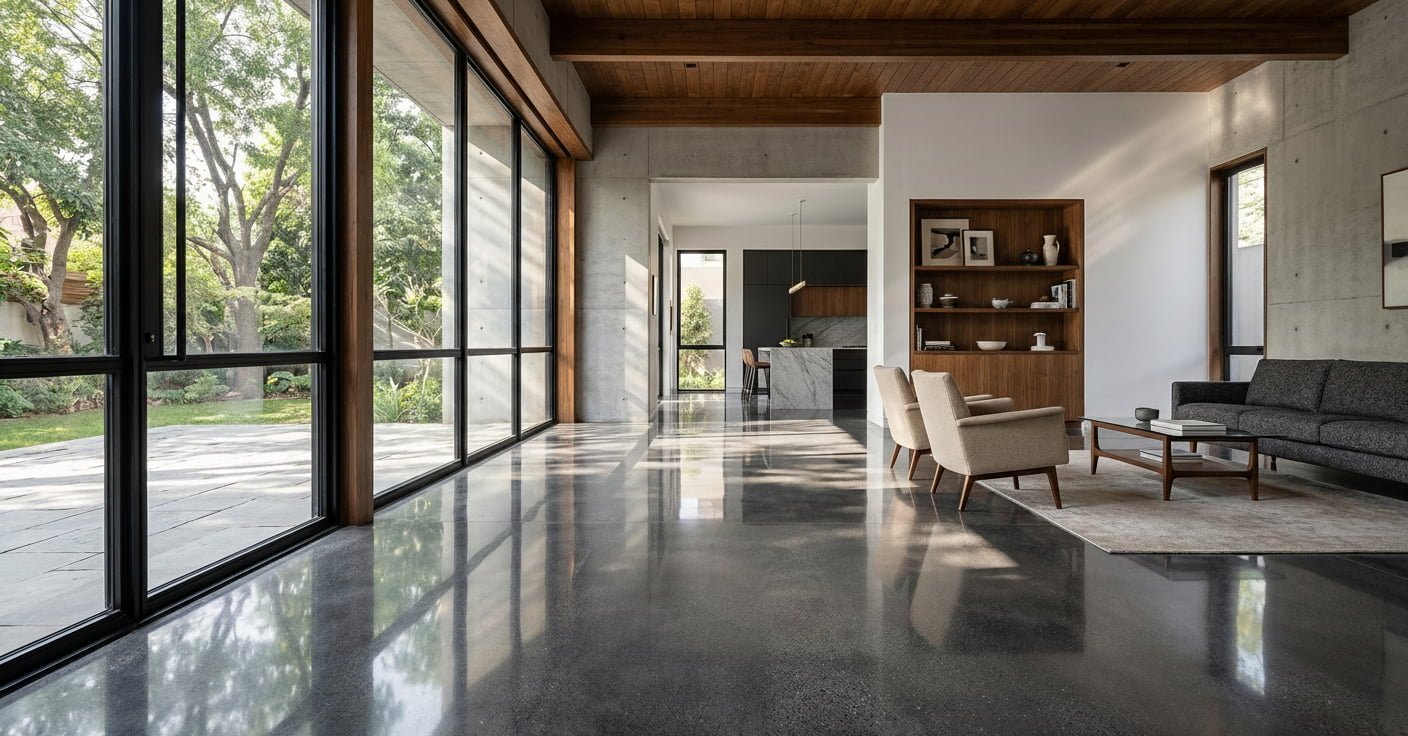
Concrete polishing is a flooring method that transforms plain concrete into a smooth, reflective surface. It uses diamond abrasives and grinding tools to refine and strengthen the slab. The process improves durability, appearance, and long-term performance.
This flooring solution is widely used in homes, warehouses, retail spaces, and commercial facilities. It is known for its low maintenance needs and long service life.
Many property owners look for polished concrete flooring as a practical upgrade for both function and style. This guide explains the costs, benefits, and process in simple terms.
What is Concrete Polishing?
Concrete polishing is a multi-step mechanical process. It uses diamond abrasives to grind the surface in stages. Each step uses finer grit tools to increase smoothness.
A densifier is applied during the process. It reacts with concrete and hardens the surface. This reduces dust and increases strength.
The final result is a smooth and reflective floor. The level of shine depends on the number of polishing stages completed.
ProCoat Epoxy Flooring uses industry methods to deliver consistent results for polished concrete in Conroe, TX. Each project is tailored to the surface condition and the client’s needs.
Concrete Polishing Costs
Concrete polishing cost depends on surface condition, project size, and finish level. Basic finish costs range from $3–$5 per square foot. This includes light grinding and a matte finish. It works for low-traffic areas.
Mid-range finish costs range from $5–$8 per square foot. This level includes moderate grinding and visible aggregate exposure.
High-end finishes start at $8 per square foot and can exceed $12. This typically includes deep grinding and a mirror-like surface. Many property owners comparing flooring options search for polished concrete flooring in Conroe, TX, to understand both pricing and long-term value. This helps them choose a finish that matches their space, traffic level, and design goals.
Several factors affect cost:
Surface condition impacts grinding time and repair work. Damaged floors need more preparation work. Project size changes per square foot pricing. Larger spaces reduce cost per unit.
Custom design adds labor. Stains, dyes, and scoring increase time and materials. ProCoat Epoxy Flooring reviews each site before giving an estimate. This helps match the budget and finish goals.
Key Benefits of Polished Concrete
Polished concrete offers strong performance in many environments.
- It provides a long service life. The surface resists wear from foot traffic and equipment.
- It supports low maintenance. Cleaning requires basic sweeping and mopping.
- It reduces replacement costs. The existing slab becomes the finished floor.
- It supports energy savings. The reflective surface increases natural light in indoor spaces.
- It also improves hygiene. The dense surface reduces dust and surface buildup.
Safety remains strong when finished correctly. The surface supports slip resistance in commercial use.
These benefits make polished concrete a practical choice for homes and business spaces.
How the Polishing Process Works
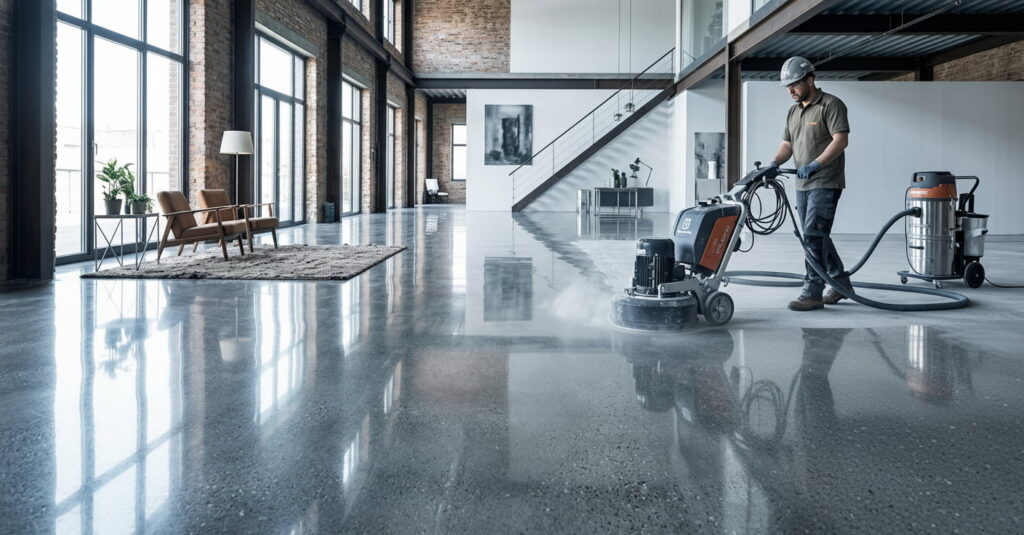
The polishing process follows clear stages.
- The first stage is surface preparation. Old coatings, adhesives, and dirt are removed. Coarse diamond tools level the slab.
- The second stage is grinding. Metal-bonded diamonds remove surface marks and smooth the floor.
- The third stage is densification. A chemical hardener fills pores and strengthens concrete.
- The fourth stage is polishing. Resin pads with finer grit create a smooth finish. Each pass increases shine.
- The final stage is sealing. A protective layer improves stain resistance and finish stability.
Technicians move in overlapping patterns. Each pass crosses the previous direction to ensure full coverage. Dry grinding is common in modern systems. It reduces cleanup and speeds up work. Proper safety gear remains important during this stage.
Polished Concrete vs Grind & Seal
Polished concrete and grind & seal systems are not the same. Polished concrete uses mechanical grinding to create shine. The surface becomes dense and smooth. It does not rely on surface coatings.
Grind & seal uses light grinding followed by a topical sealer. The sealer creates shine on top of the surface. Polished concrete lasts longer under heavy use. It resists wear without peeling or coating failure. Grind & seal costs less at the start. It needs resealing over time to maintain its appearance.
Both options work for different needs. Polished concrete suits long-term use and high-traffic areas.
Conclusion
Concrete polishing offers strength, style, and long service life. It reduces maintenance needs and improves floor performance in many environments. Understanding cost levels, methods, and finishes helps in choosing the right system for your space.ProCoat Epoxy Flooring delivers polished concrete systems built for long-term use and clean finishes. To learn more or start a project, contact us and request a consultation.