
A coated garage floor asks for less work than bare concrete, though it still asks for some. A few habits keep the topcoat doing its job, and most of them take less time than hosing out an uncoated garage ever did.
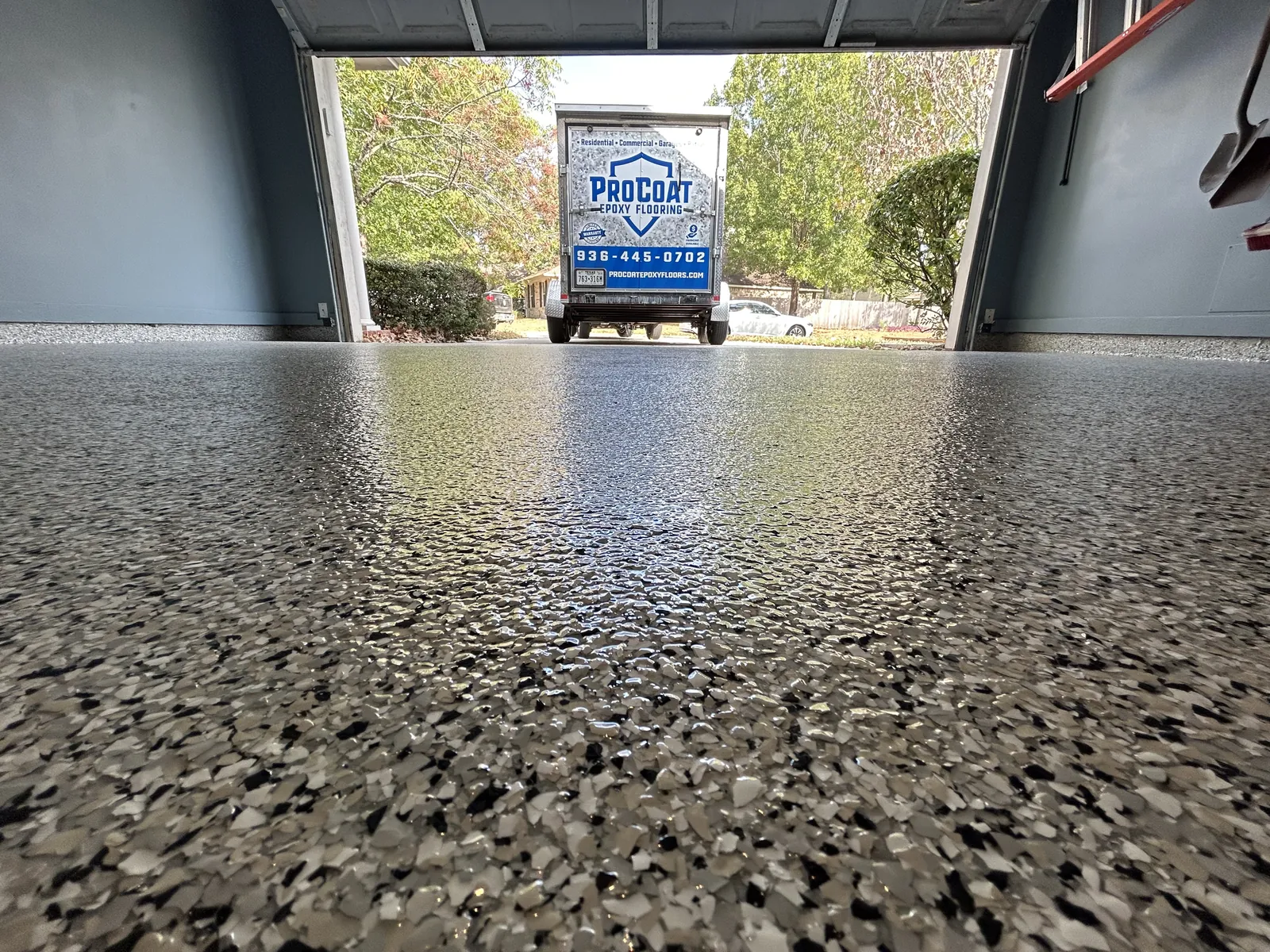
The first weeks on a new floor
A coating feels hard well before it is fully cured, and the early stretch is when it is easiest to mark. When we finish, we tell you when you can walk on it and when the car can come back, based on the product and how warm the slab is. Cars always wait longer than feet. Give it the full time, even if the floor looks ready.
In those early days, skip anything that sits in one spot or drags. Rubber-backed mats, cardboard boxes and moving blankets can trap moisture or leave marks on a fresh topcoat. Slide shelving back in on furniture pads, carry toolboxes instead of rolling a stuck caster across the floor, and keep the heaviest items off it until the cure is complete.
Hold off on mopping for a little while as well. A sweep is plenty at first, and we will tell you when the floor is ready for water and cleaner.
Grit is the real enemy
Most wear on a coated floor comes from sand and grit ground in under shoes and tires. It works like fine sandpaper and dulls the topcoat in the lanes where you walk and park. A soft broom or a dust mop once or twice a week takes most of it away, and it is the habit that makes the biggest difference. On a flake floor the chips hide grit between sweeps, which is exactly why it is easy to forget.
Mopping comes next. Warm water with a small amount of a pH-neutral cleaner handles most floors. Rinse with clean water afterward, because soap left to dry builds a dull film that turns slick when it gets wet. A floor squeegee pushes the rinse water out the door and leaves fewer streaks than letting it air dry. Work in sections and rinse the mop often, or you end up spreading dirty water around. The kit is short:
- Soft broom or dust mop
- pH-neutral cleaner, lightly diluted
- A bucket of clean rinse water
- A floor squeegee
Cleaners to keep off it
Some cleaners do more harm than dirt. Strong citrus degreasers, vinegar, bleach and anything acidic can dull or etch a topcoat over time. Steel wool and stiff wire brushes scratch it. Cleaners with oils or waxes in them leave a residue that makes the floor slippery and holds onto dirt.
For a stubborn spot, start with the gentlest thing that works: a nylon scrub brush and the same neutral cleaner, a little stronger. Rubber tire marks usually come up with some scrubbing. If something will not budge, call or text before reaching for a harsher product, because some solvents soften certain topcoats.
Hard water can leave a cloudy film where the hose drips or a car gets washed inside. A rinse with clean water and a squeegee pass usually clears it, and drying the floor after a wash keeps it from building up.
Spills that should not sit
A coating keeps spills on the surface, which is the whole point of it, but some fluids still need wiping up quickly. Brake fluid, gasoline, battery acid, paint stripper and pool chemicals can stain or soften a coating if they are left sitting, and a car that drips onto the same spot for weeks will eventually mark it.
Paper towels or a rag for the spill, then a wipe with the neutral cleaner, handles almost everything. If a car has a slow leak, a drip pan under it is easier than a stained floor. Garages where solvents and fluids are part of regular work are a good case for a chemical-resistant topcoat, which we would bring up before the floor goes in.
Store pool chemicals, fertilizer and lawn treatments on a shelf or in a tub instead of straight on the floor. A torn bag of fertilizer or a leaking jug of chlorine sitting on a coating for a month does more damage than any spill you catch the same day.
Jack stands, kickstands and heavy feet
Point loads are hard on any coating. A jack stand, a motorcycle kickstand or the foot of a loaded shelf puts a lot of weight on a small spot, and over time it can dent or crack the topcoat. A square of plywood or a rubber pad under each one spreads the load. A kickstand plate under a bike does the same job for very little.
Dragging is the other habit to break. Pulling a trailer tongue, a mower deck or a heavy cabinet across the floor scratches it, and a nail stuck in a tire tread can draw a line from the door to the parking spot. None of that ruins a floor, but it adds up in the lanes that see the most use.
Workbenches deserve a thought too. A vise bolted to a bench means dropped parts and tools land in the same small area again and again, and a rubber mat under that spot, once the floor has cured, takes the hits instead of the topcoat.
Mud, water and when to call
Heavy rain sends water under the garage door and tracks clay mud in on the tires. Coated concrete does not soak it up, so a quick squeegee and a rinse keeps mud from drying into a film. Red clay left to bake on a light floor takes more scrubbing than it would have the same day. A pressure washer is fine on a low setting with the wand held well back, and kept away from the edges along the walls and the door, where a strong jet can lift a coating.
Leaves, pine straw and pollen blow in whenever the door is up. They do no harm on their own, but a pile of wet leaves left in a corner can stain a light floor, so sweep them out along with the grit.
Watch for a chip at the edge of a crack, a patch that looks cloudy or lifted, or a dull lane that no longer cleans up. Small chips are easier to fix before water and grit get under them, and a worn topcoat can often be scuffed and recoated without redoing the whole floor. Our garage floor repair page covers the slab side of that. If you are not sure what a mark is, text a photo to (936) 445-0702 or tell us about it on our contact page.
Questions
How often should a coated garage floor be mopped?
Most garages do well with a sweep every week or so and a mop every few weeks. Garages that see mud, sawdust or a lot of car traffic need it more often. Sweeping matters more than mopping.
Will tires leave marks on the coating?
Some tires leave dark rubber marks, especially when they come in hot. Most scrub off with a nylon brush and neutral cleaner. If a mark will not come up, or the coating under it looks lifted, call us, because that is a different problem.
Can I put rubber mats on a coated floor?
Once the floor has fully cured, yes, but check the mat. Some rubber mats leave a stain on coated floors over time, especially in a hot garage. Mats made for coated floors, or lifting and cleaning under them now and then, avoid it.
Does the topcoat need to be redone at some point?
Only if it wears. Garages with heavy traffic can show dull lanes after years of use. We can look at it and tell you whether a fresh topcoat over the existing floor makes sense.
We look at the slab and read its moisture before anyone picks a finish. Call or text (936) 445-0702, email procoatepoxyflooring@gmail.com, or see the gallery first.