
Colored quartz sand in resin, built for wet floors
A quartz broadcast system is epoxy with colored quartz sand thrown into it while it is wet, usually twice, then locked under clear resin. The sand leaves a hard, fine grit on the surface, so the floor stays sure underfoot in rooms that get mopped, hosed or tracked with rain all day.
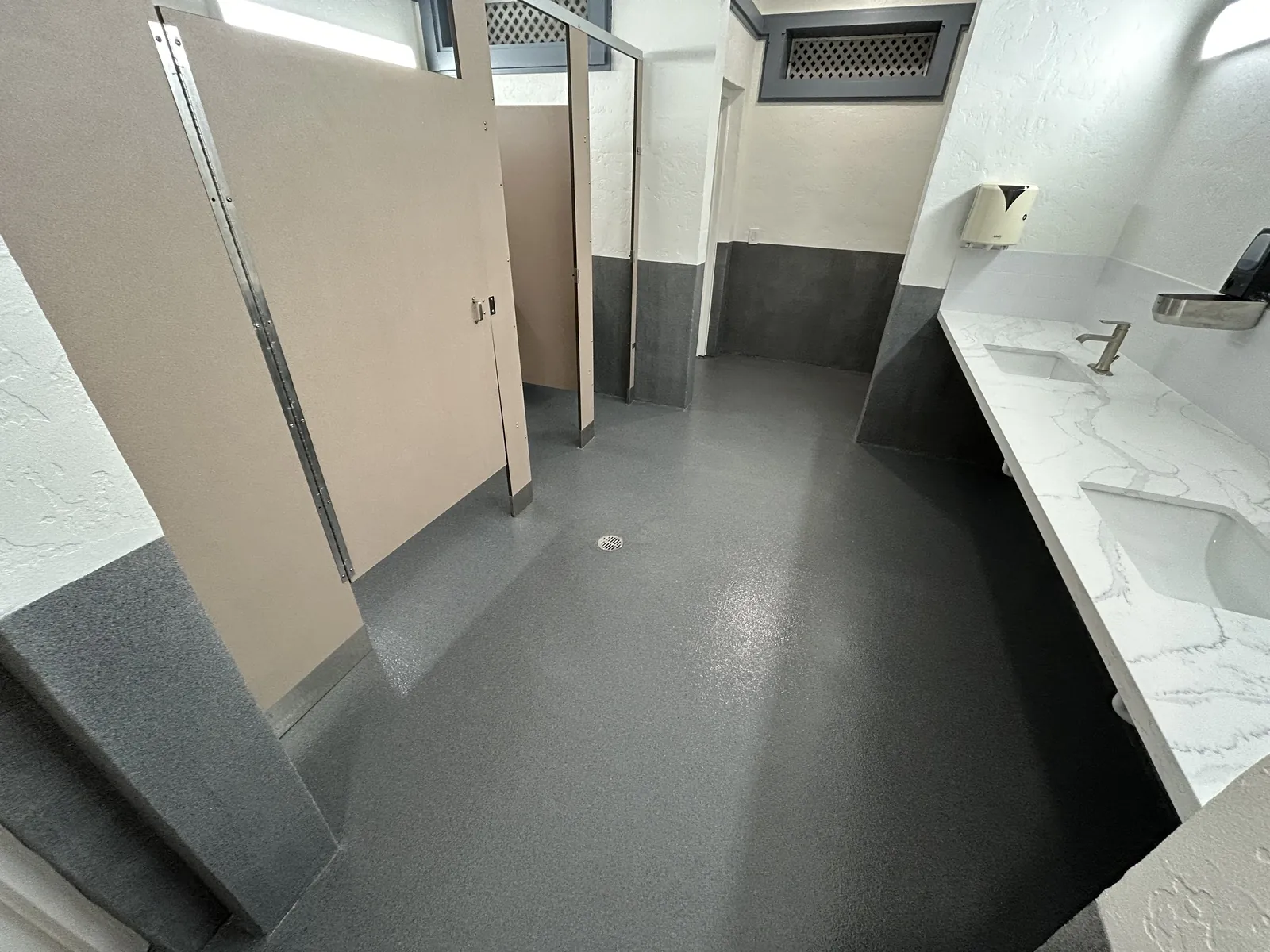
Hard sand, held in place
Floor quartz is natural sand, sorted to an even grain and colored at the factory. Each grain is stone, far harder than the resin around it, so carts, mop buckets and dragged chairs mostly scrape against rock. The grains sit slightly proud of the surface, and that small edge is where the grip comes from.
We flood a wet body coat with quartz until no shiny resin shows, let it set, sweep off the loose sand, and do it again. Two full broadcasts build a thick floor with color all the way through it. When a cart does gouge it, what shows underneath is more of the same quartz.
That depth is the reason we put quartz on commercial floors where a flake system would wear thin in the walking paths. Homeowners pick it too, mostly for mudrooms, laundry rooms and walk-in showers that stay damp.
Water finds the edges first.
Grip is set with the topcoat
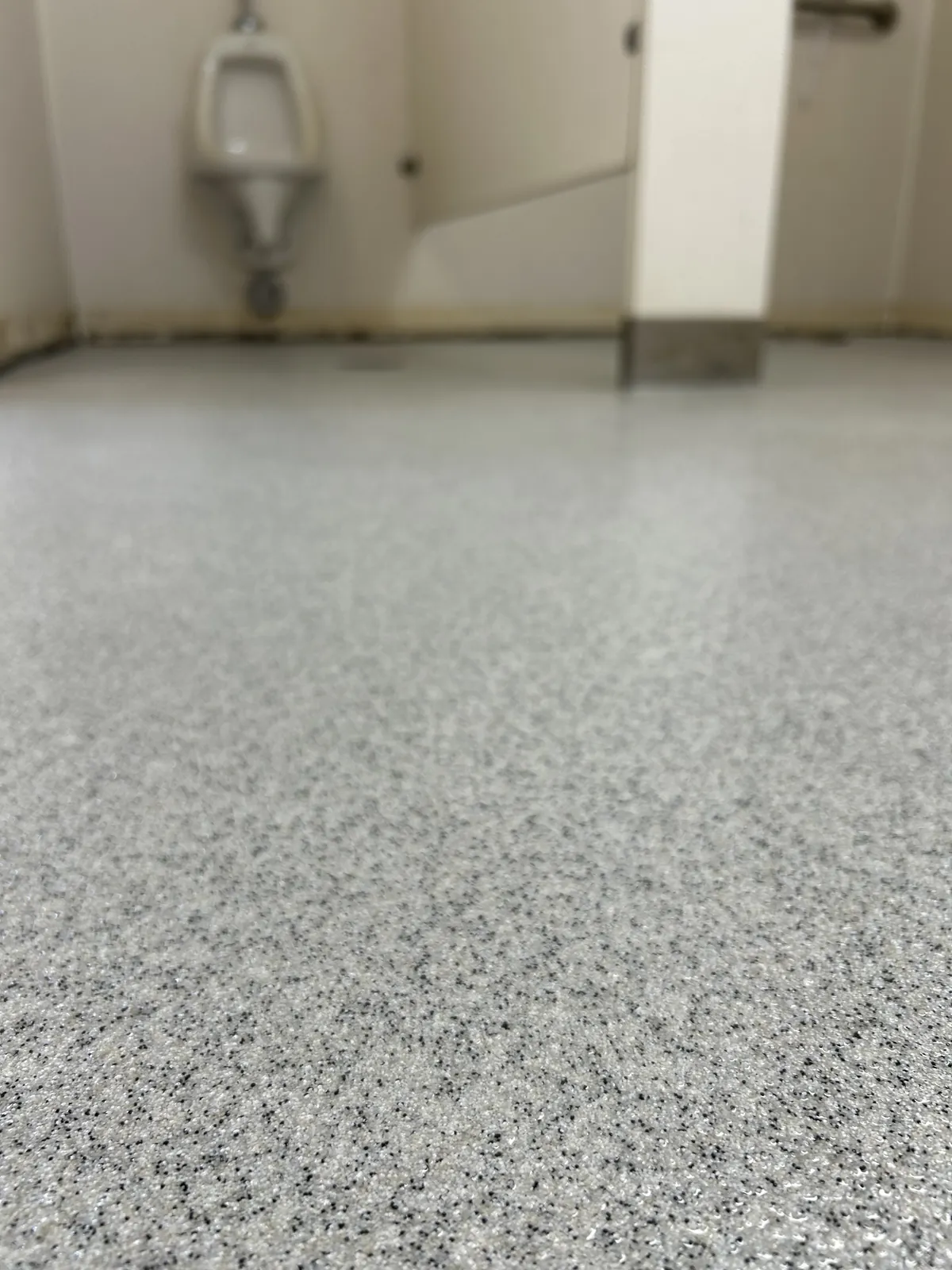
How rough the finished floor feels is decided in the last coats. A thin clear coat leaves the grains standing up, which gives the most bite and suits a dish room, a ramp or the floor around a pool shower. More coats fill the low spots between grains and leave a smoother face that mops faster.
One room can carry both. The wet zone by the sinks and drains gets the rougher finish, and the hallway or dining side gets the smoother one, in the same blend so the change is hard to see. Where a floor already slopes to a drain, we keep that slope instead of leveling it away.
Edges, drains and the limits
Where the floor meets a wall, we can carry the quartz system up into a cove base a few inches tall, so there is no corner seam for mop water and grime to sit in. At floor drains we cut back the old surface and slope the coating into the drain body.
It is still an epoxy floor, so heat and sun set its limits. A cook line with fryers and boiling washdowns is better served by polyurethane cement, and any quartz floor that catches sunlight needs a UV-stable topcoat or the color drifts toward yellow. We would rather say that at the assessment than lay the wrong floor.
In five lines
- Looks like
- A fine, sandy speckle of blended color that reads as one tone from across the room, closer to stone than to the larger pieces of a flake floor.
- Holds up in
- Restrooms, locker rooms, dish rooms, vet clinics, gyms, school halls and entries where water and grit come in on every shoe.
- Wrong pick when
- Skip it beside fryers and boiling washdowns, and in a bedroom or living area where bare feet want a smooth floor.
- Prep it needs
- A diamond-ground slab with a profile deep enough to hold a thick build, a moisture reading, and old glue or mastic fully removed.
- Compared with
- People weigh it against flake for looks and against polyurethane cement for heat, and gym owners compare it with rubber matting.
Quartz floors by the job
The same broadcast method, taken into specific rooms: a decorative quartz floor chosen for its color, grip-first coatings for ramps and wet entries, and gym floors that get sweat, sliding benches and a mop every night.
Quartz and grip
- Decorative Quartz Flooring
Quartz chosen for color in lobbies, entries and restrooms, with borders and a smoother top for daily mopping.
- Slip-Resistant Flooring
Grip built into the body of the floor by zone, with drains, mats and cleaning planned so it keeps gripping.
- Anti-Slip Floor Coatings
For any coated floor that gets wet or greasy underfoot, with grit added to the last coat in an amount that balances traction against how easily it cleans.
- Gym Flooring
Coated concrete across the open floor with rubber where weights fall, chosen for sweat, cleaners and grip.
How a quartz floor goes down
Profile and test
We diamond grind to a profile deep enough to grip a heavy build, and pull any old glue or mastic. Moisture readings come before anything gets mixed.
Repairs, coves, drains
Cracks and spalls get filled, cove bases get formed along the walls, and drain edges get cut back. Those are the places a wet floor usually lets go.
First broadcast
Primer goes down, then a body coat we cover in quartz until the resin disappears. Once it sets, the loose sand is swept and vacuumed off.
Second broadcast
A second body coat and a second full layer of sand build the thickness. That extra depth is what keeps the color showing after a gouge.
Grout and finish
A clear grout coat soaks into the sand and binds it, and the finish coat sets the texture zone by zone. Rooms with sun on the floor get a UV-stable product at this step.
Before the sand goes down
A thick quartz build pulls hard on the concrete under it, so the slab needs a real profile and no old adhesive left anywhere. Our surface preparation pages cover profiling, moisture testing and glue removal in more detail.
- Concrete Surface Profiling
Setting how rough the slab should be for the system going on, from a light scratch for sealers to a deeper bite for thick builds.
- Concrete Moisture Testing
Readings that tell us whether vapor is coming up through the slab, which decides the primer and sometimes the whole system.
- Flooring Adhesive Removal
Clearing carpet glue, thinset and vinyl or wood-floor adhesive left behind when the old flooring came up.
What to know about quartz broadcast systems
Ask us directly: call or text (936) 445-0702 or write through the contact page.
Does quartz work in a home shower?
It does, as long as the drain and the curb are done carefully so water cannot get behind the coating. We cove the base where the floor meets the wall and keep the slope toward the drain. A smoother finish coat is usually kinder to bare feet in a shower.
How do you keep a gritty floor clean?
A deck brush or an auto scrubber gets into the texture better than a string mop alone. The rougher the finish, the more it holds grit, which is the trade for grip. Where the room allows it, we lean a little smoother so cleaning stays quick.
Is quartz a good fit for a gym?
For locker rooms, hallways and studio floors that get mopped often, it holds up well and gives sweaty shoes something to grip. Under heavy free weights that get dropped, rubber matting on top is the usual answer, because no resin floor wants a barbell landing on it. We look at how each part of the gym is used.
Can quartz go over an old tile or vinyl floor?
No, the tile or vinyl comes up first, and so does the adhesive under it. A broadcast floor has to bond to bare, ground concrete, and leftover mastic is a common reason a coating lets go. Glue removal is part of the prep we plan at the assessment.
Which quartz blends hide dirt best?
Mid-tone and darker blends, the grays, tans and mixed earth colors, hide scuffs and tracked-in grit best in a busy room. Bright blends with reds, blues or greens look sharp but show more. Because the grain is fine, any blend reads as a single color from a few steps away.
Show us where the water lands
Walk us through the wettest corner and the busiest path, and we’ll test the slab and plan the texture for each zone. Book a floor visit, or call or text (936) 445-0702 to set a time.
- Call or text(936) 445-0702
- Emailprocoatepoxyflooring@gmail.com
- Based inConroe, Texas, working six counties
Want to see the work first? Browse the gallery, or find every way to reach us.