
Grit in the topcoat, matched to how wet it gets
Anti-slip coating is ordinary floor coating with a hard grit stirred into the last coat, so shoes and bare feet have something to catch on when the surface is wet. The hard part is picking how much grit, because a texture rough enough for a ramp in the rain is too rough to mop easily in a kitchen.
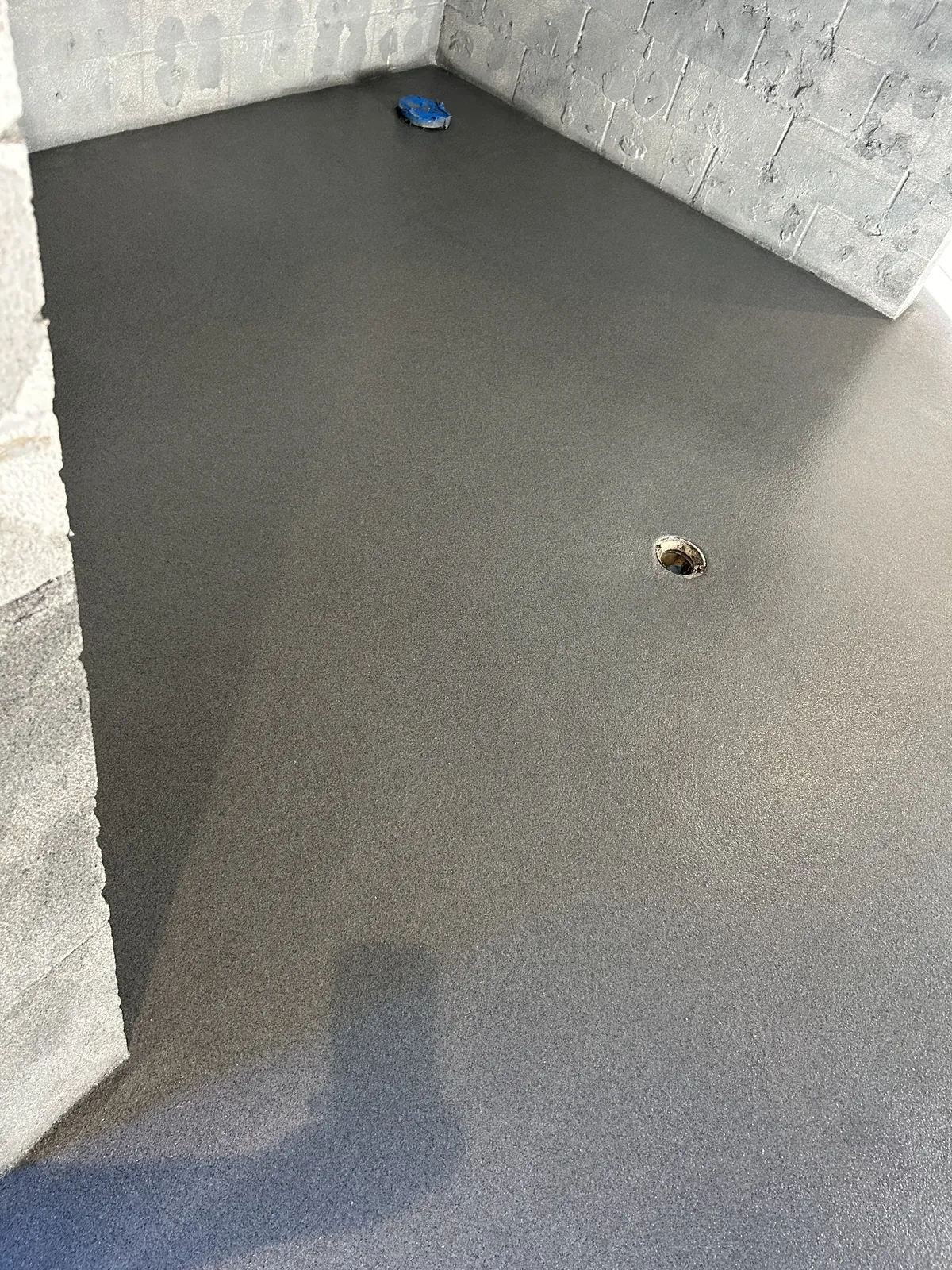
What the grit is and where it sits
The grit is a hard mineral, usually aluminum oxide or something similar, ground to a set particle size. We mix it into the topcoat or broadcast it into the wet top layer. The coating locks each particle in place and leaves a small peak standing above the surface. Those peaks are what a wet sole presses against instead of sliding on a film of water.
Grit sits in the top layer only. That’s why the coats under it matter so much. If the base coat lets go because the slab was smooth or damp, the grit goes with it. We put the same work into grinding and moisture testing on an anti-slip floor as on any other, then add the texture at the end.
The coating itself still decides how the floor handles hot tires, chemicals or sun. Grit changes the feel. It doesn’t make a weak system stronger, and it doesn’t stop an epoxy top from yellowing outside.
Every bit of texture that stops a foot also catches dirt.
How wet, and how barefoot
Two questions set the texture. How much water sits on this floor, and is anyone walking it barefoot? A garage that gets wet tires a few times a week needs a light touch. A covered pool surround where kids run with wet feet needs more bite, but the grit has to be rounded and fine enough that it doesn’t scrape skin.
Shoes tell a different story. A restaurant line with grease, hot water and rubber-soled shoes can take a coarser grit, because a cook in work shoes needs grip more than comfort. A ramp outside a shop door that catches rain blowing in sits somewhere between. We ask who walks the floor and in what, then pick a grade to match.
Grip that has to be cleaned
A heavy grit holds onto grease and tracked-in mud, and a string mop snags on it and leaves lint behind. Most floors with a lot of grit clean best with a stiff deck brush or an auto scrubber, then a rinse. If nobody on site will scrub, we’d rather go a grade finer than leave a floor that turns gray in the low spots.
That’s why we often texture a floor in zones instead of all at once. The wet end of a kitchen line gets more grit and the dry storage area beside it gets less. A garage might get texture in the first few feet inside the door, where rain and wet tires come in, and a smoother finish under the workbench. One room can carry two or three grades, each matched to what happens on that patch of floor.
The basics of anti-slip floor coatings
- Looks like
- The floor keeps its color or flake pattern, with a fine sandpaper feel under your hand that you notice more than you see.
- Holds up in
- Ramps, wet entries, pool surrounds under a roof, commercial kitchen lines, locker rooms, washbays and any coated floor that gets hosed down.
- Wrong pick when
- A showroom or living room that stays dry gains little from grit and gives up some shine and easy cleaning for it.
- Prep it needs
- The same grinding, repair and moisture test as any coating, since grit in the topcoat only grips as long as the coats beneath it stay bonded.
- Compared with
- It rides on top of flake, quartz, solid color and polyaspartic systems, and people often weigh it against a bare broom finish or a penetrating sealer outdoors.
When anti-slip floor coatings is the call
A good fit
- A covered pool surround or patio where people walk barefoot.
- A commercial kitchen line that gets hosed down every night.
- A ramp or entry that catches rain blowing in.
- A garage where wet tires and dripping cars roll in after storms.
Where we steer people elsewhere
- A dry showroom or living room is better left smooth, with a gloss or satin finish that’s easy to dust.
- A greasy production floor that needs more grip than a textured top can give is better served by a full slip-resistant flooring system.
- An uncovered driveway or walkway often does fine with a penetrating sealer over its broom finish instead of a coating.
Adding grip without losing the bond
Walk the wet spots
We find where water actually sits and where people slip, which is rarely the whole room. Drains, doorways and the area in front of sinks get marked as the zones that need the most texture.
Prep the slab
We test for moisture, grind the concrete open and fill cracks and spalls. Grit only helps if the coats under it stay stuck.
Lay the system
Primer and body coat go down, with flake or quartz broadcast in if the floor calls for it. This builds the color and thickness of the floor, and the grit comes later.
Mix grit by zone
Grit goes into the topcoat at the grade picked for each area, or gets broadcast into the wet top and back-rolled. We keep the mix steady inside a zone so the feel doesn’t change halfway across a walkway.
Check the feel
Once it sets, we walk each zone and run a hand across it. You see how it feels and how it cleans before we pack up.
Part of Quartz Broadcast Systems
Anti-Slip Floor Coatings is one of the services under quartz broadcast systems. The overview compares them all.
- Slip-Resistant Flooring
Grip built into the body of the floor by zone, with drains, mats and cleaning planned so it keeps gripping.
- Gym Flooring
Coated concrete across the open floor with rubber where weights fall, chosen for sweat, cleaners and grip.
- Decorative Quartz Flooring
Quartz chosen for color in lobbies, entries and restrooms, with borders and a smoother top for daily mopping.
Small print on anti-slip floor coatings
Your question not here? (936) 445-0702 takes calls and texts, and the contact page has email.
What is the grit made of?
Usually aluminum oxide or a similar hard mineral, ground to a set size. It’s harder than the coating around it, so it keeps its edge as the floor wears. We pick the size by how wet the floor gets and who walks on it.
Can you add texture to a floor that’s already coated?
Often, if the old coating is well bonded. We scuff it and roll a new topcoat with grit over it. If the floor is peeling or lifting anywhere, the old coating comes off first, because grit on a failing floor leaves when the floor does.
Will the grit hurt bare feet?
Coarse grit can feel rough on skin, so for barefoot areas we use a finer, rounder grade. You still feel texture, just nothing like sandpaper. We talk through the grade with you before the topcoat goes down.
Does texture make the room harder to clean?
A little. Texture holds dirt that would wipe off a smooth floor, so a deck brush or scrubber works better than a string mop. A finer grit and zoned texture keep the extra cleaning to the spots that really need grip.
Does the grit wear off over time?
The peaks wear down slowly where traffic is heaviest, the same way the topcoat itself wears. When a lane starts to feel smooth, a scuff and a fresh topcoat with grit brings the texture back.
Is anti-slip coating the same as a slip-resistant flooring system?
Anti-slip coating is the grit added to the topcoat of a floor we’re already coating. A slip-resistant flooring system is built around traction from the base coat up, for floors where grip drives every choice. Many garages, patios and entries only need the additive.
Show us where people slip
Tell us which part of the floor gets wet and who walks on it. We’ll come test the slab and suggest a grit grade for each zone of the room.
- Call or text(936) 445-0702
- Emailprocoatepoxyflooring@gmail.com
- Based inConroe, Texas, working six counties
Want to see the work first? Browse the gallery, or find every way to reach us.