
Liberty County floors between the river and the pines
The Trinity River runs down the middle of Liberty County, and the land on either side is wooded, rural and spread out. Homes here usually come with acreage, and acreage usually comes with a shop, a barn or a carport slab that has carried trucks and mowers without ever being coated. From Cleveland in the north to Dayton and the county seat at Liberty, every one of those floors starts with us standing on it and testing it.
What the Trinity leaves in the concrete
The Trinity floods, and the low ground along it stays wet long after the water goes down. A slab on that ground, or one that has had water stand against it, can read high for moisture for a long stretch afterward. Coating over that moisture is how floors blister, peel and come up in sheets. Every floor in the county gets a moisture test before a primer is chosen, and a high reading means a moisture-mitigating system goes down first.
Higher ground brings its own trouble. Much of the county sits on clay that swells and shrinks with the weather, and slabs crack as it moves. We go crack by crack at the visit. One that has stopped moving gets filled and ground flat, and one that still opens and closes gets a flexible repair, so it does not tear the new floor along the same line a season later. Hairline shrinkage cracks from the original pour are a different matter, and most of them are handled by the grind and the body coat.
Then there is the shade. A garage or shop under tall pines stays cooler and damper than one in open sun, mildew can take hold on the slab, and needles and sap get tracked in all year. That pushes us toward a textured finish that stays safe when wet and a topcoat that wipes clean, and it makes a hard scrub part of the prep before any grinding starts. A slab that never sees direct sun can also cure more slowly, and we account for that when we schedule the topcoat.
The shop, the carport, then the house
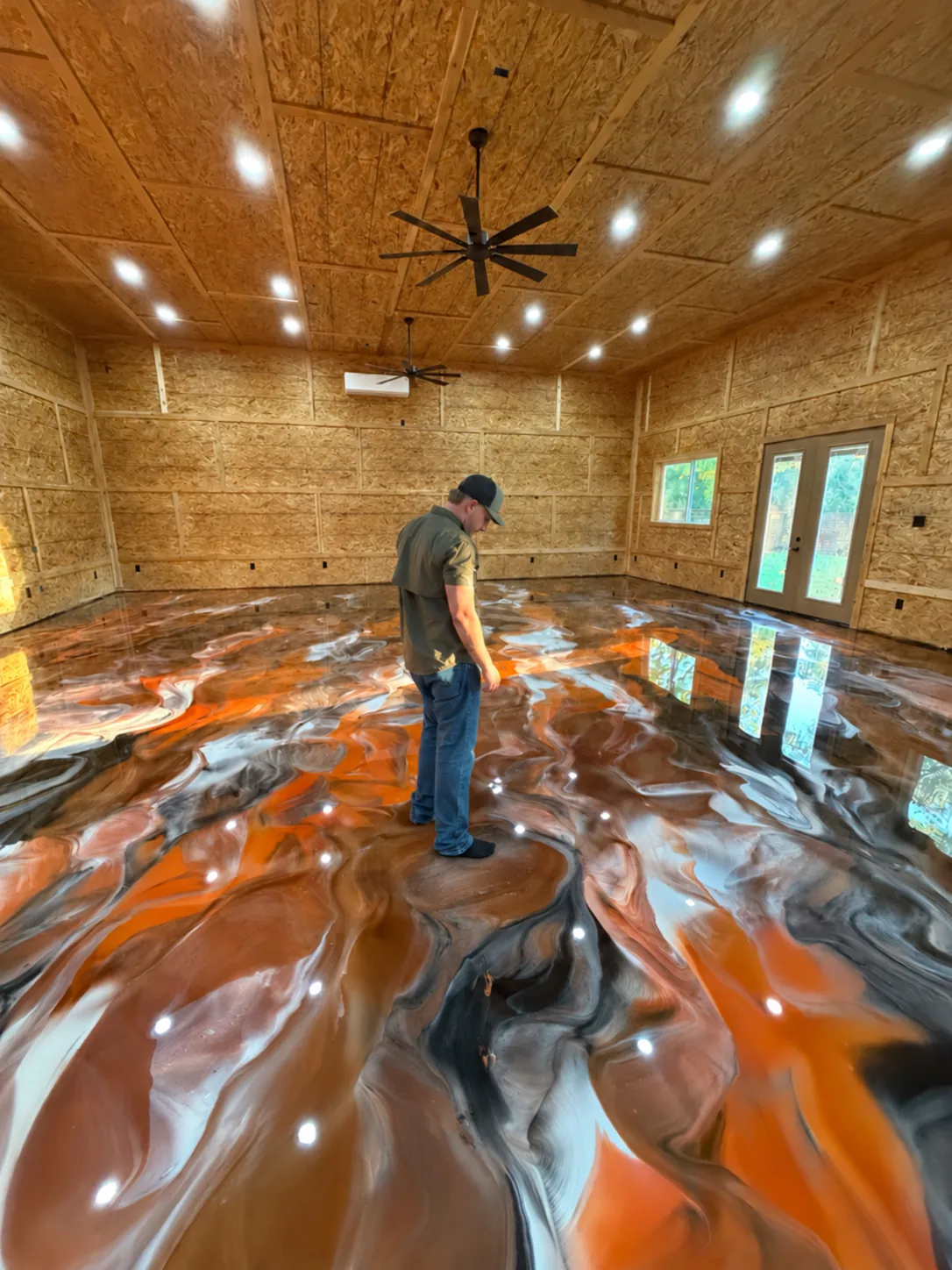
On acreage the shop is often the first floor people want done. It holds the truck, the mower and the workbench, plus whatever drips out of them. Those slabs usually need heavy grinding and patching, and the oil stains get a hard look, because a deeply soaked spot can keep any coating from holding. A shop slab that will hold a lift or a heavy trailer gets its thickness checked as well. We point out which spots need cutting out before you commit to a system, so the scope of the prep is clear from the start.
Carport and porch slabs take the weather head on. Sun, rain and the odd high water are hard on an epoxy that was never meant to sit outdoors, so those floors usually get a UV-stable coating or a penetrating sealer. Drainage gets checked too, because water that sits in a low corner of a carport changes what we would put down. When a slab is cracked badly enough that a coating would only outline the damage, we talk about repair first.
Inside the house, attached garages and the occasional concrete living space get the same systems we put down anywhere else: flake in a garage, a sealed or polished slab in a mudroom, a solid color in a laundry room. Sun through a west-facing garage door is worth mentioning at the visit, because it affects which topcoat we would choose. We plan Liberty County visits so one trip covers every floor on the property, and you get our read on each of them before you decide anything.
What we put down in Liberty County
The same six systems, and the same crew, everywhere we work.
- Flake Epoxy Systems
Colored vinyl flakes are broadcast into a wet base coat, then sealed under a clear topcoat. It hides dirt, small stains and tire marks, which is why most garage floors get it.
- Metallic Systems
Metallic pigment moves through the resin as it is worked, leaving a swirled, glassy floor with depth that shifts as you walk past. It belongs in showrooms, basements and living spaces where the floor is part of the look.
- Solid Color Systems
One even color with nothing to hide behind, built thick enough for carts and foot traffic. Warehouses and shops use it so aisles and safety zones can be striped and kept clean.
- Quartz Broadcast Systems
Colored quartz sand is locked into the resin in layers, leaving a fine grip underfoot. You see it in commercial kitchens, locker rooms and busy entries where floors stay wet.
- Polished Concrete
Bare concrete is ground with finer and finer diamonds until it shines on its own, then densified. There is no coating to peel, and it takes forklift traffic in warehouses and stores.
- Concrete Staining
Stain soaks into the concrete itself: acid stain gives mottled earth tones and water-based stain gives steadier color. It suits patios, porches and interior floors that want color without a thick coat.
Questions from Liberty County
Not answered here? Ask us on the contact page or call or text (936) 445-0702.
Can a floor that has flooded be coated?
Often, yes. What matters is how much moisture the slab is still holding, and only a meter reading tells you that. If the number is high, a moisture-mitigating primer goes down before the coating. A slab that floods again and again may be better left sealed, and we will tell you if we think that is the case.
What belongs on a carport slab?
Something built for sun and rain. A standard epoxy yellows and chalks outdoors, so carports usually get a UV-stable coating or a penetrating sealer instead. We look at the cracks and the drainage first, because water sitting on the slab changes the answer. A carport that doubles as a work area may also want texture for footing.
My shop sits under trees and the floor stays damp. Does that matter?
It can. Shade keeps a slab cooler and wetter, which shows up in the moisture reading and in how the floor feels underfoot. We test it, scrub it hard during prep, and lean toward a textured finish that keeps its grip when it is wet. Clearing gutters and keeping water moving away from the door helps whatever floor goes down.
Which parts of Liberty County do you cover?
All of it: Cleveland, Dayton, Liberty and the smaller communities, plus the county roads between them. We come out to rural addresses as readily as town ones, so a long gravel drive is no problem. Call or text (936) 445-0702 with the address, and tell us how many slabs are on the property so the visit is planned around all of them.
Can the garage and the shop share one visit?
They should. Tell us about every slab when you call, and we will look at all of them on the same trip. It saves you a second appointment, and it lets us show you which floors need the same prep and which need something different. If one floor needs to wait, you will still know what it needs when you are ready.
From our Google reviews
I have a long concrete porch that runs along my workshop. The old surface coating on it was an eyesore. The new flake epoxy flooring that Matt and his team applied looks awesome. It is obvious that they know their products and how to apply it properly.
Chris, Google review
Matt and his guys did an amazing job today and yesterday. Communication was great, service was awesome, and finished product looks amazing!
Austin Colson, Google review
A Liberty County floor visit
Book a floor visit with the form, or call or text (936) 445-0702 with where the floor is and what sits on it. We will come out, test the slab and walk you through the system and the prep we would use before anything is scheduled.
- Call or text(936) 445-0702
- Emailprocoatepoxyflooring@gmail.com
- Based inConroe, Texas, working six counties
Want to see the work first? Browse the gallery, or find every way to reach us.