
The work under the floor you end up seeing
Prep is everything that happens to a slab before the first coat of color: looking, testing, grinding, stripping and filling. It is most of the job, and it is where most failed floors went wrong.
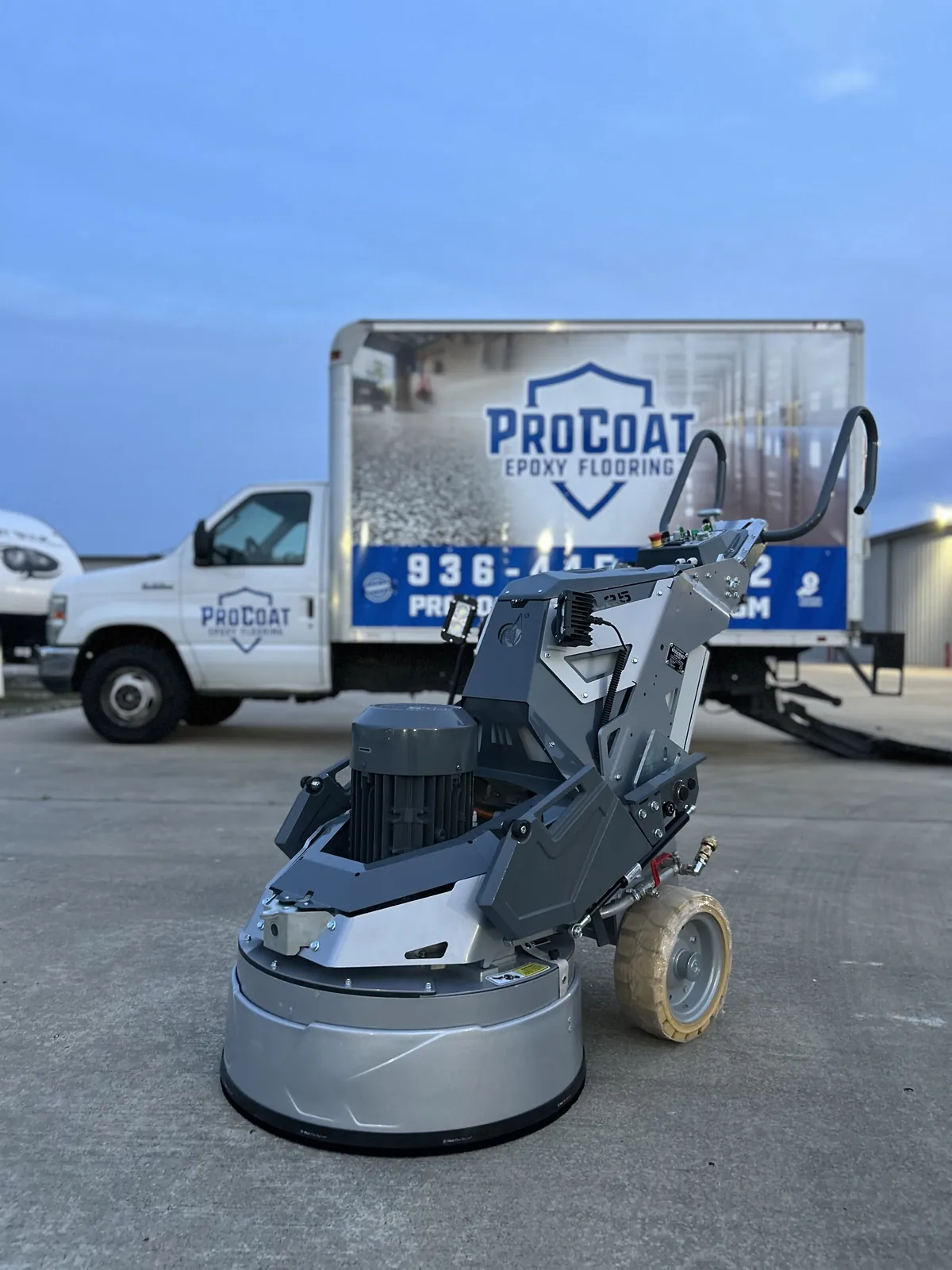
Why the slab gets more time than the color
A coating is only as strong as its bond to the concrete under it, and that bond is decided before any resin is mixed. If the slab is too smooth, too wet, too dirty or still carrying an old finish, the best product on the market will let go. When we pull up a peeling garage floor, the cause is almost always something that should have been dealt with at this stage.
So prep is not one step for us, it is a family of services. Some floors need only a grind and a moisture reading. We work out which on site, not from a photo.
Each of these jobs also stands on its own. Plenty of people call us only to get paint or adhesive off a slab, to have a floor leveled before tile, or to find out why a coating someone else put down is failing.
Others need an old epoxy ground off, carpet glue taken out of the pores, a dip leveled and a damp slab primed against vapor.
What every prep job starts with
It starts with a look at the floor. We walk it, note cracks, patches, old finishes and low spots, and ask how the room will be used. Then we read the moisture, because vapor coming up through the slab changes which primer goes down and sometimes which system makes sense at all.
From there the order rarely changes: remove what is on the slab, open the surface to the right profile, repair and level, then prime. Skipping or rushing one of those is how a floor that looked fine at handover starts lifting a year later.
Every service in concrete surface preparation
Each one has its own page with the detail, the prep it needs and the questions people ask.
Concrete Surface Preparation
- On-Site Floor Assessments
The visit where we walk the slab, ask how the room is used, read its moisture and come back with the system we would put down.
- Concrete Moisture Testing
Readings that tell us whether vapor is coming up through the slab, which decides the primer and sometimes the whole system.
- Diamond Grinding
Diamond tooling that strips the smooth top and old residue so primer can soak into open concrete instead of sitting on top.
- Shot Blasting
Steel shot thrown at the slab to open big, open floors quickly where a grinder would take far longer.
- Concrete Surface Profiling
Setting how rough the slab should be for the system going on, from a light scratch for sealers to a deeper bite for thick builds.
- Existing Coating Removal
Taking off a failed sealer, paint or coating and working out why it failed, so the new floor does not repeat it.
- Epoxy Floor Removal
Grinding up thick or peeling epoxy, often an old kit floor, down to sound concrete and checking what was hiding under it.
- Concrete Paint Removal
Getting peeling floor paint out of the surface and the pores of a garage slab so nothing is left for a coating to lift with.
- Flooring Adhesive Removal
Clearing carpet glue, thinset and vinyl or wood-floor adhesive left behind when the old flooring came up.
- Floor Leveling
Patching, skimming or self-leveling the low spots and lips a coating would otherwise copy straight onto the finished floor.
Which prep a floor actually needs
The finish you want sets the target. A clear sealer on a driveway needs a light profile and a clean surface; a thick broadcast system in a shop wants a deeper, more open surface; polished concrete skips coatings altogether and goes straight to grinding through grits. Knowing the end floor first keeps us from over-grinding a slab or under-preparing it.
What is on the slab now decides the first day. Bare concrete might only need grinding. Paint, sealer, old epoxy or adhesive have to come off completely, and we look at what an old dark adhesive or coating is before anyone grinds it. Where a coating failed, we want to know why before we choose how to remove it.
The moisture reading and the shape of the floor decide the rest. A damp slab gets a moisture-mitigating primer or a different system, and dips, lips and open joints get filled and leveled before the body coat. If a crack is still moving with the soil, we tell you it may show again rather than promise it away.
Getting concrete surface preparation right
Ask us directly: call or text (936) 445-0702 or write through the contact page.
Can you just coat over my floor without grinding it?
We do not. A coating needs an open, rough surface to bond to, and a smooth or dirty slab is the most common reason floors peel. Grinding, or shot blasting on big floors, is part of every coating job we do.
How do you decide between grinding and shot blasting?
Size, edges and the finish going on. Shot blasting covers big open floors fast; grinding handles edges, small rooms, thin systems and decorative work better. Many jobs use both.
Do you only do prep as part of a coating job?
No. We also remove paint, old coatings and adhesive, level floors and test moisture as jobs of their own, including ahead of tile or other flooring going down.
What happens if you find something unexpected under the old floor?
We stop and tell you. Old adhesives, patches, damp spots or a failed layer underneath can change the plan, and you hear about it before we go on.
How dusty is the prep work?
Grinding and blasting make fine dust, so the machines run hooked to vacuums and we keep the work area closed off. Expect noise more than mess.
Why test moisture if the floor looks dry?
A slab can feel dry on top while vapor is still coming up through it. A reading tells us whether the floor needs a moisture-mitigating primer before anything else goes on.
Let us look at the slab first
Call or text (936) 445-0702, or use the form with your town and what is on the floor now. We will come read the slab and tell you exactly what the prep involves.
- Call or text(936) 445-0702
- Emailprocoatepoxyflooring@gmail.com
- Based inConroe, Texas, working six counties
Want to see the work first? Browse the gallery, or find every way to reach us.