
Before we talk about color or flake or shine, we put a meter on the slab. What the concrete is doing underneath decides almost everything that goes on top of it, and it is the one thing nobody can judge by looking.
The order of a coating job
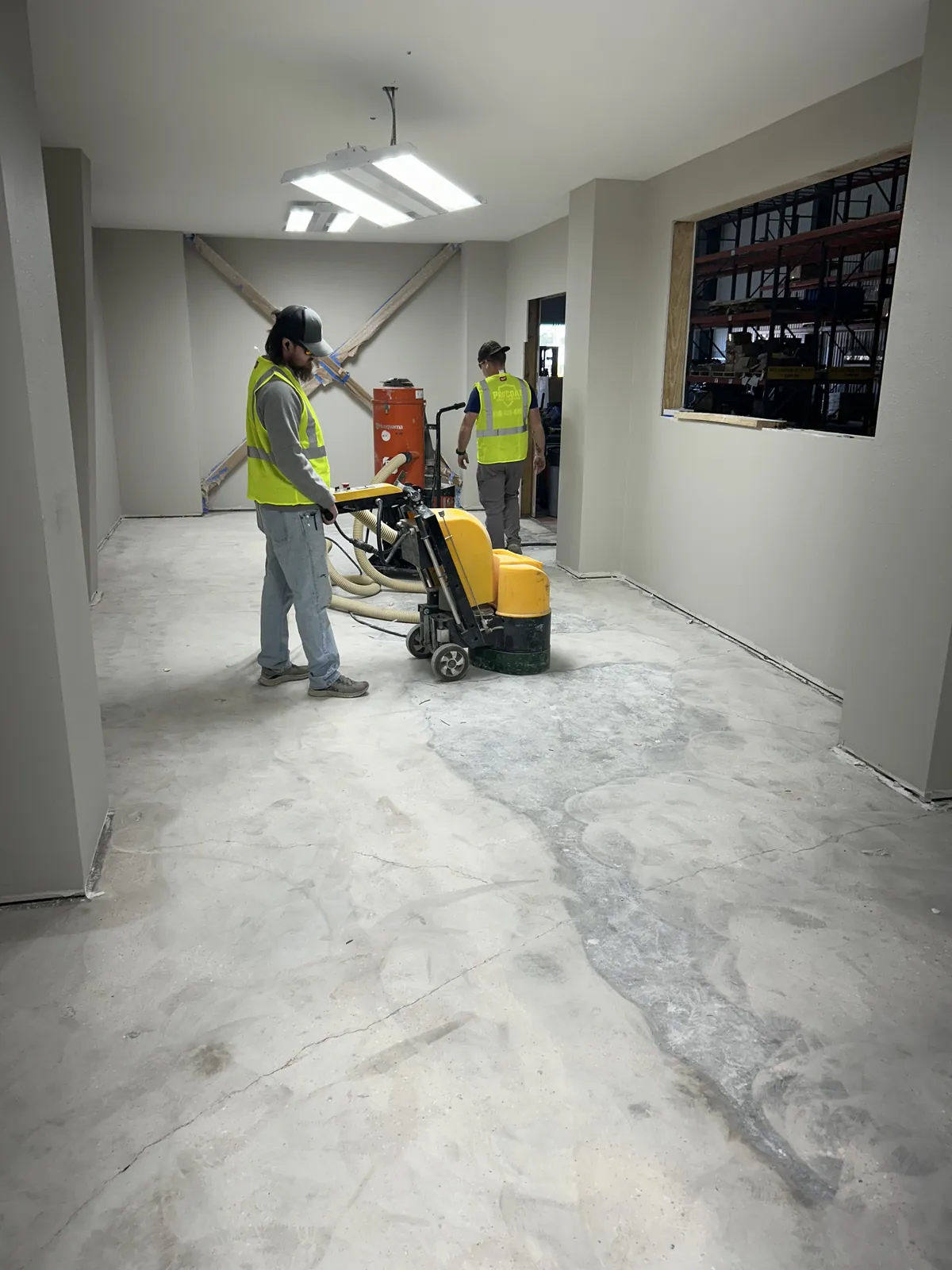
People usually call about the finish they want, which is a fine place to start the conversation. The floor itself starts somewhere else. A coating is only as good as its grip on the concrete, and moisture is the most common thing that breaks that grip, so it comes first in our order of work, ahead of grinding, repairs and color.
The reading changes real decisions. It tells us which primer goes down, whether the floor needs a moisture-mitigating layer, and whether a coating is the right answer at all. Choosing a color before we know that is like picking paint for a wall you have not checked for leaks.
We also want the reading before we quote. A floor that needs a moisture-mitigating layer is a different job from one that does not, and you should hear that at the visit, while you are still deciding, instead of halfway through the install.
Where a Houston slab gets its water
Most homes around here sit on a slab poured right on the ground, with no basement and no crawl space between the concrete and the soil. Whatever water is in that soil is pressed against the bottom of the slab. Clay holds water for a long time after a storm, and Gulf Coast humidity keeps the air damp much of the year, so the ground under a slab rarely dries out completely.
Then there is the water people add without thinking about it. Sprinkler heads aimed at the foundation, downspouts that empty next to the garage, flower beds watered against the wall and yards that slope toward the house all put more water right at the edge of the slab. Closer to the coast in Brazoria County, the ground can stay wet even through a dry spell.
Plenty of slabs here still read dry. The water simply has more ways to get under a house on the Gulf Coast than it would somewhere arid, and the meter is how we find out which kind of slab you have.
How the garage and the house differ
A garage slab and the slab under the living room often behave differently, even in the same house. The garage is usually poured as its own section, it may or may not have a plastic vapor barrier under it, and the garage door lets in rain and humid air that the air-conditioned rooms never see.
Inside, flooring has usually covered the slab for years. When carpet or tile comes up for a coating or a polish, the concrete underneath can read wetter than people expect, because the old flooring was holding moisture in. We test each area we will coat instead of assuming one reading covers the whole house.
Older homes add one more variable. Slabs poured decades ago were often laid straight on the dirt with no barrier at all, while newer construction usually has one. Nobody can tell which by looking at the top of the concrete, so the meter decides.
What a wet slab does to a coating
Moisture problems are slow. A floor can go down over a damp slab, cure and look perfect for weeks or months. Then small blisters show up, often near walls, drains or the door, where the slab tends to be wettest. Press on one and it may feel soft, and some have liquid inside when they break.
From there the blisters grow and join, and the coating starts lifting in sheets. By then the only fix is taking it all off, dealing with the moisture and starting over, which means losing the floor and spending more weeks without the room. A reading at the start is a lot easier than that.
Moisture can also lift a coating with no blisters at all. Sometimes the bond just weakens across the floor, and the first sign is a section that comes up in one piece when something heavy gets dragged across it. Either way, it started with vapor trapped under a film.
The taped plastic check and its limits
You may have seen the home test: tape a square of plastic sheet to the floor, leave it a day or two and look for darkened concrete or droplets underneath. It is a fair way to spot a slab that is clearly wet, and it costs nothing to try.
What it cannot do is tell you how much moisture is moving or what is happening below the surface. A slab can pass the plastic test on a dry week and push plenty of vapor in a wet one, and a sunny garage can dry out the top of the concrete while the slab below stays damp. That is why our concrete moisture testing uses a meter across the floor and, when the numbers sit near the line, slower tests that read deeper.
If you try it, put the plastic somewhere out of direct sun, away from the garage door and on a spot that has not just been mopped. A result showing moisture is worth a call. A dry result is a good sign and still worth a proper reading.
Planning a floor around the reading
Most slabs that read high still get coated. The usual change is underneath: a moisture-mitigating floor system goes down first and holds back vapor so the coating on top can stay bonded. The finished floor looks the same as any other.
Interior slabs get the closest look, since they are covered, cool and often hold the most moisture. If you are thinking about basement floor coatings or a coated room inside the house, the reading tells us whether a standard system will hold or whether the floor needs more. When the numbers are very high, polished concrete or a penetrating sealer can be the better floor, and we will tell you so.
If you want to know where your slab stands, send us a note or call or text (936) 445-0702 and we will set up a visit.
Questions
Do you test moisture on garage floors too?
Yes. Garages sit on the ground and open to rain and humid air every time the door goes up, so they can read wet as easily as any room in the house. A garage coating that blisters fails the same way an indoor one does.
Is the moisture test part of the floor assessment?
Meter readings happen during the on-site assessment while we look over the rest of the slab. If the numbers come back borderline, a slower test can take a day or more, and we will explain why we want it before we set it up.
Does a high reading mean I can’t have the floor I wanted?
Usually not. Most of the time it means a different primer or a moisture-mitigating layer under the same finish. Now and then the readings are high enough that we suggest polished concrete or a sealer instead.
Can moisture in the slab change after the floor is down?
It can. A new downspout, a sprinkler line or a change in drainage can send more water under the slab than was there on test day. Keeping water directed away from the foundation helps the floor and the slab both.
We look at the slab and read its moisture before anyone picks a finish. Call or text (936) 445-0702, email procoatepoxyflooring@gmail.com, or see the gallery first.