
The garage slab, done properly from the ground up
The garage is the floor we are asked about most, and the one that punishes a shortcut fastest. Hot tires, oil, water at the door and sun on the first few feet all go after it from the day it is finished.
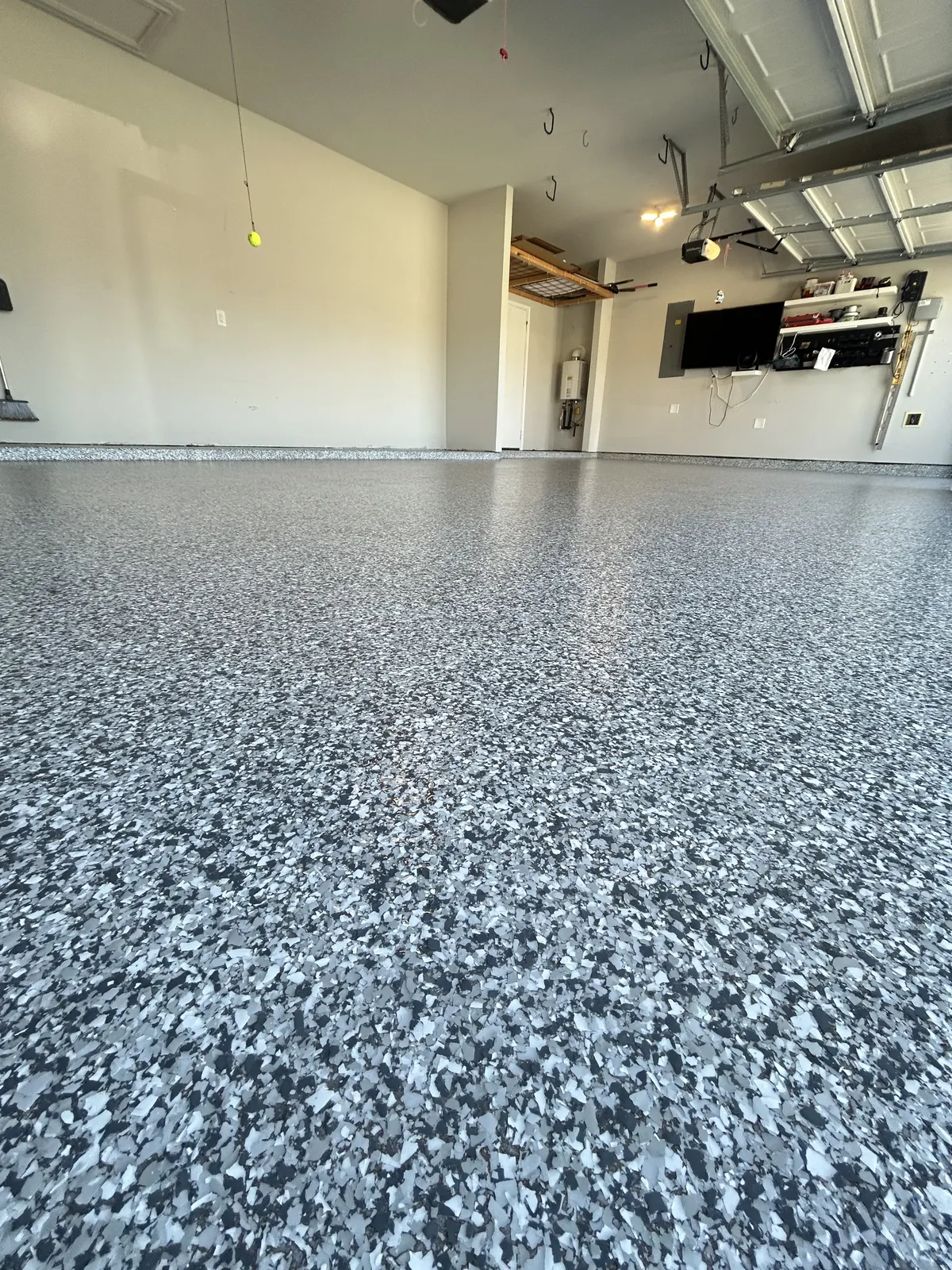
Why garage floors fail where they do
Watch where an old garage coating gives up and it tells you a lot. It lifts in two strips where the tires park, peels at the door where water and sun reach it, and blisters in a patch where vapor is coming up through the slab. A kit floor usually fails in all three places within a couple of years, because it was rolled onto smooth concrete that never had a chance to grip it.
So a garage floor is mostly a list of problems to solve before color goes down. The slab gets ground open, cracks and spalls get repaired, the joint at the door gets attention, and the moisture gets read. Then comes a body coat thick enough to matter and a topcoat chosen for the sun at the door.
The services in this family are those same steps, split out, because not every garage needs all of them. Some need only a sealer. Most need grinding and a full system.
Some need repair and resurfacing before anything else.
A garage is more than somewhere to park
Most garages here are also storage rooms, workshops, laundry rooms and home gyms. That changes the floor. Shelving legs and freezers press into it, tools drop on it, and the step into the house takes every bit of foot traffic. We ask how yours gets used before we pick the system.
Looks count too. A flake blend picked to suit the house hides dust and tire marks far better than a solid color, which is why most garage floors we put down are flake. Polyaspartic topcoats keep the strip by the door from yellowing.
Every service in garage floor coatings
Each one has its own page with the detail, the prep it needs and the questions people ask.
Garage Floor Coatings
- Garage Floor Epoxy
The full garage system explained: how it differs from a kit, what the days on the job look like, and moving back in afterward.
- Polyaspartic Garage Floors
Choosing a polyaspartic system for a garage that gets afternoon sun at the door or needs to be back in use sooner.
- Garage Floor Flake Systems
The layered chip floor built for a garage, from base coat and broadcast to scraping and topcoats, with a blend that suits the house.
- Garage Floor Grinding
Grinding a garage slab back to open concrete, taking off kit epoxy or paint and smoothing a rough surface before anything else happens.
- Garage Floor Repair
Filling cracks, rebuilding chipped joints and fixing the broken edge at the door so a coating has a sound slab to follow.
- Garage Floor Resurfacing
A new cement surface over a garage slab that has scaled or pitted across the whole floor, left bare, sealed or coated after.
- Garage Floor Sealing
A sealer for people who want the garage to stay plain concrete but keep oil, tire marks and grime from soaking in.
How we settle on a garage floor
We start with the slab. If it is badly scaled, pitted or cracked, repair or resurfacing comes first, and that may decide whether a full coating even makes sense. If it is sound but smooth or coated with an old kit, grinding is the first day of work. The moisture reading then tells us whether a moisture-mitigating primer goes down under everything.
Next is how you want to live with the floor. If you want plain concrete that resists oil, a sealer is honest and easy to maintain. If you want a finished room that hides dirt and wipes clean, a flake system is the usual answer. Where the door faces afternoon sun, or you need the garage back sooner, a polyaspartic system or topcoat belongs.
Last we look at the details that decide how long it lasts: the lip at the door, the step into the house, any floor drain, and where the shelving will sit. Getting those right is the difference between a garage floor that looks new for years and one that starts lifting at the edges.
What to know about garage floor coatings
Your question not here? (936) 445-0702 takes calls and texts, and the contact page has email.
How long is the garage out of use?
It depends on the slab, the repairs and the system, so we give you the schedule after the assessment. Grinding, repairs and coats each take their own time, and cars go back on last.
Can you coat over the old garage coating?
No. An old coating or paint gets ground off first, because a new floor bonded to a failing layer comes up with it.
Will the coating stop hot tire marks?
A properly bonded system on a ground slab resists the lifting that hot tires cause on thin kits. Some rubber can still mark a light topcoat, which wipes or scrubs off.
What do I do with everything in the garage?
Everything comes off the floor before we start. We tell you what to move and when it is safe to bring it back.
Is flake the only option for a garage?
No, it is just the most common. Solid color, quartz, metallic and plain sealed concrete are all options; flake wins most often because it hides dust and wear.
Do cracks show through a garage coating?
Repaired cracks usually disappear under flake. A crack that is still moving with the clay can come back as a fine line, and we tell you which ones are likely to.
Part of Flake Epoxy Systems
Garage Floor Coatings is one of the services under flake epoxy systems. The overview compares them all.
- Garage Floor Repair
Filling cracks, rebuilding chipped joints and fixing the broken edge at the door so a coating has a sound slab to follow.
- Garage Floor Resurfacing
A new cement surface over a garage slab that has scaled or pitted across the whole floor, left bare, sealed or coated after.
- Garage Floor Grinding
Grinding a garage slab back to open concrete, taking off kit epoxy or paint and smoothing a rough surface before anything else happens.
- Garage Floor Sealing
A sealer for people who want the garage to stay plain concrete but keep oil, tire marks and grime from soaking in.
Have us look at the garage
Call or text (936) 445-0702, or use the form with your town. We will read the slab and tell you which of these your garage actually needs.
- Call or text(936) 445-0702
- Emailprocoatepoxyflooring@gmail.com
- Based inConroe, Texas, working six counties
Want to see the work first? Browse the gallery, or find every way to reach us.