
Floors built for one hard requirement
Some floors have a single demand that decides everything else: a slab that reads wet, a room full of acid, a kitchen that runs hot, a clinic that has to clean in minutes. These are the systems we build for those floors.
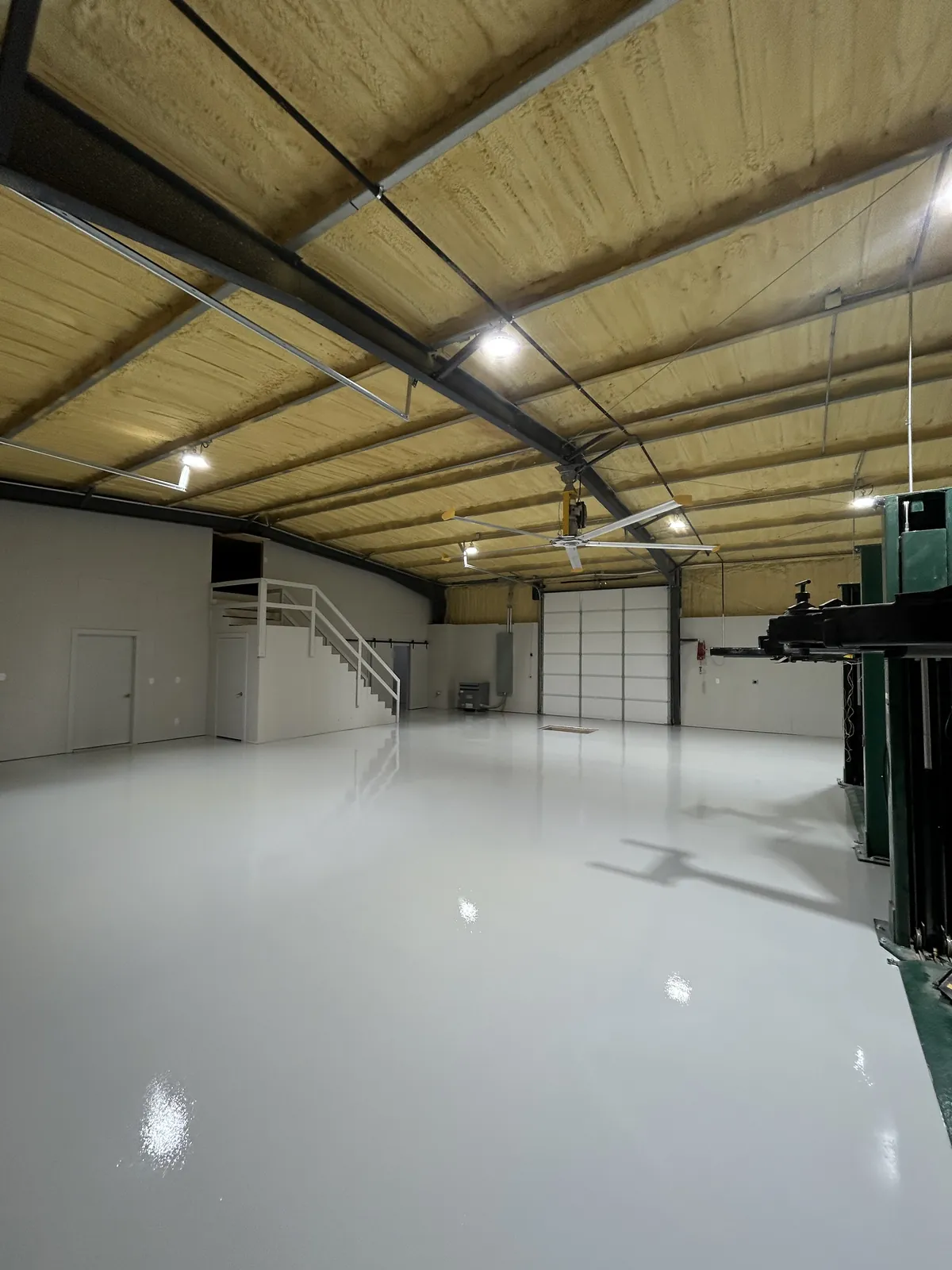
When one condition decides the system
Most floors get chosen by room and by look. Specialty floors get chosen by a requirement that cannot bend. If a slab is pushing vapor, the whole system starts with a layer that holds it back. If a floor will see battery acid or solvents, the build is about containment and the chemistry of the topcoat. If boiling water hits the floor every night, urethane cement usually wins before anyone talks about color.
Because the requirement comes first, these pages are blunt about limits. An antimicrobial additive does not replace cleaning. A slip-resistant floor stops gripping if it is cleaned the wrong way. Knowing the limits is how the floor lasts.
Each of these systems still starts with the same visit: a look at the slab, a moisture reading and questions about what happens in the room. For specialized rooms we may also ask for your chemical list, cleaning routine or written requirements.
A moisture-mitigating primer has a ceiling.
Where these floors end up
We see these requests from plants, kitchens, clinics, daycares, vet offices, battery rooms, farm shops and equipment barns, and from homes with damp slabs or wet entries. The same family can cover a barn floor that takes a loader bucket and a restroom that needs to clean easily.
If a room needs something outside what we do, we will say so at the assessment and point you to the right kind of company.
Several of these systems also work together on one floor. A commercial kitchen might take urethane cement on the cook line, a quartz broadcast with grip at the dish station and a coved, continuous finish in the restrooms, all planned at the same visit so the edges between them are built on purpose.
Every service in specialty flooring systems
Each one has its own page with the detail, the prep it needs and the questions people ask.
Specialty Flooring Systems
- Moisture-Mitigating Floor Systems
The vapor-reducing layer that goes under the coating when a slab reads wet, and the point where even that is not enough.
- Chemical-Resistant Flooring
The whole floor of a chemical area, from containment and coved edges to trench drains and battery rooms.
- Heavy-Duty Protective Flooring
Tough builds for barns, farm shops, loading areas and rental yards where buckets, jacks and gravel do the damage.
- Hygienic Seamless Flooring
A continuous floor carried up the wall with sealed pipes and drains, so restrooms and clinics clean easily.
- Antimicrobial Flooring
Coatings with an antimicrobial additive, explained honestly: what it does on the surface and why cleaning still matters most.
- Polyurethane Cement Flooring
Thick urethane cement for floors that run hot or take hot water and steam, and where it is more floor than you need.
- Decorative Quartz Flooring
Quartz chosen for color in lobbies, entries and restrooms, with borders and a smoother top for daily mopping.
- Slip-Resistant Flooring
Grip built into the body of the floor by zone, with drains, mats and cleaning planned so it keeps gripping.
How we match a specialty floor to the room
We start by naming the one requirement that cannot bend, and we check it. A wet reading, a chemical list, a washdown temperature or a cleaning schedule each points to a different system, and guessing at any of them is how specialty floors fail.
Then we look at the second demand, because there usually is one. A kitchen that runs hot also needs grip; a battery room that sees acid also takes forklift traffic; a clinic restroom that has to clean fast also needs a cove that does not crack. The system is built to cover both.
Last is what the building can give us: time out of service, ventilation, and access to the room. Some of these systems smell while they cure or need more days than a standard coating, and we tell you that before anything is booked.
The usual specialty flooring systems questions
Something else on your mind? Call or text (936) 445-0702, or use the contact page.
How do I know if my floor needs a specialty system?
If something about the room is harsh or strict (a wet slab, chemicals, hot water, a sanitation routine, people slipping) it probably does. The assessment tells us which one.
Can a moisture-mitigating primer fix any wet slab?
No. It handles vapor within its rating. Liquid water, flooding or readings past that point need a drainage fix or a different floor altogether.
Do antimicrobial floors kill germs?
We do not make health claims. The additive is meant to slow growth on the coating’s own surface; cleaning is still what keeps a floor clean.
Is urethane cement better than epoxy?
For heat, hot water and thermal shock it usually is. For a dry garage or office it is more floor than you need.
What should I have ready for a chemical room visit?
Your chemical list, safety data sheets and any written containment requirements. They decide the build.
Can a floor be both decorative and slip resistant?
Yes. Quartz blends and textured broadcasts can look good and grip. We set the texture by zone so it stays cleanable.
Part of Solid Color Systems
Specialty Flooring Systems is one of the services under solid color systems. The overview compares them all.
- Chemical-Resistant Flooring
The whole floor of a chemical area, from containment and coved edges to trench drains and battery rooms.
- Moisture-Mitigating Floor Systems
The vapor-reducing layer that goes under the coating when a slab reads wet, and the point where even that is not enough.
- Chemical-Resistant Floor Coatings
For floors where solvents, brake fluid, acids or cleaners land regularly, matched to the actual substances on site instead of a general claim of chemical resistance.
Tell us the requirement
Call or text (936) 445-0702, or use the form with your town and what the floor has to stand up to. We will read the slab and match the system to it.
- Call or text(936) 445-0702
- Emailprocoatepoxyflooring@gmail.com
- Based inConroe, Texas, working six counties
Want to see the work first? Browse the gallery, or find every way to reach us.