
Arcola floors a few years after the move-in
Most of the garage floors we look at in Arcola, off FM 521 southeast of Richmond, belong to houses on streets that are still filling in. That means a lot of houses here are only a few years past move-in, so the bare garage floor has picked up some history and a spare room may have turned into an office.
A garage floor nobody ever sealed
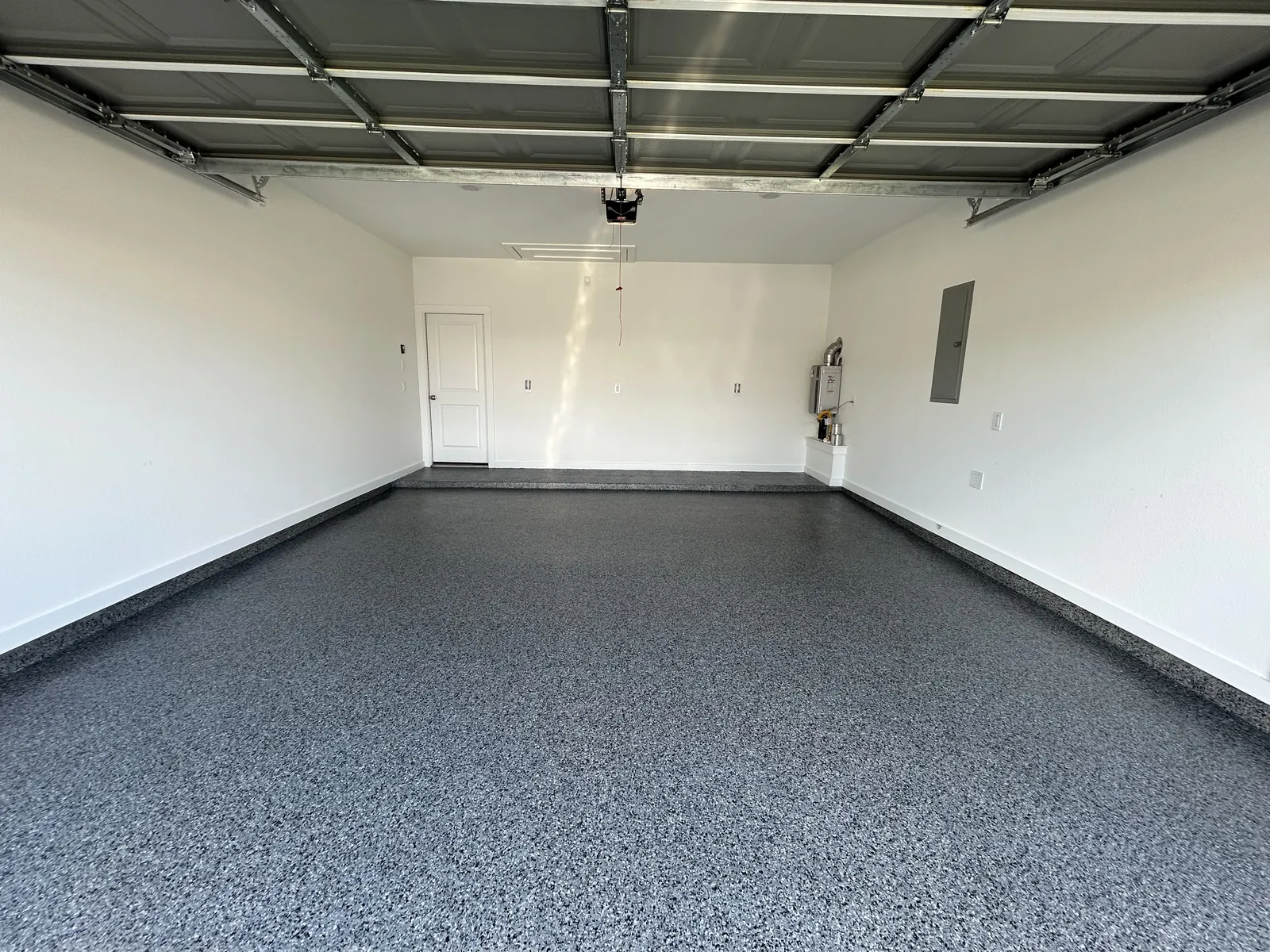
Plenty of new houses hand over the garage as plain concrete with nothing protecting it. The cars move in the same week, and for a few years it quietly takes everything: oil drips under the engine, coolant from the overflow, fertilizer bags, tire marks where the car turns in. By the time an owner calls about a coating, the slab has a history written into it.
Those stains go deeper than they look. Oil and coolant wick down into the pores, and a coating laid over them can lose its grip in exactly those spots, often as a patch of lifting resin right where the car parks. We degrease the worst of it, grind the whole floor open and check whether the oil has gone deeper than the grinder reaches. A slab that has soaked up a lot of drips sometimes needs a primer made for oil-contaminated concrete.
The good news on a slab this young is the shape. It is usually flat, it rarely carries old paint or a failed kit coating, and the cracks tend to be fine shrinkage lines and early clay movement. That keeps the repair part of the job small, and most of the effort goes into getting the stains out and the profile right.
Moisture still gets read, even on a slab a few years old. A garage that takes water under the door in a storm or sits beside a watered flower bed can stay damp along one edge, and that edge is where a coating would lift first.
If the reading is high there, a moisture-mitigating primer goes under the rest of the system.
The spare room that became an office
Many newer homes have a front room or a downstairs flex room on the slab, and a lot of them end up as home offices. When the carpet or the floating floor in that room wears out, the concrete under it is worth a look before you buy more flooring. Ground and polished to a satin sheen, or stained and sealed, it makes a hard, easy floor for a desk that sees eight hours a day.
Office chairs are the hidden test. Hard casters rolling over the same patch all day will wear a path through carpet and scuff a soft finish, and they find any lip or seam in the floor. Polished concrete handles that well. A coating works too if it gets a tough topcoat, and either way we’d suggest soft rubber casters, which are kinder to every floor.
Interior slabs need the same moisture reading as a garage, maybe more so, since that room has been under carpet pad or plastic underlayment that can trap damp against the concrete. Once the old flooring and its tack strip or glue come up, we read the slab, fill the nail holes and decide between a polish, a stain or a coating based on what we find.
Front walks and the sprinkler line
In a new subdivision the front walk and the driveway are usually the first concrete anyone sees, and they take a beating from something people rarely think about: the sprinklers. Irrigation water that runs high in minerals or iron can leave orange or white stains along the edge of a walk where the spray lands every morning. Left alone, those stains build up and soak in.
We clean the walk first, using a cleaner matched to the stain, then put down a penetrating sealer that slows the next round from soaking into the concrete. A sealer leaves the broom finish grippy, which matters on a walk that is wet half the morning. Turning a spray head or two away from the concrete does more than any product, so we’ll point out the worst ones while we’re there.
Driveways in a neighborhood still being built also catch construction mud for a while, tracked in from the lots down the street. If yours has picked up mud, tire marks or a fresh crack at the curb, it is easier to deal with before the sealer goes on than after.
Floors that suit Arcola
Four we would put on the shortlist here, before we have seen your slab.
Matt and his guys did an amazing job today and yesterday. Communication was great, service was awesome, and finished product looks amazing!
Austin Colson, Google review
- Garage Floor Epoxy
A garage that has spent a few years bare needs its oil spots degreased and ground out, then an epoxy system that bonds to clean concrete underneath.
- Satin Concrete Finishes
A satin polish gives a home office slab a soft sheen with little glare, and chair casters roll across it without wearing a path.
- Water-Based Concrete Staining
Where the room has to match the rest of the house, a water-based stain offers steady color in a wide range before it is sealed.
- Walkway Sealing
Front walks that catch sprinkler spray every morning pick up mineral stains, and a penetrating sealer slows them without making the concrete slick.
More towns in Fort Bend County
The Fort Bend County page lists every town we cover there.
- SimontonNorthwest, Brazos
- Weston LakesNorthwest, acreage
- BeasleyUS 59, rural
- Sugar LandUS 59, southwest
Asking about floors in Arcola
Something else on your mind? Call or text (936) 445-0702, or use the contact page.
What do you do about the dark spot where the car parks?
We degrease it, then grind the whole floor, which takes off the stained top layer along with the smooth finish. If the oil has gone deeper than that, it can keep bleeding back up, so we treat that patch with a primer made for oily concrete. You’ll know which case you have after the visit.
Will polished concrete in my office be loud or echo?
A bare room with a hard floor does carry sound more than a carpeted one. The easy fix is a rug under the desk and chair zone, or a few soft furnishings, with the concrete left bare everywhere else. A satin finish also looks calmer than a high gloss in a small room.
Can one room be polished without redoing the whole downstairs?
Yes. We work inside the walls of that room and stop at the doorway, where a threshold or a clean transition strip meets the next floor. Grinding is dusty work, so we seal off the doorway and run our grinders on vacuums, and the rest of the house can stay in use.
What are the orange stains on my front walk?
Usually iron, from the irrigation water or from lawn fertilizer that bounced onto the concrete. They can often be lifted with a cleaner made for that kind of stain, though deep ones may only fade. Sealing afterward and turning the spray heads away keeps them from coming back as fast.
Which floor in a newer house should I do first?
We’d usually start with the garage, since that floor takes damage every day it stays bare and the stains only get deeper. An office or flex room can wait until its current flooring wears out. If both are on your list, we look at them on the same visit and can plan the work back to back.
Let us look at the garage first
Call or text (936) 445-0702, or use the form with your Arcola address and the rooms you have in mind. We’ll come look, take moisture readings and tell you which floor to tackle first and what it needs.
- Call or text(936) 445-0702
- Emailprocoatepoxyflooring@gmail.com
- Based inConroe, Texas, working six counties
Want to see the work first? Browse the gallery, or find every way to reach us.