
Pasadena’s plant floors and the garages beside them
Pasadena sits along the Houston Ship Channel, with plants, refineries, warehouses and truck yards close to its homes. That puts two kinds of floor in front of us here: concrete that takes forklifts and chemical spills all shift, and home garages that take hot tires and humid summers.
Forklift aisles and loading docks
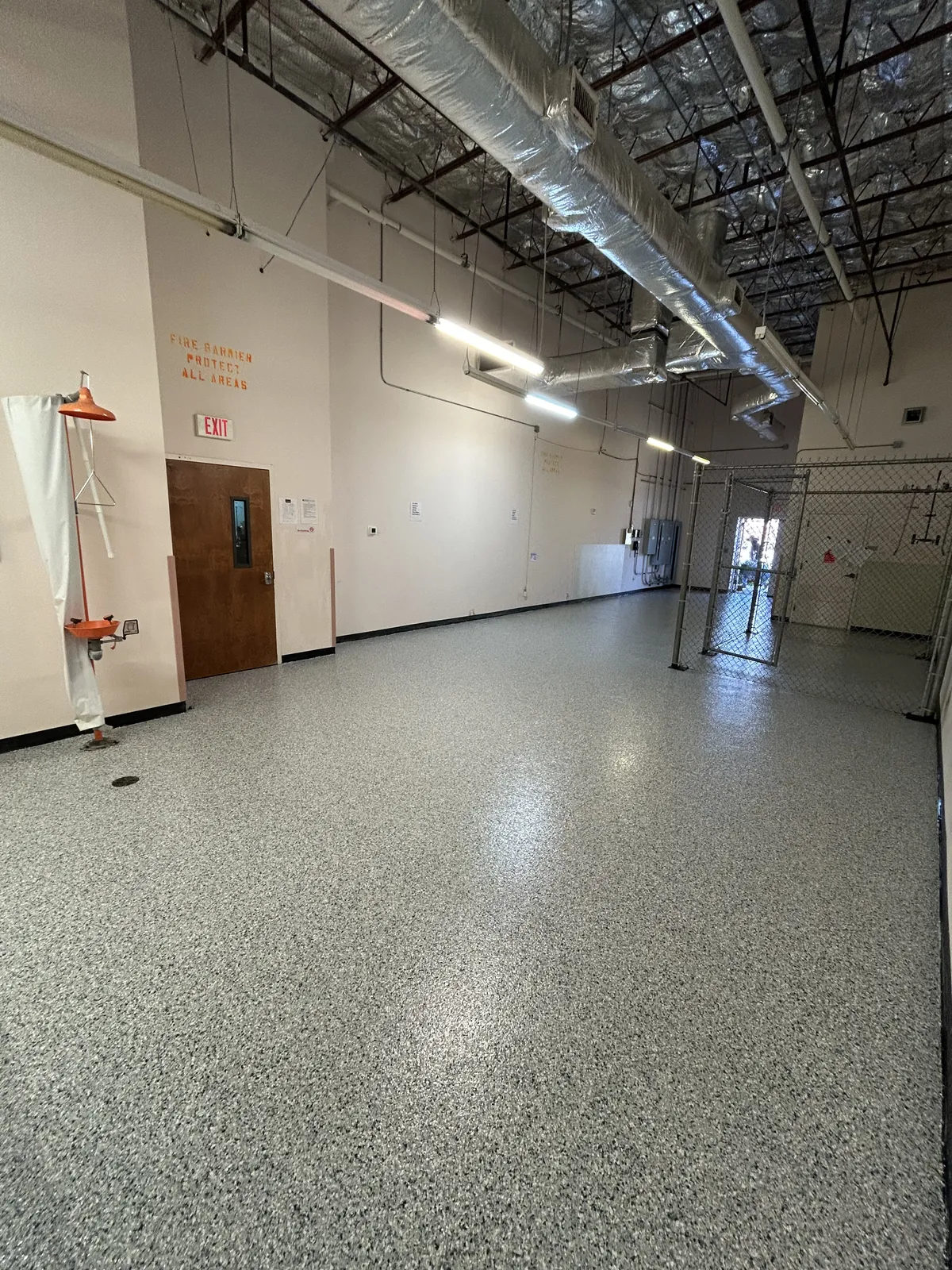
A warehouse floor fails in the same few places every time. Forklifts turn hard at the ends of the racks and pallet jacks drag across the dock plates. The joints in the slab take a hit every time a loaded wheel rolls over them. Bare concrete there turns to dust, and a thin coating wears through to gray in lanes you can trace from the door.
There are two good answers, and the building decides which one. Polished concrete has no coating to wear through, so it suits big open storage floors where the main enemy is wheel traffic and dust. A thick industrial epoxy or urethane system makes more sense where things get spilled, or where you want aisles, walkways and loading zones striped in colors that stay put. We shot blast the big open floors before a coating goes down, since that gives a clean, rough profile across thousands of square feet faster than grinding.
Joints and cracks get attention before any of it. A control joint with a broken edge chips a little more every time a forklift crosses it, and a coating laid over that edge breaks along the same line soon after. We fill and rebuild those edges first. Shift schedules matter too, so we talk through which bays can be closed and when, and how long each one stays out of use, before anything is booked.
Spills also soak into old concrete long before anyone thinks about a coating.
Spills that eat through ordinary epoxy
Around plants and refineries, floors see things a garage never does. Solvents, caustic cleaners, hydraulic oil and acids end up on the concrete in maintenance shops, lab rooms and loading areas, sometimes in small drips and sometimes all at once. A standard epoxy handles oil and water fine but can soften or etch under some of those chemicals, and a soft spot in a coating is where it starts to lift.
So we ask what actually gets spilled, and how often. A chemical-resistant topcoat or a novolac-type system holds up to harsher exposure, and polyurethane cement handles hot washdowns and thermal shock that would crack a thinner floor. A topcoat that resists a chemical for a quick wipe-up may not survive the same chemical left sitting overnight, which is worth knowing before you choose. If you have a list of the chemicals used in a room, bring it to the assessment. It changes the answer more than anything else about the floor.
Oil that has been sitting in a slab for years keeps bleeding back up and pushes a new coating off from underneath. We grind or blast past the stained layer and degrease what is left, and some floors need more than one pass. It is slow work, and it is the part that decides whether the new floor stays down.
Garages that bake through the summer
Most homes around Houston sit on a slab, and Pasadena’s garages get the same Gulf Coast treatment as everyone else’s. A car pulled in after a hot drive leaves tires soft enough to grab a weak coating and peel it up, which is hot tire pickup. Store-bought kits rolled onto unground concrete are the usual victims, and by the second summer the parking spots are bare. Dust from a garage that doubles as a workshop works into the bare spots and makes them look worse every month.
Our answer is a ground slab with a flake system or a polyaspartic topcoat. Grinding opens the concrete so the base coat bites in. The flake hides dust and drips, and a UV-stable top keeps the color from yellowing where the door lets afternoon sun in. The expansive clay under this part of the county also moves slabs, so the cracks get filled before the color goes down, and we tell you plainly that a crack that keeps moving can show through again.
Floors that suit Pasadena
Four we would put on the shortlist here, before we have seen your slab.
Matt and his guys did an amazing job today and yesterday. Communication was great, service was awesome, and finished product looks amazing!
Austin Colson, Google review
- Warehouse Floor Coatings
Storage floors and dock areas take forklift turns and dragged pallets, so they get a thick coating with striped aisles, laid on a shot-blasted slab.
- Chemical-Resistant Floor Coatings
Maintenance shops and loading areas near the plants see solvents and caustic cleaners that can soften a standard epoxy, so the topcoat is picked for what gets spilled.
- Industrial Concrete Polishing
Big open floors where wheels and dust are the main problem do well polished, since there is no coating left to wear through in the traffic lanes.
- Garage Floor Flake Systems
Home garages here take hot tires and oil drips, and a flake broadcast over a ground slab hides both while holding up to the heat.
More towns in Harris County
The Harris County page lists every town we cover there.
- KingwoodLake Houston, City of Houston
- CypressNorthwest Harris County
- BaytownGalveston Bay
- ChannelviewNorth of the Ship Channel
Asking about floors in Pasadena
Your question not here? (936) 445-0702 takes calls and texts, and the contact page has email.
Can a coating go over an oily plant floor?
Sometimes, after a lot of prep. Oil that has soaked deep into the slab keeps working back up, so we grind or blast through the stained layer, degrease what remains and check that the surface takes a primer. If the contamination runs too deep, polished concrete or a fresh topping may be the better plan, and we will tell you that up front.
Should a warehouse aisle be polished or coated?
It depends on what happens in the aisle. Polished concrete wins where the traffic is wheels and the main complaint is dust, because there is nothing on top to peel. A coating wins where spills happen or where you want striped lanes and safety zones that read clearly from a forklift seat. Some plants do both: polish the storage floor and coat the maintenance bay.
Can you work around a plant’s shift schedule?
We plan the job in sections where the building allows it, so part of the floor stays in use while another part is ground and coated. Faster-curing products can shorten the time a bay is closed, though they still need the right temperature and a dry slab. We map out the order at the assessment, before anything gets scheduled.
Why did my garage coating peel at the tires?
That is hot tire pickup, and it usually traces back to prep. A coating rolled onto smooth, unground concrete sits on the surface instead of gripping it, and hot tires pull it loose. Patching just the tire spots rarely lasts, since the rest of the old coating is often just as loose. We remove what is left, grind the slab and put down a system built to hold, often flake with a polyaspartic top.
Does humidity near the channel affect a new floor?
It can. Humid air slows how some products cure, and a slab that pulls moisture up from the ground can blister a coating months later. We take moisture readings before choosing a primer, and if the numbers are high, a moisture-mitigating system goes down first. On hot, sticky days we also watch the dew point so the coating does not go down on a damp surface.
Walk us through the floor that fails first
Call or text (936) 445-0702 with a few words about the space and what it carries every day. We will come read the slab, take moisture readings and tell you which system we would lay, what prep it needs and how many days it will be out of use.
- Call or text(936) 445-0702
- Emailprocoatepoxyflooring@gmail.com
- Based inConroe, Texas, working six counties
Want to see the work first? Browse the gallery, or find every way to reach us.