
Stained floors and garage steps around Stagecoach
Stagecoach is a small town in the southwest of Montgomery County, near Magnolia in SH 249 and FM 2920 country. This page is about the concrete that wears slowly and gets noticed late: a stained slab inside the house, the step down into the garage and a carport that takes every storm.
When the stained floor wears through
Stained concrete inside a house lasts a long time, but the sealer on top of it wears out much sooner. The color lives in the concrete, and the sealer is the clear layer that takes the foot traffic. Once it wears thin in the hallway, in front of the kitchen sink or by the back door, the stain underneath starts to look dull and dry, and spills begin soaking in where they used to bead up.
Often that floor needs no new color at all. A light cleaning grind or a thorough scrub, followed by a fresh sealer or a clear coating, can bring back the depth the stain had when it was new. Where the stain itself has worn off along a traffic path, a water-based stain can be blended in to match before the floor is sealed again. Matching is easier with water-based color than with acid stain, which reacts with the minerals in the slab and varies from one patch to the next.
Sun changes things too. A stained floor beside a glass door or a big west window can fade faster than the rest of the room, and some older sealers cloud or yellow in strong light. If one area keeps fading, a UV-stable clear topcoat over that part of the floor is worth talking about. It helps to look at how the light falls across the room during the assessment, since that decides which sealer goes back down.
Steps are best treated as part of the floor.
The step down into the garage
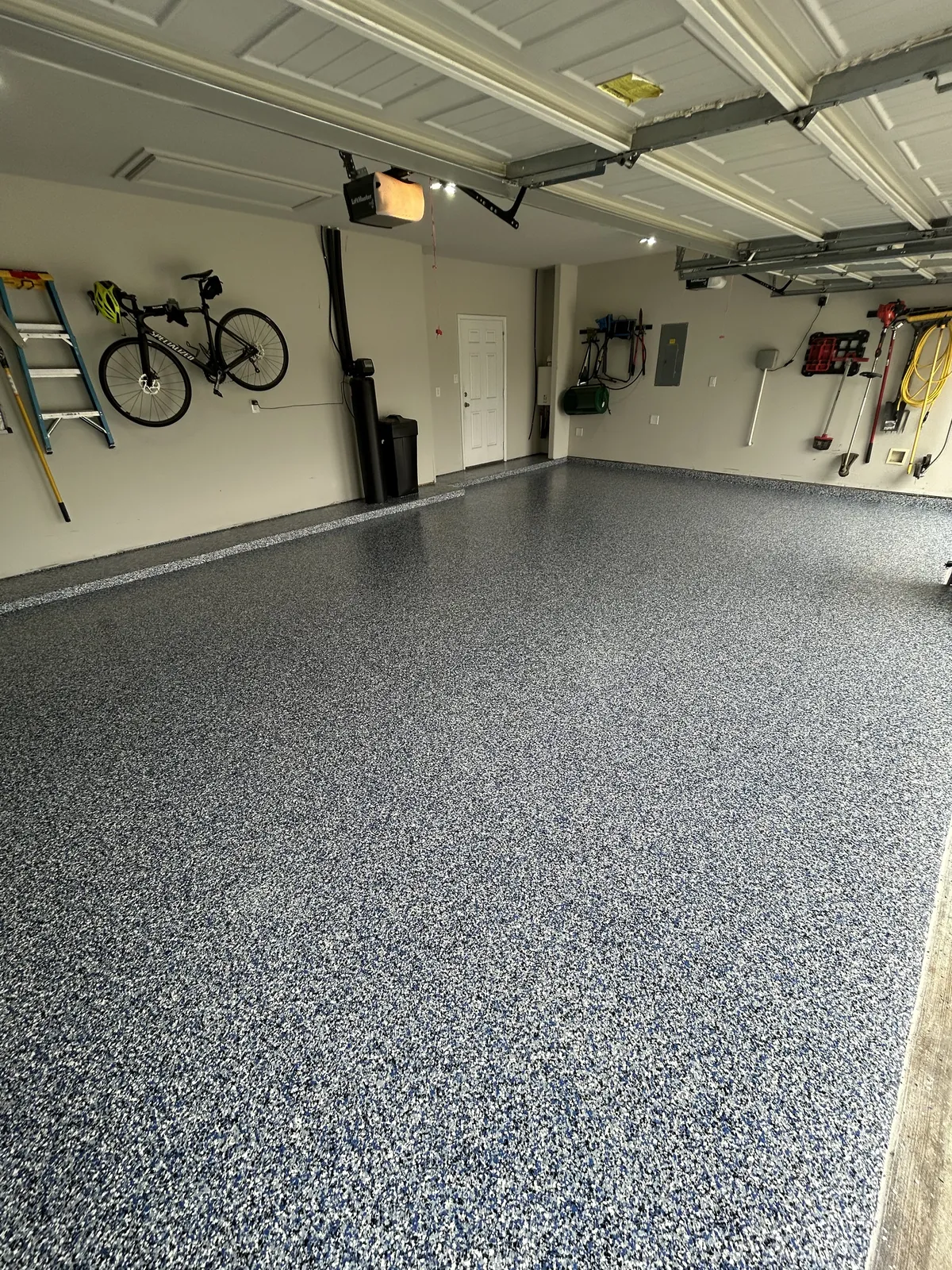
Plenty of slab houses have a step or two between the kitchen door and the garage floor, and it is one of the most used and least noticed bits of concrete on the property. The edge chips from boots, dropped grocery bags and the corner of a cooler, the tread wears smooth, and in humid weather the garage slab can sweat enough to make that step slick. It is also a spot where coatings often start to peel, because the riser and the nosing are awkward to prepare.
They get ground and repaired with the rest of the slab, and a chipped edge gets filled and rebuilt as part of the spall repair. A coating carried over the nosing leaves no thin edge for a heel to catch. Grit in the topcoat gives shoes something to grab, and a contrasting color along the edge makes the drop easier to see when you come out to the garage at night.
If the garage floor is being coated anyway, doing the steps at the same time avoids a line where new meets old. If only the steps are worn, they can be repaired on their own, though new color rarely matches an older coating exactly, so it is worth deciding up front whether a slight difference will bother you.
A carport that catches the whole storm
A carport is a garage floor with no walls, which gives it the sun of a patio and the rain of a driveway at the same time. Water blows in from the sides, leaves and pollen gather in the corners, and tires carry grit in off the road. Plain epoxy turns yellow and chalky out there, and any finish on a carport has to cope with a slab that stays damp for a while after each storm. Oil that would sit in one spot on a garage floor gets washed across a carport slab instead, leaving a stain that spreads a little with every rain.
For a lot of carports, a penetrating sealer is the better fit: it soaks in and keeps oil and water out without making the surface slippery. If you want color or a floor that hoses off easier, a UV-stable polyaspartic can work, with grit mixed into the topcoat. Either way we look at the cracks first. The clay under an uncovered edge swings between wet and dry more than the slab inside a house does, and a crack that is still moving will come right back through anything laid over it.
Floors that suit Stagecoach
Four we would put on the shortlist here, before we have seen your slab.
Matt and his guys did an amazing job today and yesterday. Communication was great, service was awesome, and finished product looks amazing!
Austin Colson, Google review
- Water-Based Concrete Staining
A worn traffic path on a stained interior floor can be blended back in with water-based stain, which gives more control over matching the old color.
- Concrete Floor Refinishing
When the sealer on a stained floor has worn thin, refinishing brings back its depth without touching the color underneath.
- Slip-Resistant Flooring
The step from the house into the garage can turn slick in humid weather, and a slip-resistant topcoat gives shoes a surer footing there.
- Concrete Surface Protection
A carport slab takes sun, blown rain and road grit, and a protective treatment keeps oil and water from soaking into the concrete.
More towns in Montgomery County
The Montgomery County page lists every town we cover there.
- Cut and ShootJust east of Conroe
- PinehurstNear Magnolia
- New CaneyUS 59, near Porter
- WoodbranchNext to New Caney
Your Stagecoach floor questions
Something else on your mind? Call or text (936) 445-0702, or use the contact page.
Can a stained floor be resealed without restaining it?
Often, yes. If the color is still in the concrete and only the sealer has worn, a cleaning grind or deep scrub and a fresh sealer or clear coat can bring it back. We check the worn paths first to see whether any stain has gone with the sealer. If it has, those spots get blended in before sealing.
Why does my stained floor look chalky near the patio door?
Usually the sealer has broken down from sun and traffic, so the stain underneath is drying out and catching dirt. Some older sealers also cloud or yellow in strong light. Taking the old sealer off and putting down a UV-stable product generally clears it up. If the stain itself has bleached, that patch can be blended back in before the new sealer goes on.
Can a coating cover the chipped edge on my garage step?
Not on its own. A coating follows the shape of whatever is under it, so a broken edge would keep chipping through. The edge gets filled and rebuilt first, then coated along with the step, with grit in the topcoat for grip.
Is it worth coating a carport?
It can be, with the right product. A carport takes sun and blown rain, so plain epoxy is the wrong choice out there. A UV-stable polyaspartic with grit holds its color and gives traction, and a penetrating sealer is a good plain option when you mainly want oil and water kept out.
Why do the cracks in my carport keep coming back?
The clay under the slab swells when it is wet and shrinks when it dries, and an uncovered edge sees the biggest swings. A crack that is still moving will open again through any filler or coating laid over it. We look at whether a crack has settled before treating it, and some cracks are better left as control lines than filled.
Let us look at the worn spots
Call or text (936) 445-0702 and tell us which floor is wearing first. We’ll look at the stain, the steps or the carport, test the slab and tell you whether it needs a refresh or a full redo.
- Call or text(936) 445-0702
- Emailprocoatepoxyflooring@gmail.com
- Based inConroe, Texas, working six counties
Want to see the work first? Browse the gallery, or find every way to reach us.