
Brookside Village porches and the garages behind them
Brookside Village is a small city on the north edge of Brazoria County. Like most homes in the county, the houses here sit on concrete slabs, and the porch, the patio and the garage each wear out in their own way.
An older porch in the afternoon sun
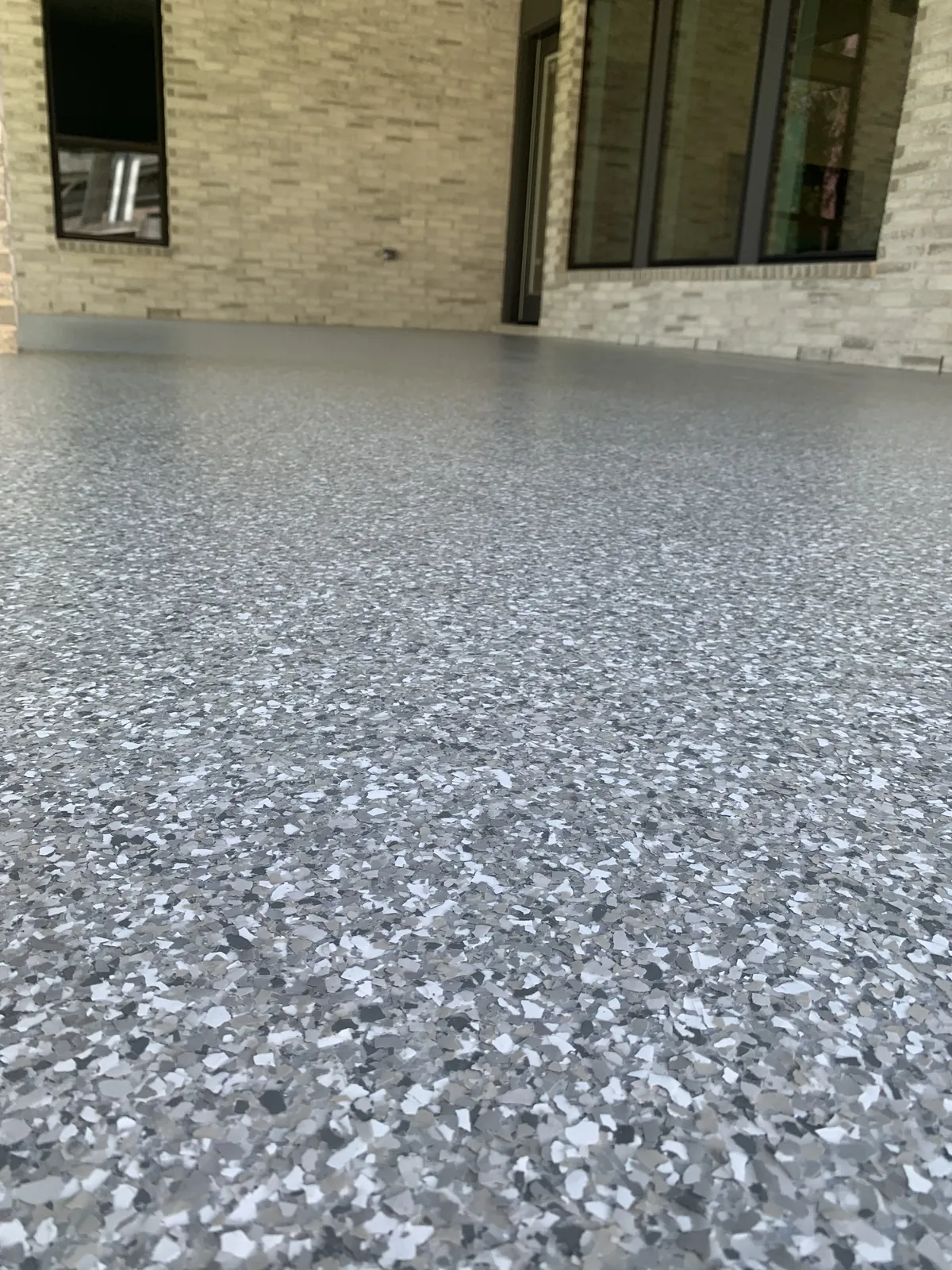
An older ranch-style house often has a porch running along the front, and that concrete has often been painted, repainted and painted again. Porch paint looks fine for a season or two, then the sun breaks it down, water gets under the edges, and it starts to flake in sheets. Each new coat sits on the one before it, so an old porch can carry several layers of paint letting go at different rates.
Every layer of it has to come off. We grind the old paint off down to clean concrete, fill the cracks and any chipped edges along the front, and take a moisture reading, since porch slabs sit right at ground level and often take rain blown in under the roof. Porch concrete also tends to have a smooth troweled finish, and a coating holds poorly on that until it is ground open. Then the finish has to handle sunlight. Plain epoxy yellows outdoors, so a porch gets a UV-stable topcoat, usually a polyaspartic, with fine grit where rain makes it slick.
The front edge and the steps need the most care. They take the hardest knocks and shed the most water, and a coating that stops short of the edge looks unfinished and wears through there first. A finish usually lasts longer when it wraps over the edge and down the face of each step, and the porch then reads as one surface instead of a patchwork.
Those edges decide how the job holds up.
What sits along the garage walls
Most garages fill up from the walls inward. Shelving, a deep freezer, a workbench, cabinets and a few years of boxes end up lined against every side, and the concrete under them rarely sees daylight. That is where a water heater drips, where a forgotten paint can rusts through, and where a damp cardboard box leaves a ring that never quite fades. Sometimes a crack is hiding under a shelf that nobody knew was there. Once the garage is cleared, the outer strip often looks nothing like the middle.
Old stains, glue from rubber mats and soaked-in oil along the walls have to come off, or the coating tends to peel at the edge first, which is the spot you see every time the door opens. We grind right up to the wall, fill the cracks that tend to run in from the corners, and take moisture readings near the walls as well as in the open floor, because a slab can read damp at the edge and dry in the center.
Clearing the garage is the part people dread, so it helps to plan it. We go over what has to come out and for how long at the assessment, and polyaspartic, which usually cures much faster than epoxy, can shorten the time the shelves sit out in the driveway. Where cabinets are fixed to the wall, the coating can run up to them and stop at a clean line.
Back patios on a moving slab
A back patio is often poured after the house, thinner and with less steel in it, and the clay under the yard moves it more than it moves the foundation. In a wet season the ground swells and lifts one corner; in a dry spell it shrinks and the slab settles back, a little lower than before. Over enough years that leaves cracks across the patio and a gap or a step where it meets the house.
A coating will not stop a slab from moving, so we start by judging how active the cracks are. Settled, stable cracks get opened up and filled, low spots that hold water get leveled, and then the patio can take a UV-stable coating or a penetrating sealer. Where the cracks are still opening every summer, a sealer that keeps water out of them is often the smarter choice, since a coating would only crack along the same lines. Whichever it ends up being, a moisture reading comes first, because a patio slab sits right on wet ground.
Floors that suit Brookside Village
Four we would put on the shortlist here, before we have seen your slab.
I have a long concrete porch that runs along my workshop. The old surface coating on it was an eyesore. The new flake epoxy flooring that Matt and his team applied looks awesome. It is obvious that they know their products and how to apply it properly.
Chris, Google review
- Porch Coatings
A front porch with years of flaking paint does better once it is ground bare and finished with a UV-stable topcoat that takes sun and blown-in rain.
- Polyaspartic Garage Floors
Garages that have to be emptied to the walls get back in use sooner on polyaspartic, which usually cures much faster than epoxy.
- Concrete Moisture Testing
Slabs can read damp along the walls and dry in the middle, so readings in more than one spot come before any primer is picked.
- Patio Sealing
Back patios with cracks the clay is still working are often better off sealed, which keeps water out of the cracks without a coating to split.
More towns in Brazoria County
The Brazoria County page lists every town we cover there.
- Surfside BeachOn the Gulf
- LiverpoolSmall town, mid-county
- AlvinNorth Brazoria County
- AngletonCounty seat
Asking about floors in Brookside Village
Something else on your mind? Call or text (936) 445-0702, or use the contact page.
Can you coat over old porch paint?
Not if the new finish is going to last. Porch paint that is already flaking will keep letting go, and anything put on top goes with it. We grind it off down to bare concrete first, then repair and test the slab before the new finish goes down. If the paint is coming off in sheets already, most of it lifts quickly under the grinder.
Which finish holds up on a porch that gets afternoon sun?
A UV-stable topcoat, usually polyaspartic, because plain epoxy yellows and chalks in sunlight. On a porch where rain blows in, we add fine grit so it is not slick when wet. Darker colors also run hotter underfoot in summer, which is worth thinking about if people walk it barefoot.
Do I have to empty the whole garage?
For a full coating, yes: everything on the floor comes out, including the shelving along the walls, since the edges need the same prep as the middle. Fixed cabinets can usually stay with the coating run up to them. We go over what moves and for how long at the assessment so you can plan for it. Most people stage things in the driveway or a spare room for the duration.
Why is my patio pulling away from the house?
Usually because the clay under it moves more than the soil under the foundation does. The patio rises and settles with wet and dry spells, and over time it tilts or drops at the house. A coating will not fix that movement, so we look at the slope and the gap first and tell you plainly whether coating, sealing or leveling makes sense.
Will water heater drips damage a coated garage floor?
A coated floor keeps a slow drip on the surface instead of letting it soak into the concrete, so it is easier to spot and clean up. Standing water left for weeks can still lift the edge of any coating, though, so a drain pan under the heater is a good idea. Bare concrete around an old leak may need extra prep before we coat.
Start the visit on the front porch
Call or text (936) 445-0702 and tell us about the porch, the garage and anything stored along its walls. We’ll come out to Brookside Village, test each slab and tell you which finish suits it.
- Call or text(936) 445-0702
- Emailprocoatepoxyflooring@gmail.com
- Based inConroe, Texas, working six counties
Want to see the work first? Browse the gallery, or find every way to reach us.