
Dayton’s newer garages and the busy floors along US 90
Dayton sits on US 90 and keeps growing, with new streets of homes going in around the older town. That makes for two very different floors: fresh garage slabs that have never carried a car, and entry floors at businesses where the front door barely stays shut.
A new garage at the edge of the woods
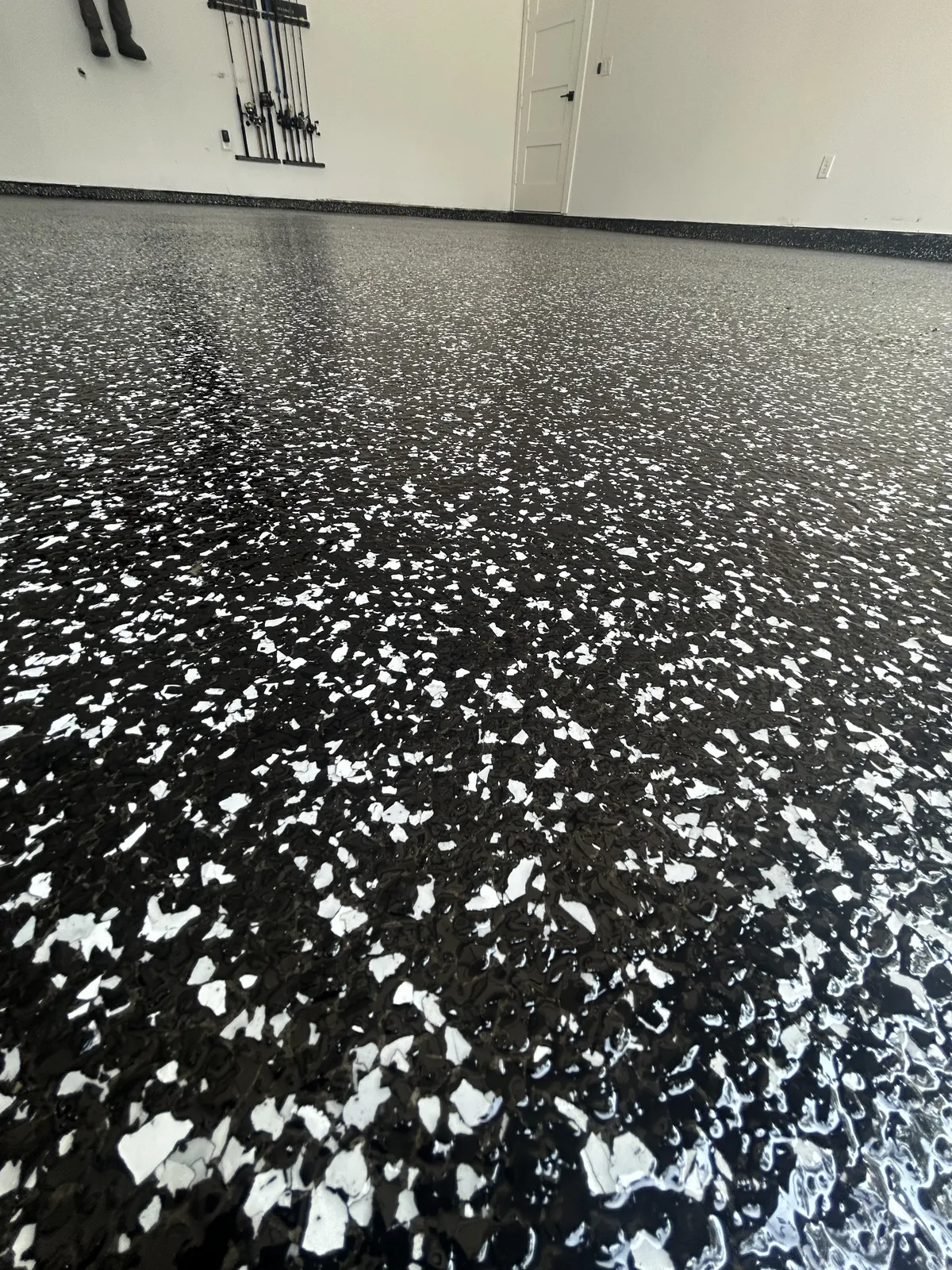
A garage in a new subdivision starts life clean, but the street around it often is not. Lots next door are still being cleared and built, yards are bare dirt until the grass takes, and every trip in and out tracks sand, clay and sawdust across the slab. Wet clay dries into a film that a broom just pushes around. Where the pines are close, there is pollen and sap on top of that. Bare concrete soaks up stains from all of it before anyone has decided on a floor.
Builder slabs are usually troweled smooth and tight, which looks nice and gives a coating almost nothing to hold. We diamond grind them open first. New concrete also gives off moisture as it dries, so a recent pour gets a moisture reading before we pick a primer, and sometimes the right advice is to give it more time. Hairline cracks that have already shown up get filled and ground flat before the primer goes down. Saw-cut joints are there to control cracking, and a good coating plan either fills them or leaves them open on purpose instead of bridging them and hoping.
For a garage like this, a full flake broadcast does a lot of quiet work. The chips hide the grit and the odd pine needle between sweeps, and they give the surface some texture for wet shoes and rainy evenings. A polyaspartic topcoat holds its color where the afternoon sun comes under the door. If a truck that drips will park there, a chemical-resistant topcoat and a lighter blend make sense, since drips are easier to spot and clean.
Uncoated concrete there also sheds a fine dust that settles on shelves and display cases.
Front doors that see the whole day’s traffic
A business on a highway like US 90 gets traffic all day, and nearly all of it comes through one door. Every pair of shoes brings in grit from the parking lot, and grit is what wears a floor. In time, a bare or thinly coated entry shows a dull path from the door to the counter, darker at the threshold where rain blows in.
Entries like that usually want a quartz or flake broadcast locked in a tough topcoat. The broadcast hides tracked-in dirt between moppings and gives shoes something to grip when the first few feet of floor are wet. Anti-slip grit in the topcoat adds more where a storm can push water past the mat. A smooth high-gloss floor at a busy door looks good on day one and turns slick the first rainy afternoon.
We also look hard at the threshold. Concrete right at a door is often cracked or chipped from carts and hand trucks bumping over it, and a low spot there holds a puddle every time it rains. Patching the spalls and leveling that dip during prep matters more than any topcoat, because a coating laid over a puddle line just gives the puddle a shinier home. Even the strip under the floor mat needs the full build, since grit works under mats too.
Porch slabs that catch blowing rain
A covered front porch on a new house looks protected, but rain blows in sideways in a summer storm and the outer edge of the slab stays wet longest. Low afternoon sun reaches under the roof too. A plain epoxy out there yellows and chalks, and a glossy finish turns slippery the moment rain hits it. Mud from the yard ends up there too, carried in on boots and paws.
Porches do better with a UV-stable coating carrying fine grit, or with a penetrating sealer when the owner wants the concrete to keep its plain look. Either way, the edge where water drips off the roof gets checked for cracks first, and the steps get the same texture as the landing so nobody finds the slick one in the dark. Porch furniture and planters leave rings, so pads under them help once the floor is down. Doing the porch and the front walk together keeps the two from looking mismatched.
Floors that suit Dayton
Four we would put on the shortlist here, before we have seen your slab.
Very professional team. Amazing quality of workmanship. Would definitely work with ProCoat again!
James Howard, Google review
- Garage Floor Flake Systems
A full flake broadcast hides the sand and clay a new neighborhood tracks in, and it adds texture underfoot when the garage floor is wet.
- Quartz Epoxy Flooring
Busy entries along the highway take a beating from grit, and quartz locked in resin wears slowly and keeps its grip when rain gets past the mat.
- Slip-Resistant Flooring
Thresholds where storms push water inside need grit in the topcoat, so the first few feet of floor give shoes something to grip on wet afternoons.
- Porch Coatings
New covered porches still catch sideways rain and low sun, so they get a UV-stable coating with fine grit or a penetrating sealer.
More towns in Liberty County
The Liberty County page lists every town we cover there.
Floors in Dayton, asked plainly
Not answered here? Ask us on the contact page or call or text (936) 445-0702.
Should I coat the garage before we move in or after?
Before, if the timing allows. An empty garage is the easiest floor to work on, and the slab has not soaked up oil or paint yet. The one catch is age: a very new slab may still be drying, so we test the moisture first and tell you if it needs more time. Once the garage fills up, the job gets harder for everyone.
Will sand and clay from the yard scratch a flake floor?
Grit underfoot wears any floor over time, but a flake broadcast under a hard topcoat hides light scratches well and takes a long while to show a path. Sweeping often matters more than anything else. A mat by the garage door catches most of it before it spreads. Once the yard grows in, there is less of it to track.
What floor works at a busy shop entrance off the highway?
Usually a quartz or flake broadcast with a tough topcoat, plus anti-slip grit right at the door. It hides tracked-in dirt and keeps its grip when the floor gets wet. High gloss is the one we steer people away from at an entry. A darker blend hides the most dirt, and a lighter one makes a store feel brighter. We look at how water reaches the door before choosing the texture.
Can the entry be coated without closing the store?
Often, yes. The entry can be done half its width at a time, or after hours, so customers always have a way in. Each half needs time to cure before people walk on it, and that time depends on the product and the weather. We work out the order with you before anything starts.
Do porch steps need a different finish than the porch?
They need the same texture, at least. Steps are where people slip, especially going down in the rain with their hands full. We carry the grit over the edges and down each tread, and check the nosings for chips before coating. A step that has cracked away at the corner gets repaired first.
Point us to the new slab or the busy door
Call or text (936) 445-0702 with the address in Dayton and what the floor carries. We will come out, test the slab and lay out the prep and the finish that fit it.
- Call or text(936) 445-0702
- Emailprocoatepoxyflooring@gmail.com
- Based inConroe, Texas, working six counties
Want to see the work first? Browse the gallery, or find every way to reach us.