
Hempstead’s older downtown slabs and US 290 shop floors
Hempstead is the Waller County seat, on US 290, in a county of farm and ranch land where metal buildings on slab are common. A county seat’s floors can run from old concrete buried under tile and paint to bare shop slabs that carry loaded pallets all day.
Old commercial floors under many layers
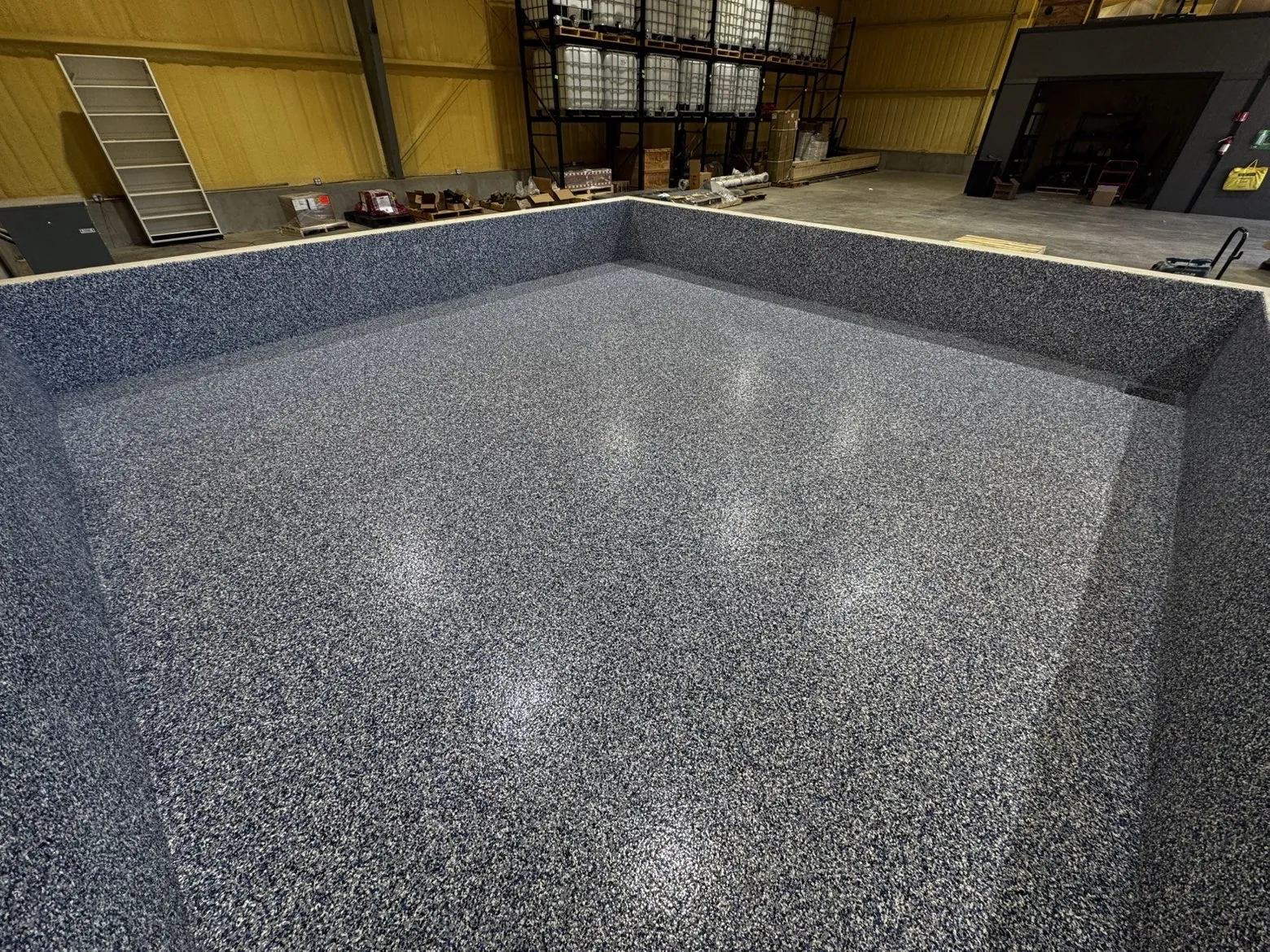
Older buildings near the middle of a county seat tend to have had several lives. A floor that started as bare concrete may have been tiled, then carpeted, then covered in sheet vinyl, and every change left some glue behind. When it all comes up, what is left is rarely one clean slab. It is a patchwork of mastic, old paint, a filled trench where the plumbing moved and maybe a strip of newer concrete where a wall used to stand.
None of that can stay under a coating. We take the old layers all the way down to open concrete, by grinding on most floors, and then look hard at the lines where old and new pours meet. Those seams tend to move a little differently from the slab around them, so they usually get repaired and left to work as joints instead of being coated over and forgotten. Spalled spots along old wall lines get filled, and low areas get leveled so the finished floor sits flat.
What goes down after that depends on what the room is now. A shop selling antiques or clothing may want the concrete itself, ground and polished or stained so the old patches read as character. An office or a lunch counter usually wants a coating that wipes clean. Old slabs are also more likely to have hairline cracks that only show up once the glue is gone, and we look for those before deciding. The moisture reading still comes first, because an old building with no vapor barrier under the slab can push more water up than anyone expects.
The front counter area takes mud and gravel tracked in from outside.
Floors that carry pallets and feed sacks
A sales or storage floor stacked with feed and fertilizer takes a beating that looks nothing like a garage. Pallet jacks roll loaded pallets of feed down the same path all day, sacks get dragged and split, and bags of fertilizer and salt blocks sit right on the concrete. Spilled feed holds moisture against the slab, and fertilizer salts can slowly eat at bare concrete.
For a room like that we lean toward a thick, hard-wearing system over a ground slab, or toward polished and densified concrete where the owner would rather have nothing on the floor that can chip. Loaded wheels are hard on thin coatings, especially where a wheel catches a raised edge. A heavier build with a tough topcoat holds up better in the aisles, and a densified slab sweeps clean without the dust that bare concrete keeps shedding onto the shelves.
The loading door is a problem of its own. Rain blows in, trucks back up close, and the slab at the threshold often cracks or sinks before the rest of the floor does. We look at that edge closely, fill the cracks and bring the low spot up, and on a floor that gets wet at the door we put grit in the topcoat there so someone carrying a heavy sack has something to grip. Once the edge is sound, the rest of the floor tends to wear evenly.
Highway shops seen through the glass
A building on a highway gets judged from the parking lot. A small showroom with equipment parked on the sales floor wants a floor that looks clean through the front windows and still takes tires, jack stands and the odd fuel drip. A flake or high-gloss finish over a ground slab can do both, and a lighter color makes a sales floor look brighter under shop lights. Just inside the front door is where tracked-in grit wears a floor fastest, and a good mat there keeps the topcoat looking new longer.
Sun is the catch. A showroom with big west-facing windows bakes all afternoon, and plain epoxy can yellow in the patch of floor the light lands on. A UV-stable topcoat, often a polyaspartic, holds its color better there. The working bays behind the sales floor usually get a heavier, chemical-resistant build instead, so one building can end up with two floors that meet at the shop door.
Floors that suit Hempstead
Four we would put on the shortlist here, before we have seen your slab.
I have a long concrete porch that runs along my workshop. The old surface coating on it was an eyesore. The new flake epoxy flooring that Matt and his team applied looks awesome. It is obvious that they know their products and how to apply it properly.
Chris, Google review
- Existing Coating Removal
Older downtown floors carry tile, mastic and paint from past owners, and all of it has to come off before any new finish can bond.
- Retail Store Flooring
A shop in an old building can show off its ground and polished slab, or wear a coating that wipes clean, depending on what the store sells.
- Heavy-Duty Protective Flooring
Aisles stacked with feed and fertilizer see loaded pallet jacks every day, so they need a thick build that resists wheel wear and fertilizer spills.
- Showroom Flooring
Highway showrooms need a floor that looks bright through the glass, with a UV-stable topcoat where afternoon sun hits it.
More towns in Waller County
The Waller County page lists every town we cover there.
- PattisonRural, acreage
- WallerUS 290
- Prairie ViewHome of Prairie View A&M
- BrookshireI-10
Floors in Hempstead, asked plainly
Ask us directly: call or text (936) 445-0702 or write through the contact page.
Can an old downtown floor be polished instead of coated?
Sometimes. Once the old tile, glue and paint are ground off, we can see how sound the concrete is and how many patches it carries. A slab in good shape can be polished or stained so its history shows. A floor with a lot of repairs usually looks better under a coating, and we will tell you which kind yours is.
Will pallet jacks wear through a coated floor?
A thin coating will wear in the aisles where loaded wheels roll all day. A thicker system over a ground slab holds up much better, and wheels kept clean and in good repair help too. Polished and densified concrete is the other route, since there is no coating on it to wear through. We ask what gets moved across the floor so the system matches the load.
What can be done about a loading door that lets rain in?
That edge usually needs the most repair on the floor. We fill the cracks, bring up the dip where water sits and add grit to the topcoat so it grips when wet. If water runs in under the door every storm, it is worth fixing the threshold too, because standing water keeps any floor dirty and slick.
Can a store stay open while part of the floor is done?
Often, if the floor can be split into sections. We work out the order with you so customers still have a way in, and the section being coated stays closed off until it can take traffic. Grinding is loud and makes some dust, so that part usually goes outside open hours. Faster-curing products can shorten how long each section stays closed.
Why does a showroom floor yellow near the windows?
Plain epoxy tends to amber when sunlight hits it day after day, and it shows first on the stretch of floor by the glass. A UV-stable topcoat, such as polyaspartic, holds its color much better. If the floor has already yellowed, the old coating usually has to be ground off before a new system goes down.
Walk us through the old building
Call or text (936) 445-0702 with what the building is used for and what is on the floor today. We will come out to Hempstead, test the slab and tell you what it needs before anyone picks a color.
- Call or text(936) 445-0702
- Emailprocoatepoxyflooring@gmail.com
- Based inConroe, Texas, working six counties
Want to see the work first? Browse the gallery, or find every way to reach us.