
Pattison concrete from the porch rail to the pump house
Floors in Pattison, a small rural city in Waller County, mostly belong to houses set well back on acreage. The concrete on a place like that is rarely one slab, and the smaller pieces, like a porch around the house or the pad under a pump house, tend to get the least attention until they crack or turn green.
A porch that wraps around the house
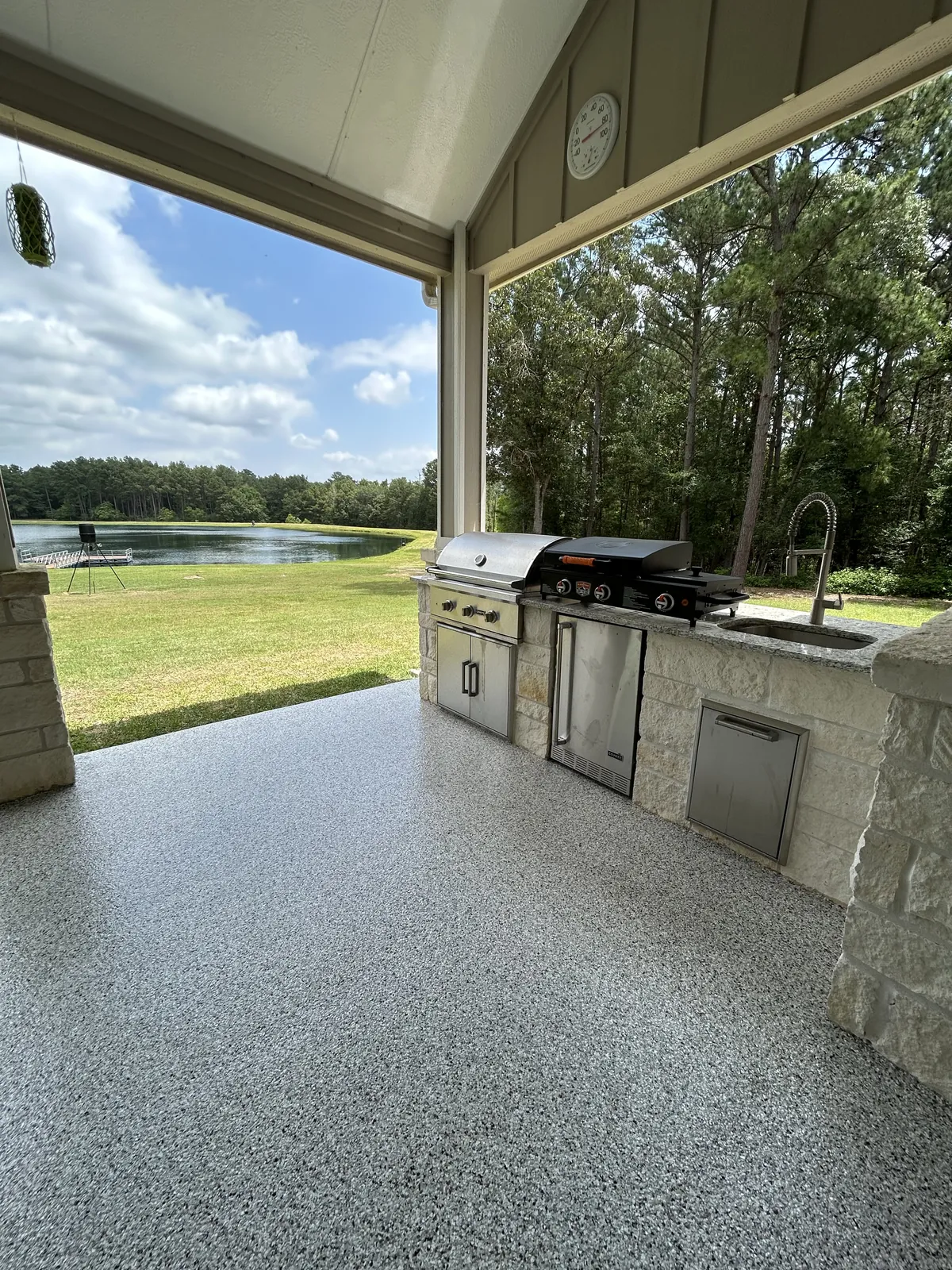
A porch that runs around two or three sides of a house is really several porches. The west side bakes every afternoon and fades whatever is on it, the north side stays shaded and damp long after a storm, and the corner under a roof valley takes a splash of runoff every time it rains. The steps down to the yard count too, since their front edges take every boot on the way in. One finish has to handle all of it, so we read each side on its own before picking a system.
Sun is the easy part to plan for. Plain epoxy yellows and chalks outside, so a porch gets a UV-stable topcoat such as polyaspartic, usually with fine texture so it does not turn slick when rain blows under the roof. A lighter color also stays cooler underfoot on the sunny side. The shaded side is harder. Concrete that stays damp grows mildew, and a coating laid over a slab still wet underneath can blister, so that side gets its own moisture reading.
Older porches often carry paint, sometimes several coats of it, and a coating laid over old paint lets go wherever the paint already has. We grind it off to bare concrete, working by hand around the posts and along the edge where the porch drops to the yard. Chipped corners and spalled edges get repaired, and the slab’s fall away from the house stays as it is, since that slope keeps water off the siding.
These pads are small, and many were poured thin and have cracked since.
The pad under the pump house
On a property that runs on well water, the pump and pressure tank often sit in a small shed on a pad of their own. Cold water lines sweat in humid weather and drip onto that pad, and in a closed room with little airflow the floor stays dark and damp. If a water softener shares the space, spilled salt and brine left sitting can eat at the surface over time.
A penetrating sealer that keeps water and salt out of the pores, with the cracks filled first, is often the better fit for a floor that is wet more often than dry. Where the room doubles as storage, a coating with grit in the topcoat gives a wet floor some grip, as long as the moisture reading says the slab can hold one.
It is a short look to add on when we are already out for the porch or the shop. A small pad takes little time to prep, and stopping the drip at its source, with insulation wrapped on the cold lines, does more for that floor than any finish.
Potting benches and a wet shed floor
A garden shed or a small greenhouse gets watered right along with the plants. Hoses drip, trays drain onto the floor, and potting soil gets tracked into the corners and turned to mud. Bags of soil and mulch stacked against the wall hold water against the floor for weeks. Bare concrete in a room like that grows a green film where the water sits, and a wheelbarrow tire skids on it once it is wet.
Grip and drainage matter more here than looks. A textured coating with a coarser broadcast suits the walkway between the benches, and a penetrating sealer can handle the strip under them where water drips all day and nobody walks. Before either one, we grind off the old film and check whether the floor pitches toward the door or holds puddles in the middle, since a low spot leveled now stops growing green later. A light color also shows where the water collects, which makes it easier to see when the floor needs a rinse.
Floors that suit Pattison
Four we would put on the shortlist here, before we have seen your slab.
Very professional team. Amazing quality of workmanship. Would definitely work with ProCoat again!
James Howard, Google review
- Porch Coatings
A porch that wraps the house takes full sun on one side and shade on another, so it needs a textured, UV-stable system picked with both in mind.
- Concrete Paint Removal
Older porch slabs often carry layers of paint that have to be ground off to bare concrete before anything new will stay bonded.
- Penetrating Concrete Sealers
The small, often wet pad under a pump house is usually better served by a penetrating sealer that keeps water and softener salt out of the pores.
- Anti-Slip Floor Coatings
A garden shed floor gets wet every day, and a coarser broadcast in the topcoat keeps boots and wheelbarrow tires from skidding along the walkway.
More towns in Waller County
The Waller County page lists every town we cover there.
- Prairie ViewHome of Prairie View A&M
- BrookshireI-10
- WallerUS 290
- HempsteadCounty seat, US 290
Pattison floor questions
Your question not here? (936) 445-0702 takes calls and texts, and the contact page has email.
Which side of a wraparound porch fails first?
Usually the side with the hardest afternoon sun, or the side that never dries. Sun breaks down a coating that was not made for it, and a slab that stays damp pushes moisture up under the finish. Corners under a roof valley wear early too, from runoff hitting the same spot. Knowing which side is which shapes the prep for the whole porch.
Do the porch posts have to come off for the work?
Usually not. The posts stay put, and the concrete around each base gets ground by hand so the coating meets the post cleanly. If a post base has rotted or rusted, get it repaired before the floor is coated, since the finish is harder to patch around afterward. We look at every base during the assessment.
Why does the floor in my pump house stay wet?
Usually it is the cold water lines sweating. Humid air hits the cool pipes and tank, water beads up, and it drips straight onto the pad. Wrapping the lines in pipe insulation often cuts it down a lot. If the floor is still wet while the pipes are dry, moisture may be coming up through the slab, and a moisture reading settles it.
Will potting soil stain a sealed shed floor?
Soil swept up the same day rarely leaves a mark, but wet soil left sitting, and the tannins that leach out of mulch and bark, can stain bare concrete. A sealer slows that down by keeping water out of the pores. A coating stops it outright, though a floor that is wet all day needs a slab dry enough underneath to hold one.
Could the old paint on my porch contain lead?
It can, if the paint is old enough. Paint put down before the late 1970s may contain lead, and grinding it turns that into dust. On an older house, have the paint tested before any removal, and if it comes back positive, the removal has to follow lead-safe work practices. A clean test means the grind goes ahead as usual.
Start the walk at the front steps
Call or text (936) 445-0702 and tell us which pieces of concrete on the property need work. We’ll come out to Pattison, test each slab and tell you which ones want a coating, which want a sealer and what the prep looks like.
- Call or text(936) 445-0702
- Emailprocoatepoxyflooring@gmail.com
- Based inConroe, Texas, working six counties
Want to see the work first? Browse the gallery, or find every way to reach us.