
A visit to the floor before anyone picks a system
The assessment is the first thing we do on every job, and it happens at the property, standing on the concrete. You end up with a recommendation for the floor, a quote for that system and the reasons behind both.

Who asks us out to look
Most visits start with a homeowner who wants the garage done and already has a color in mind. Plenty start with a shop owner whose floor is peeling at the bay door, or a property manager with a warehouse that has to stay open while the work happens. The visit runs the same way for every one of them, because the concrete does not care who owns it.
Some people call before they have decided anything at all. That is a good time to have us out. Picking between flake, quartz, polished concrete and a polyaspartic system gets a lot easier once you know what your slab will put up with and what it will fight.
Others call after a floor has already failed, sometimes one that another company put down a few years back. Those visits lean harder on finding the cause. A new coating laid over the same problem tends to fail the same way, usually in the same spots.
A home gym, a detailing bay and a dry storage room can sit on identical slabs and still need different floors.
What we check and what we ask
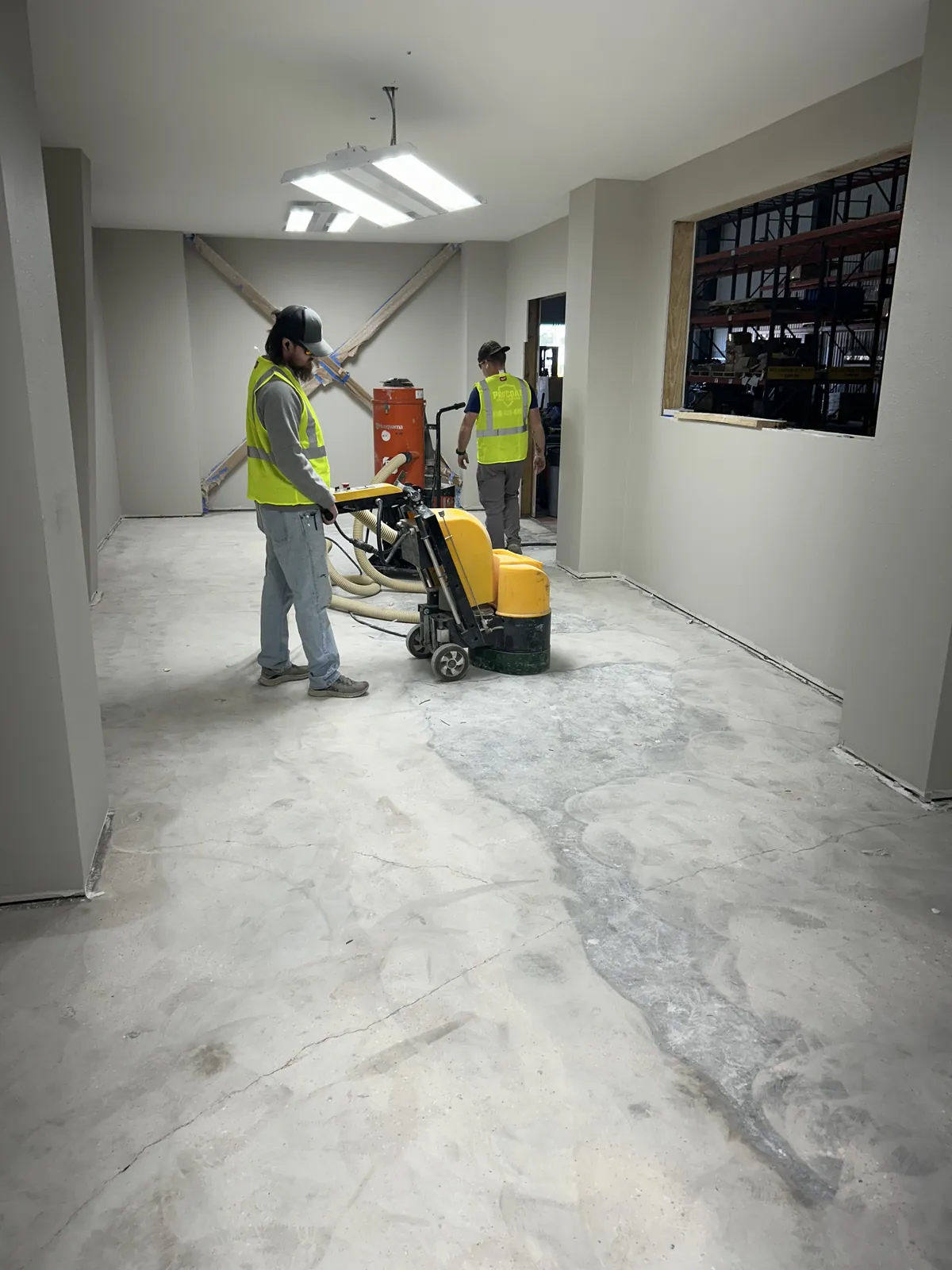
We start along the edges and in the low spots, since that is where water sits and where trouble shows first. Cracks get a closer look: a thin hairline from shrinkage is a different thing from a crack with one side higher than the other, and clay soil moving under a slab can keep a crack working. We look for spalled patches, oil soaked deep into the surface, old paint or epoxy, carpet glue and tile mastic, and how flat the floor sits from wall to wall. Then come the moisture readings, which decide the primer.
How the room gets used matters as much as the concrete. We ask what drives or rolls on it, what gets spilled, whether it gets hosed down, whether sun reaches it through an open door, and how long you can do without the space. We also want to know where the power is for the grinder and whether cars or equipment have to move out first.
What you have when we leave
You leave the visit with two things: our recommendation for the floor and a quote for that system. The recommendation comes with its reasons, so you know why we would put a moisture-mitigating primer under the coating, or why the cracks by the garage door need repair before anything else. Customers tell us they like having the process explained, so we talk through what we find as we go instead of saving it all for the end.
Sometimes the honest recommendation is a different floor than the one you called about, or the same floor with more prep than you expected. When that happens, you hear it at the visit, along with what we saw that changed the plan. The quote is for the floor we think will hold up in that room.
The basics of on-site floor assessments
- Looks like
- One of us at your property with a flashlight, a moisture meter and a lot of questions about how the room gets used.
- Holds up in
- Anyone weighing a new coating, a polish or a fix for an old floor, at a house or at a business.
- Wrong pick when
- If you only want to know which kinds of floor we put down, a phone call or the service list answers that faster than a visit.
- Prep it needs
- Clear enough of the floor that we can see the concrete, especially along the walls, around the drains and under anything that has sat in one spot for years.
- Compared with
- It leads straight into moisture testing, and from there to the grinding or shot blasting the chosen system needs.
Where on-site floor assessments fits, and where it doesn’t
A good fit
- You know you want a coated garage but have not picked a system.
- An old coating is peeling and you want to know why before anything new goes down.
- You bought a place with a painted or glued-down slab and have no idea what is on it.
- A business floor has to be planned around work hours and deliveries.
Where we steer people elsewhere
- If you just want to know which floors we put down, the service list answers that faster than a visit.
- A slab that has heaved or dropped from settlement may need a foundation contractor before anyone works on the surface.
- Wood, tile or carpet that you want to keep is a job for a flooring installer, since we work on concrete.
How the visit runs
Set a time
Call or text (936) 445-0702, or use the form with a few words about the floor. We find a time when someone can let us in and the floor is mostly clear.
Walk the edges
We look along the walls, at the drains and in the low spots first, since water and failures show up there. Then we work across the middle, noting cracks and anything sitting on the surface.
Read the moisture
We take moisture readings across the slab and decide whether the job needs a longer test. Those results set the primer and sometimes the whole system.
Talk through the room
We ask about traffic, spills, washdowns, sun and how long the space can be closed. Your answers carry as much weight as what we find in the concrete.
Recommend and quote
We tell you the system we would put down and why, then give you a quote for that system. If something on the floor changes the plan, you hear about it right there.
Part of Surface preparation
On-Site Floor Assessments is one of the services under surface preparation. The overview compares them all.
- Concrete Paint Removal
Getting peeling floor paint out of the surface and the pores of a garage slab so nothing is left for a coating to lift with.
- Flooring Adhesive Removal
Clearing carpet glue, thinset and vinyl or wood-floor adhesive left behind when the old flooring came up.
- Floor Leveling
Patching, skimming or self-leveling the low spots and lips a coating would otherwise copy straight onto the finished floor.
- Concrete Moisture Testing
Readings that tell us whether vapor is coming up through the slab, which decides the primer and sometimes the whole system.
Questions on on-site floor assessments
Ask us directly: call or text (936) 445-0702 or write through the contact page.
How long does the visit take?
It depends on the size of the floor and how much is on it. A two-car garage goes faster than a warehouse with layers of old coating. We take the time it needs, since the looking is what keeps the job from going wrong later.
Do I need to be there?
It helps a lot. We want to ask how you use the room, and we would rather walk you through what we find than leave a note. For a business, anyone who knows how the floor gets used day to day works just as well.
What should I do before you come?
Move what you can off the floor, especially along the walls and around any drains. Do not scrub or patch anything first, since stains, cracks and old coatings tell us a lot. If a car normally sits there, pull it out for the visit.
Will you tell me if I don’t need a coating?
Yes. Some slabs are better polished or sealed, and some coated floors only need a fresh topcoat over a layer that is still bonded tight. We recommend the floor we think fits and quote that one.
Can you look at a floor in a building we’re about to lease?
Yes. Knowing what is on the slab, how much moisture it carries and what repairs it needs is useful before you sign anything. We tell you what it would take to get the floor you want in there.
What do you look for on a garage floor in particular?
Hot tire marks, oil soaked into the concrete, cracks and saw cuts, and the slope toward the door. We also look at the joint where the garage slab meets the driveway, since water likes to get in there.
Have us walk your floor
Tell us where the floor is and what you want from it. We’ll come out, look it over and test it, then give you our recommendation and a quote for the system.
- Call or text(936) 445-0702
- Emailprocoatepoxyflooring@gmail.com
- Based inConroe, Texas, working six counties
Want to see the work first? Browse the gallery, or find every way to reach us.