
Clute’s floors once the carpet comes up
Humidity off the Gulf never quite leaves the house slabs in Clute, the small city beside Freeport and Lake Jackson. A lot of the floors we get asked about start indoors: carpet or tile pulled up, glue left on bare concrete, and a question about what can go down next.
Bare concrete under the old carpet
Pull up carpet in a slab-on-grade house and you find the slab itself, tack strip holes around the edges, and patches of pad glue or old mastic. Tile comes up with thinset stuck to the concrete in ridges. A grinder handles all of that easily, but a coating or a stain can’t, because both need clean, open concrete to work. Glue left behind is why stains come out blotchy and why coatings lift in squares that match the old tile.
So the first job indoors is removal. We grind the adhesive and thinset off with a vacuum running beside the grinder to keep dust down in a house people live in, then look at what the bare concrete shows us. Some slabs come out with patches, saw cuts and old plumbing repairs that change which finish makes sense. A patched slab can look good under a solid coating and odd under a clear polish or a see-through stain, so we decide after the floor is clean, never before.
Humidity reaches the inside of the house too. A home this close to the coast sits on soil that tends to stay damp, and a slab under carpet has been breathing up through the pad for years without anyone noticing. Seal it under a coating and that vapor has nowhere to go, so we take moisture readings as soon as the floor is bare, before anyone talks about color. If the reading comes back high, a moisture-mitigating primer goes down first, or we point you toward a finish that breathes, like a stain under a penetrating sealer.
A satin finish hides scuffs from shoes and dog nails better than a high shine, so busy households often stop there.
Finishes for the rooms you live in
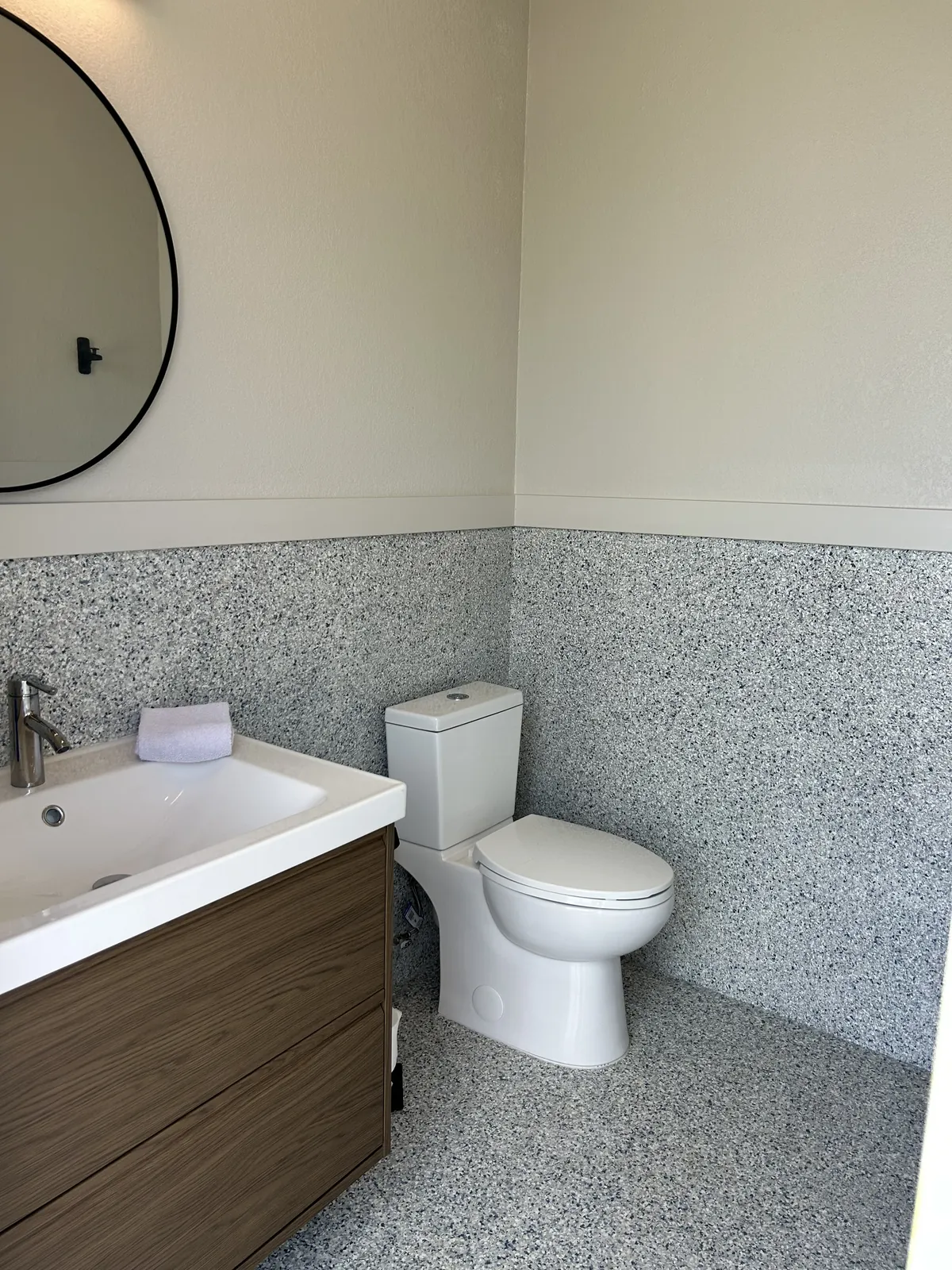
Polished concrete suits a clean slab without many patches. We grind through finer and finer diamonds, add a densifier and stop at the sheen you want, from a soft matte up to a bright shine. There is no coating on top to peel, which counts for a lot in a damp climate, and the floor cleans with a mop and plain water.
Stained concrete adds color without a film on top. Acid stain reacts with the minerals in the slab and comes out mottled, while water-based stain gives steadier color with more control, and either one can soften the marks a polish would put on show. A sealer goes over the stain, and in a humid house we lean toward one that lets the slab breathe.
A coating makes sense when the slab is too patched for a clear finish, or when the room needs something tougher, like a laundry room or a back entry that takes muddy boots and wet dogs. Solid colors, flake and quartz all work indoors, and a matte topcoat keeps a living space from looking like a showroom. Rugs and felt pads under chair legs still help on any of these floors, because grit dragged across a room will dull every finish eventually.
The garage, and the gym inside it
Out in the garage, the usual Gulf Coast trouble shows up: hot tires and road salt on top, and cracks from clay soil that swells and shrinks underneath. Before any of it goes down, we fill the cracks so they don’t print back through the finish. A flake or polyaspartic system over a ground slab handles both problems. Polyaspartic usually cures much faster than epoxy, which means less time with the car parked in the driveway, and it holds its color where the afternoon sun comes through an open door.
A garage that doubles as a gym needs a bit more thought. Dropped plates and sliding machines find the weak spots in any coating, so we pair a tough system with rubber mats where people lift. Sweat and spilled water on a glossy floor get slick fast, and grit in the topcoat keeps feet planted through a workout. Leave room in the plan for where the car still parks, since hot tires and a squat rack want different things from the same slab.
Floors that suit Clute
Four we would put on the shortlist here, before we have seen your slab.
I have a long concrete porch that runs along my workshop. The old surface coating on it was an eyesore. The new flake epoxy flooring that Matt and his team applied looks awesome. It is obvious that they know their products and how to apply it properly.
Chris, Google review
- Flooring Adhesive Removal
Slabs that come out from under carpet or tile carry glue and mastic that must be ground off before a stain, polish or coating will take.
- Interior Concrete Flooring
Living rooms and hallways on a clean slab can become the finished floor, polished or stained, with nothing on top to peel in the humidity.
- Polyaspartic Garage Floors
Garages that need to be back in use quickly suit polyaspartic, which cures much faster than epoxy and holds its color in sunlight.
- Home Gym Flooring
Garage gyms take dropped weights and sweat, so a tough coating with grit and mats under the lifting area protects both the slab and the people on it.
More towns in Brazoria County
The Brazoria County page lists every town we cover there.
- Lake JacksonBrazosport area
- FreeportGulf port
- BrazoriaWest side, near the rivers
- West ColumbiaWest side, Brazos
Before your Clute floor visit
Ask us directly: call or text (936) 445-0702 or write through the contact page.
Can you get carpet glue and tile mastic off a slab?
Yes. We grind it off with diamond tooling and pull the dust into a vacuum as we go. Some old black mastic in older houses can contain asbestos, so if a floor looks like it might, we’ll say so and recommend testing before anyone grinds it. Once the slab is clean, we can see which finish it can carry.
Is polished concrete too hard or cold for a house?
It’s hard, the same as tile, and it feels cool underfoot, which plenty of people welcome on the Gulf Coast for most of the year. Rugs soften the spots where you stand a lot, like in front of the kitchen sink. If the slab turns out too patched for a clean polish, a stain or a coating may look better.
Will a stained floor show where the old tile was?
It can. Stain soaks in differently where glue or thinset sat, so faint lines from old tile joints or carpet seams sometimes show through. Thorough grinding cuts that down a lot, and we tell you at the assessment what we expect to see. Where the marks are too strong, a solid coating hides them.
How do you tell if a slab under carpet is damp?
Carpet hides it well. Vapor passes through carpet and pad without much sign, then gets trapped once a coating seals the top. We take readings in several spots after the floor is bare and match the primer, or a breathable finish, to what we find. A bedroom slab along an outside wall can read quite differently from the hallway, which is why one reading is never enough.
Can the garage and the house be done in one job?
Usually, if the schedule allows. The garage might get a flake or polyaspartic system while the inside gets polished or stained, and we work one area at a time so you keep a way in and out of the house. We’ll lay out the order at the assessment.
Book a look at a Clute slab
Call or text (936) 445-0702 and tell us which rooms you want done and what covers them now. We’ll come to Clute, test the concrete and tell you what each room’s slab is ready for.
- Call or text(936) 445-0702
- Emailprocoatepoxyflooring@gmail.com
- Based inConroe, Texas, working six counties
Want to see the work first? Browse the gallery, or find every way to reach us.