
Older Meadows Place homes and the slabs under them
Meadows Place is a small, older suburban city off US 59 near Sugar Land, and most of its houses sit on slabs that have been lived on for a long time. By now many of those floors carry somebody’s old paint, glue or patch work, and that history has to come off before anything new goes down.
Garage paint that never really stuck
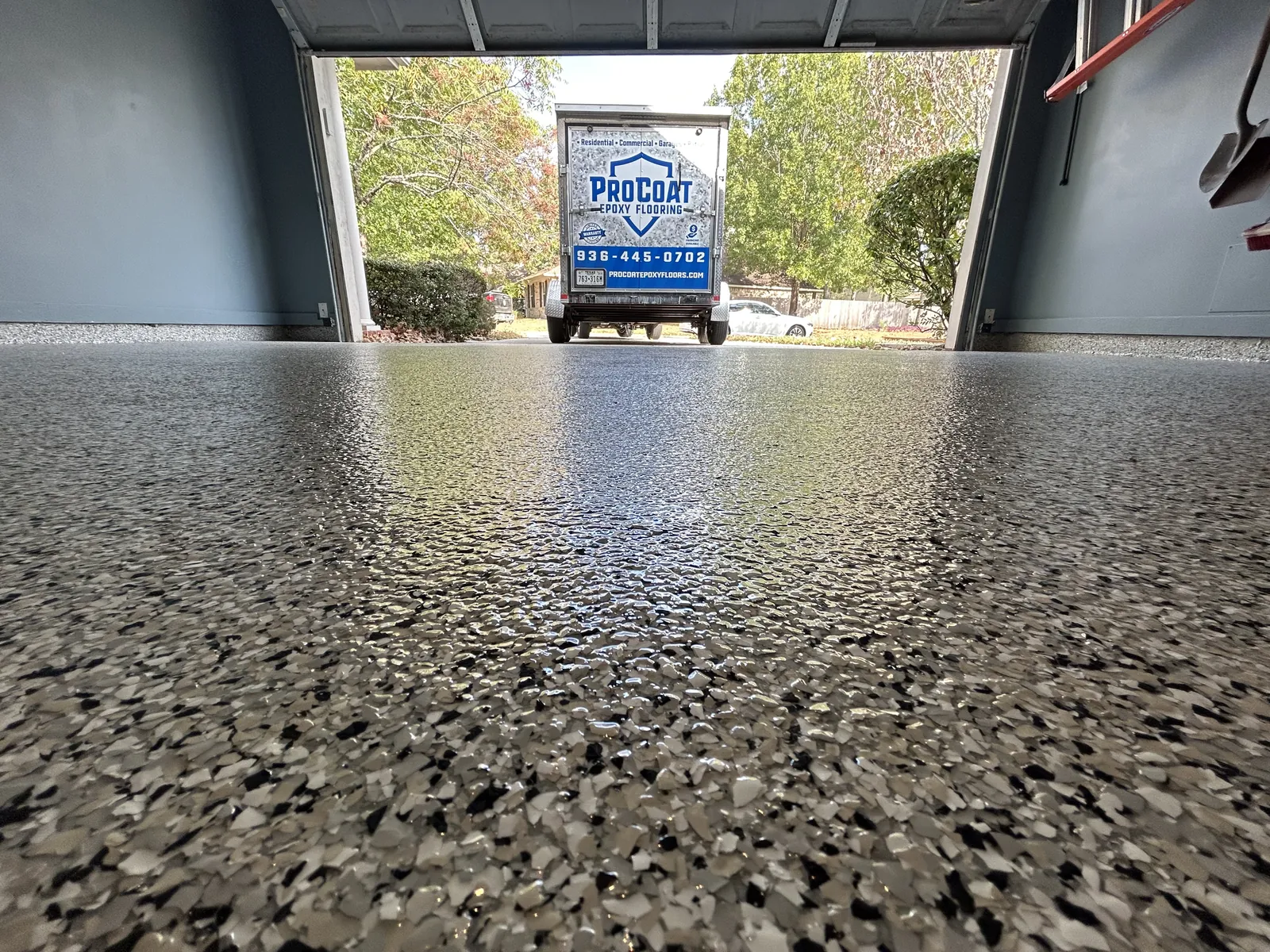
Plenty of older garages got a coat of floor paint or a store-bought epoxy kit at some point. It looked good for a while. Then hot tires started lifting it, the edges began to curl, and now the floor is a map of bare patches and stubborn spots that will not scrape off. That half-stuck layer is the first problem we deal with, because nothing we put down can bond better than whatever it sits on.
So the old paint comes off, all of it, including the patches that seem fine. We grind it away with diamond tooling until the concrete underneath is bare and open, and we work the edges along the walls and around the water heater with smaller grinders. Leaving the good-looking spots in place sounds thrifty, and it is how a new floor ends up peeling in the same outline as the old one. Paint can also hide in the pores below the surface, so we keep grinding until the color is gone.
Grinding also shows us what the paint was covering. Older garage slabs tend to have a few cracks from the clay moving under them, pitted spots where years of oil drips and wet tires sat, and sometimes a low corner where water collects after a storm. Those get repaired and leveled before the primer, since a coating follows the shape of the floor and will keep the puddle right where it was.
Some old black mastics can contain asbestos, so on houses of that age we recommend having it tested before anyone grinds.
Rooms where the carpet came up
A lot of owners pull up old carpet or tile and find bare concrete underneath, covered in glue lines, tack strip holes and patches of thinset. Some want a finished concrete floor there for good, polished or stained or coated, and older houses have plenty of rooms where that works. The adhesive is the catch. Carpet glue and tile mastic stay soft enough to gum up a grinder and keep a coating from ever touching the concrete. Thinset ridges left from old tile are hard and sharp, and they have to come down too.
We take the adhesive off mechanically, scraping the thick layers first and then grinding with tooling made for gummy material, which clogs less than a standard polishing head. Chemical strippers have their place, but they can soak into the slab and cause bonding trouble later, so we use them sparingly and rinse well when we do.
Once the glue is gone, the slab often looks rougher than people expect: old patches, saw cuts from plumbing work, a crack or two. That is normal for concrete that spent years under carpet, and it is why we talk through the look before choosing a finish. A polished or stained floor shows the slab’s history, while a coating covers it, and both are fair picks depending on taste. For a coating, the patches and saw cuts get filled and ground flat so they do not telegraph through.
Slabs that settled over the years
Houses in Meadows Place have sat on the area’s expansive clay for a long time, and that clay swells after heavy rain and shrinks through dry spells. Over the years a slab can settle unevenly, so a garage floor slopes toward one wall or a crack opens across the middle and never quite closes. Most of that is cosmetic. Some of it is worth having a foundation company look at before any finish goes on.
Part of the assessment is sorting one from the other. A crack that has stopped moving gets cut open, filled and ground flush, and a gentle slope can be evened out with leveling compound where it matters, such as a spot that holds water. A crack that is plainly still moving or has one side higher than the other is a foundation question first, and we would rather say so than coat over it and hope. In a garage, a slope toward the door is usually there on purpose, so we leave that drainage alone.
Floors that suit Meadows Place
Four we would put on the shortlist here, before we have seen your slab.
Matt and his guys did an amazing job today and yesterday. Communication was great, service was awesome, and finished product looks amazing!
Austin Colson, Google review
- Concrete Paint Removal
Older garages that once got floor paint or a kit epoxy need every bit of it ground off, since a new coating only grips as well as the layer under it.
- Flooring Adhesive Removal
Rooms where old carpet or tile came up leave glue and mastic on the slab, which has to be scraped and ground away before polishing, staining or coating.
- Interior Concrete Flooring
Once the glue is off, a living room or den on an older slab can stay concrete for good, polished or stained to show its age or coated to cover it.
- Garage Floor Repair
Settled cracks, pitted spots and low corners in long-lived garage slabs get repaired and leveled first, so the new floor does not keep the old puddles.
More towns in Fort Bend County
The Fort Bend County page lists every town we cover there.
Floors in Meadows Place, asked plainly
Something else on your mind? Call or text (936) 445-0702, or use the contact page.
Can you coat over my old garage floor paint?
We don’t, even where it looks stuck. Paint bonds to the concrete far more weakly than an epoxy primer does, so the new coating would only be as strong as the old paint holding it. We grind it all off first, which also opens the concrete so the primer soaks in.
Is the glue under my old carpet a problem for a new floor?
It is until it’s gone. Soft adhesive keeps a coating or stain from reaching the concrete, and it smears and clogs ordinary grinding heads. We scrape the heavy spots, then grind with tooling suited to gummy material until the slab is clean. Old black mastic should be tested for asbestos before anyone grinds it.
My garage slab slopes toward one wall. Can that be fixed?
Often it can be evened out where it causes trouble, like a corner that holds water, using a leveling compound before the coating goes down. A slope toward the garage door is usually deliberate drainage, and we leave it. If the slope comes with a crack where one side sits higher, we’d want a foundation company to see it first.
Should an older house get polished concrete or a coating inside?
That comes down to how the slab looks once it’s bare. Polishing and staining show every patch, saw cut and crack, which some people love and others don’t. A coating hides that history under one even surface. Seeing a patch of the bare slab, wherever the carpet is already up, usually settles it.
How long will the garage be out of use?
It depends on how much removal and repair the floor needs and which system goes down. An older garage with paint to strip and cracks to fill takes longer than a clean new slab. Polyaspartic topcoats usually let you walk on the floor sooner than epoxy does, and a car needs more time than feet do. We give you a plan for your floor at the assessment.
Show us what’s on the floor now
Call or text (936) 445-0702 and tell us what is on the slab today, whether that’s peeling paint, glue or bare cracked concrete. We’ll come to Meadows Place, look it over, test for moisture and lay out the prep and the finish we’d use.
- Call or text(936) 445-0702
- Emailprocoatepoxyflooring@gmail.com
- Based inConroe, Texas, working six counties
Want to see the work first? Browse the gallery, or find every way to reach us.