
From the Highlands woodshop to the sunroom
Concrete dust from a bare slab gets into everything in a Highlands garage shop, out in east Harris County near the Ship Channel. This page is about the concrete floors that tend to get overlooked: a hobby shop in the garage, a building out back, and a back porch that has been closed in with windows.
Woodshops and hobby benches
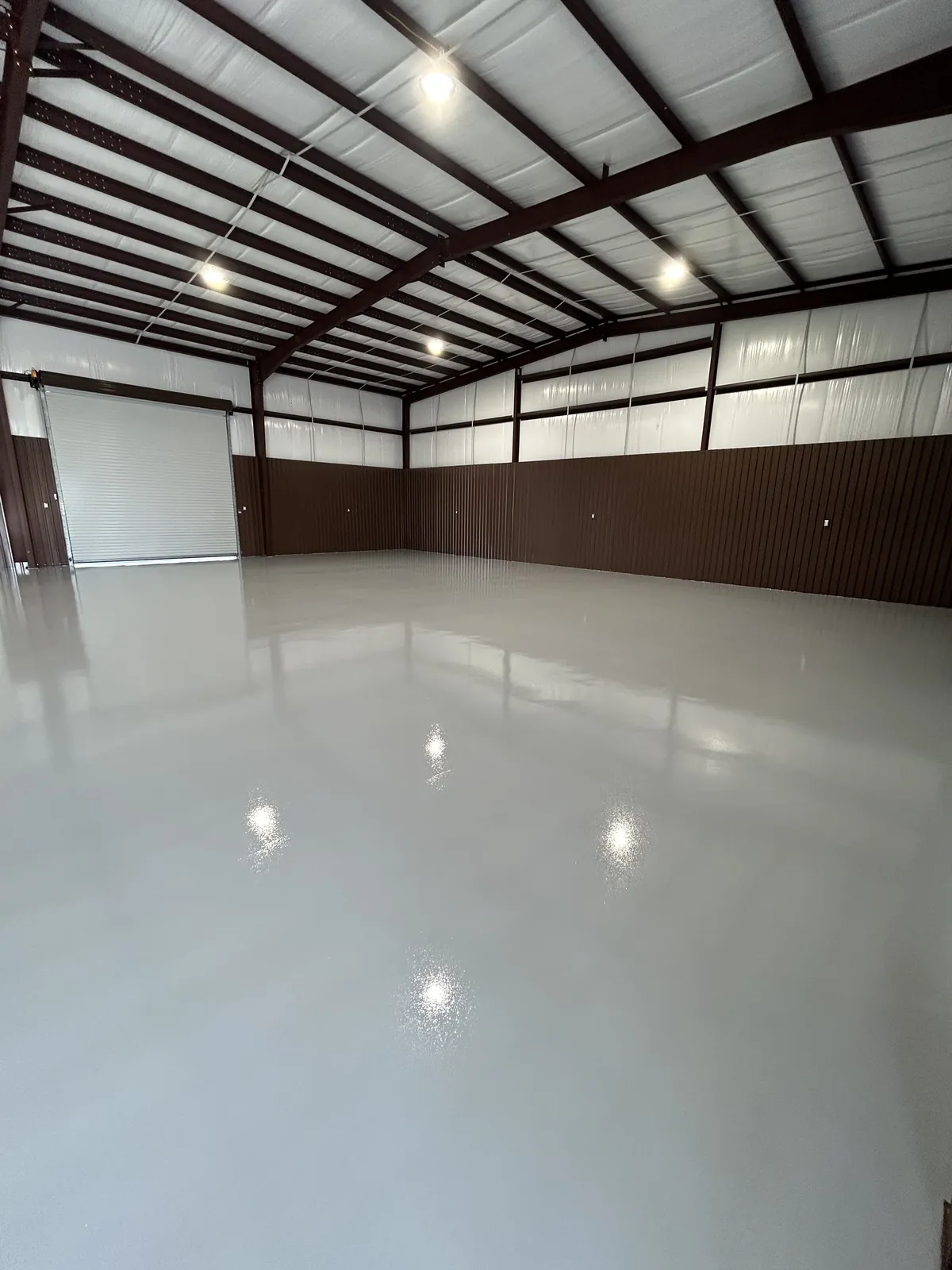
A woodshop is hard on a floor in quieter ways than a mechanic’s bay. Sawdust grinds under every shoe like fine sandpaper, glue and stain drip off the bench, a chisel gets dropped edge first, and rolling tool chests and a table saw on a mobile base get pushed around every session. Bare concrete under all of that sheds dust of its own, which ends up in the finish on whatever you are building.
There are two good routes. One is to leave the concrete bare and densify it: a densifier soaks in and hardens the surface, which cuts down the concrete dust and makes the floor sweep cleaner, and nothing on top can peel or chip. The other is a coating, usually a solid color with a satin topcoat, which keeps glue and stain from soaking in and lets a bead of finish wipe off with a rag. A coating shows a dropped chisel more than a densified slab does, so people who drop a lot of steel tend to lean toward the bare floor.
Woodworkers also care about flat. A table saw or a jointer that rocks on a low spot is a problem, and a garage slab that falls toward the door puts every machine slightly out of level. We can fill low spots and level the area where the machines sit before the finish goes down, and we would rather know where the big machines will live before we start than after. Heavy machines also sit in one spot for years, so the finish under their feet needs to be hard enough not to dent.
A flake floor with grit hides that mess between cleanings.
The detached shop out back
Where a lot has the room, a separate building out back often holds the lawn equipment, a workbench or overflow storage from the house. Those slabs are often a different story from the house slab: poured later, sometimes thinner, and sometimes without a vapor barrier underneath. Some sit low enough in the yard that storm water heads toward the door instead of away from it. When we grind a slab like that, we pay attention to how hard the surface is, since a weak top layer has to come off before anything can bond to it.
That makes the moisture reading more important out back than in the attached garage. A slab with no barrier sitting on wet clay after a summer storm can push a lot of vapor up, and a sealed coating laid over it can blister. If the reading is high, we either put a moisture-mitigating primer under the coating or steer you to a penetrating sealer, which lets the slab breathe while it keeps oil and water from soaking in from the top.
A metal building brings its own habits. The walls trap heat in summer, the slab edge along the door track takes rain every time it storms, and the floor often carries a mower with grass and mud caked on the tires. If the building is mostly storage, a plain sealed slab is often all it needs, and we will say so.
Sunrooms behind glass
A back porch closed in with windows turns into a room people use every day, and the slab under it is usually the old porch concrete, poured to shed rain with a slight slope away from the house. That room also gets more direct sun than any other floor indoors. Standard epoxy yellows in sunlight without a UV-stable topcoat, and in a sunroom that shows up as an amber cast over time, worst along the windows. Sun through glass also heats the slab, and a dark floor in that room can get warm enough to notice underfoot.
For a sunroom we look at UV-stable coatings such as polyaspartic, or at a water-based stain under a clear sealer, which colors the concrete itself so there is no film to fade. If the slope bothers you once the furniture is in, self-leveling compound can flatten it first. We also check where the old porch meets the house slab, since that joint often moves on its own and is better treated as a joint than hidden under a coating.
Floors that suit Highlands
Four we would put on the shortlist here, before we have seen your slab.
Very professional team. Amazing quality of workmanship. Would definitely work with ProCoat again!
James Howard, Google review
- Workshop Floor Coatings
Garage woodshops suit a solid-color coating with a satin topcoat, so glue and stain wipe off and sawdust sweeps up instead of grinding into the concrete.
- Penetrating Concrete Sealers
Detached buildings out back that read damp often do better sealed than coated, since a penetrating sealer lets the slab breathe and still keeps oil out.
- UV-Resistant Floor Coatings
A closed-in porch that takes sun all afternoon needs a UV-stable coating, because standard epoxy behind glass yellows along the windows over time.
- Water-Based Concrete Staining
Sunroom slabs can be stained with water-based color that sits in the concrete itself, so there is no film to fade or peel in the sun.
More towns in Harris County
The Harris County page lists every town we cover there.
- CrosbyEast of Lake Houston
- HuffmanLake Houston shore
- Galena ParkOn the Ship Channel
- Jacinto CityNext to Galena Park
Floors in Highlands, asked plainly
Something else on your mind? Call or text (936) 445-0702, or use the contact page.
Should a woodshop floor be densified or coated?
Both work, and it comes down to how you use the shop. A densified bare slab sheds less dust, never peels and hides dropped tools better. A coating keeps glue and finish from soaking in and wipes clean with a rag. We’ll look at the slab and ask about your work before we recommend one.
How do I find out if my shed slab has a vapor barrier?
Usually you can’t tell from the top, and the paperwork for an outbuilding often doesn’t say. That is part of why we take a moisture reading on the slab itself. The reading tells us what actually matters: how much vapor is coming up right now, and whether the floor needs a moisture-mitigating primer or a sealer instead of a coating.
Will a sunroom floor fade or turn yellow?
Standard epoxy can yellow in direct sun, and a sunroom gets a lot of it. UV-stable products such as polyaspartic hold their color much better, and a stained concrete floor has no film to fade at all. Furniture and rugs still shade parts of the floor, so some difference over the years is normal with any finish.
Can you level the floor where my table saw sits?
Yes. We can fill low spots and flatten the area where the big machines will stand before the finish goes down. It is easier to do while the shop is empty, so tell us at the assessment where each machine lives. A shim or two under a machine is still normal on any concrete floor.
Can the old porch slab and the house slab look like one floor?
They can get the same finish, but the joint between them usually stays. The porch slab was poured separately and often moves on its own, so a coating stretched over that seam tends to crack along it. We treat the joint with a flexible filler or a clean saw line so it reads as a deliberate break rather than a flaw.
Take us out back too
Call or text (936) 445-0702 and tell us about the shop, the building out back or the sunroom, even if only one of them is ready to go. We’ll come out to Highlands, take readings on each slab and tell you which floor fits each room.
- Call or text(936) 445-0702
- Emailprocoatepoxyflooring@gmail.com
- Based inConroe, Texas, working six counties
Want to see the work first? Browse the gallery, or find every way to reach us.