
Floors for the shop out back, sparks included
A workshop out on the property is often a pole barn or metal building on its own slab, and that slab may have gone down without a vapor barrier under it. It sees welding, grinding, oil and steel hitting the floor, so we test what the slab is doing first and build the coating around the work you do in there.
Slabs poured without a barrier
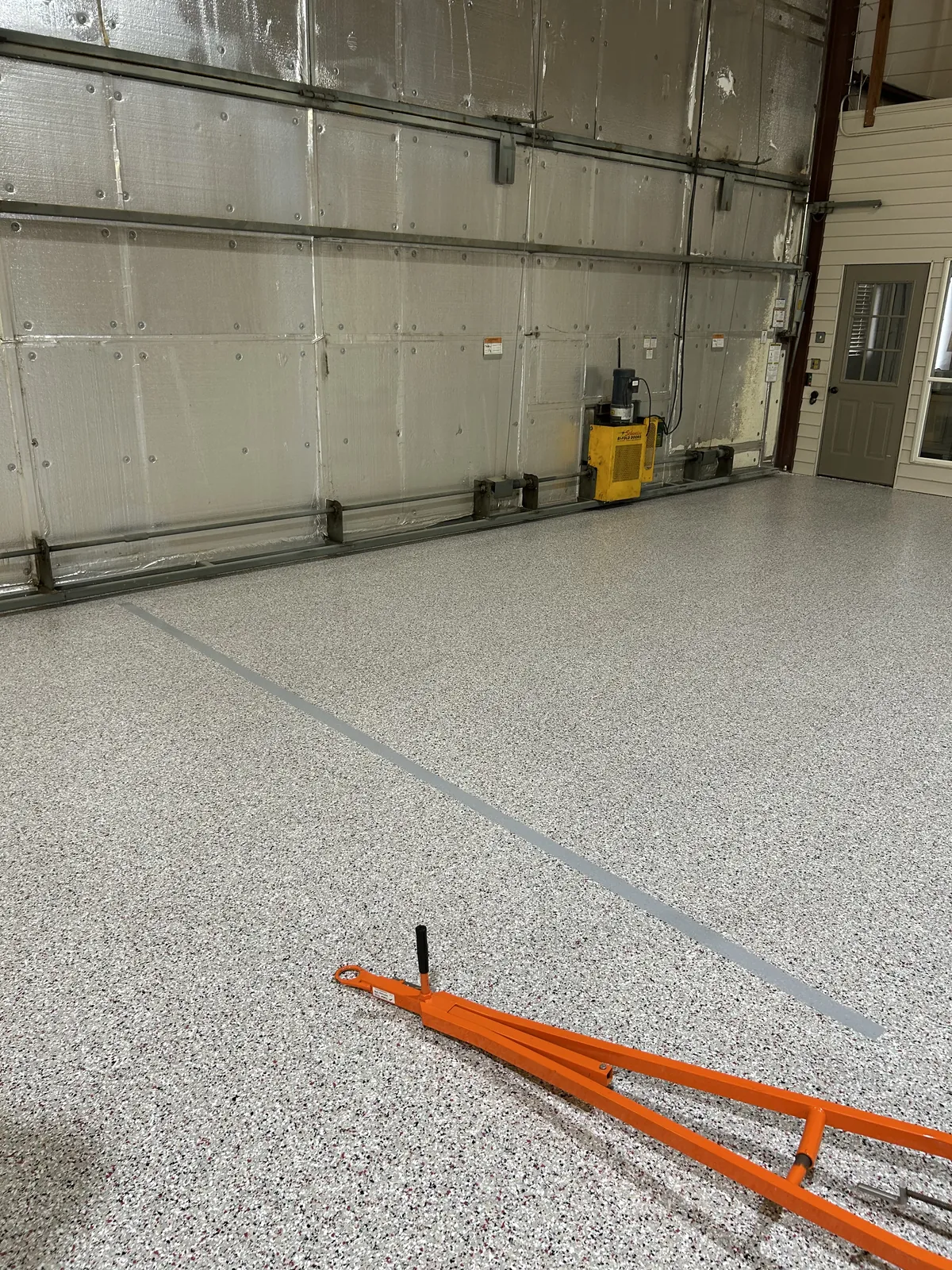
A house slab usually goes down over a plastic vapor barrier. A shop slab on acreage may not have one, especially if the building went up quickly or the slab was poured years before anyone thought about coating it. Without that barrier, ground moisture moves straight up into the concrete, and in clay soil after a wet stretch there can be a lot of it.
That shows up as blisters, white haze and patches that let go, sometimes long after the floor looked finished. It is one of the most common ways shop floors fail, which is why the moisture test is the first thing we do in a workshop, before anyone talks about color.
A high reading changes the system more often than it rules out a coating. A moisture-mitigating primer goes down first on a damp slab, and on the worst ones we may suggest polished concrete instead, since bare concrete has nothing on top to blister.
Moisture under a coating has nowhere to go, so it pushes.
Sparks, spatter and dropped steel
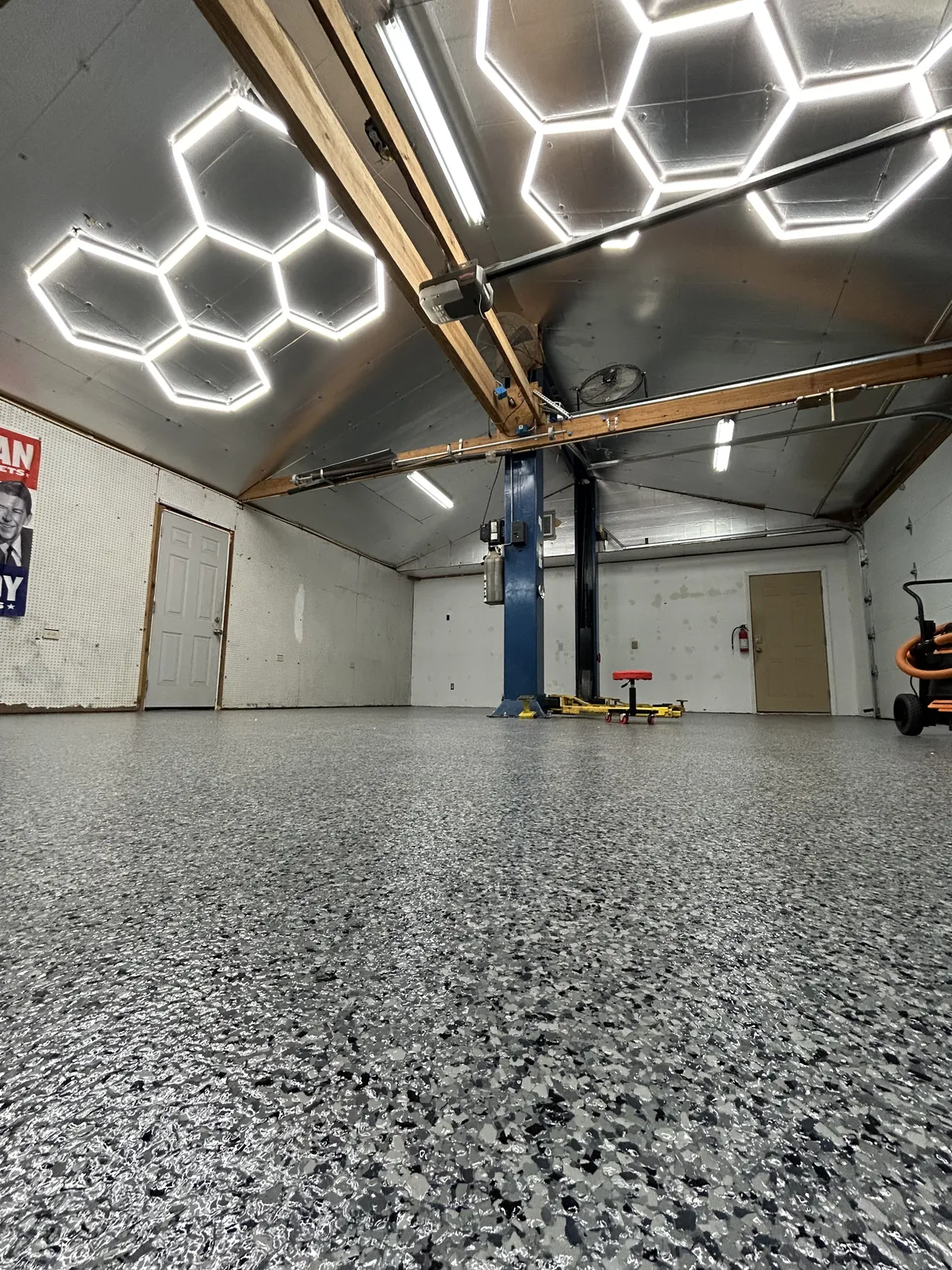
Welding spatter and grinding sparks are small, hot pieces of metal, and in a shop where people fabricate they land on the floor all day. Most coatings take a light shower of sparks with only small marks, but a steady stream in one spot will scorch any resin. We usually suggest a weld blanket or a steel plate where the welding actually happens, and a flake pattern that hides the freckles everywhere else.
Dropped tools are the other test. A hammer, a length of angle iron or a vise falling off the bench lands on a small point with a lot of force. A thicker system holds up better than a thin roll-on coat, and a chip, when it happens, is a small repair instead of a peeling floor. Steel casters on toolboxes and engine stands are hard on any topcoat, so we ask what rolls across the floor before choosing one.
Oil, fuel and the big door
Shop floors collect a lot of fluid: hydraulic oil off the tractor, mower gas, bar and chain oil, coolant and the odd quart of motor oil knocked off a shelf. A slab used bare for years has soaked much of that in, and primer will not grip concrete with oil in its pores. We degrease the stained areas, grind them and cut out the spots still bleeding oil.
The big door is its own problem. Rain blows in, mud rides in on tractor tires and the first few feet of floor stay wet longer than the rest. We put more grit in the topcoat there, and we check that the slab sheds water out the door, leveling it where it runs back toward the bench.
Quick facts on workshop floor coatings
- Looks like
- A flake floor in a mid-tone blend that hides scorch freckles and scuffs, sealed under a clear chemical-resistant topcoat.
- Holds up in
- Detached shops, pole barns, metal buildings and home workshops where people weld, fabricate, fix equipment and roll heavy toolboxes around.
- Wrong pick when
- A slab with a very high moisture reading may be better as polished concrete, and a floor that holds hay, feed or animals is better left bare.
- Prep it needs
- Moisture testing comes before anything else, then grinding, oil removal, crack and spall repair and a primer chosen for how damp the slab runs.
- Compared with
- Shop owners weigh it against polished concrete and plain sealed concrete, and many keep rubber mats at the bench where they stand all day.
Where workshop floor coatings works and where it struggles
A good fit
- A detached shop or pole barn where you weld and fabricate.
- A home workshop with a bench, a vise and heavy toolboxes.
- A slab with years of oil and fuel soaked into it.
- A shop where mud and rain come in through a big roll-up door.
Where we steer people elsewhere
- A slab broken into pieces that move with the clay needs slab repair first, since a coating will crack right along with it.
- A barn floor for animals, hay or feed should stay bare or get a penetrating concrete sealer.
- A shop that works on customer cars full time needs automotive shop flooring built around lifts and drains.
Coating a working shop floor
Test the slab first
We take moisture readings in several spots, near the walls and out in the middle, since a slab with no barrier can vary. Those readings pick the primer before anything else gets planned.
Clear the benches and floor
We go over with you where the welding table, the bench and the toolboxes live. Heavy equipment moves out so the whole floor gets the same prep.
Degrease and grind
Oil-soaked areas get degreased and ground, and spots still bleeding oil get cut out and patched. The full slab is diamond ground to an open profile.
Prime for the moisture
Cracks and spalls are filled, then a standard primer or a moisture-mitigating one goes down, depending on the readings. On a damp slab this is the step that matters most.
Flake and a hard top
The body coat goes down with flake broadcast in, then a chemical-resistant topcoat. The door area gets extra grit for wet tires and boots.
Move back in stages
People can walk it before anything rolls on it, and trucks and tractors wait longest. We give you that timing for the product and the temperature in your building.
Part of Flake Epoxy Systems
Workshop Floor Coatings is one of the services under flake epoxy systems. The overview compares them all.
- Residential Floor Coatings
Floors around the house beyond the garage: rooms inside, the patio and porch, the pool deck, the driveway and the shop out back.
- Residential Epoxy Flooring
For living spaces like dens, game rooms and kitchens, where comfort underfoot and easy mopping count for more than resistance to forklift traffic.
- Basement Floor Coatings
Coatings for below-grade rooms and any room on damp ground, where vapor and musty smells come first and the finish second.
- Home Gym Flooring
A coated slab for a home gym, with rubber where weights drop and grip where sweat lands.
Quick answers on workshop floor coatings
Ask us directly: call or text (936) 445-0702 or write through the contact page.
My shop slab has no vapor barrier. Can it still be coated?
Often, yes. We test the moisture first, and a damp slab gets a moisture-mitigating primer under the coating. If the readings are very high, we may point you toward polished concrete, which has no layer on top to blister.
Can I weld on a coated floor?
You can, with some care. Scattered sparks leave small marks that a flake pattern hides, while steady spatter in one spot will scorch the coating. A weld blanket or a steel plate under the welding table protects that patch of floor.
What happens if I drop something heavy on it?
A heavy, sharp drop can chip any coating. A thicker system resists it better than a thin roll-on, and a chip in a well-bonded floor stays a small spot that can be patched. It does not spread the way peeling paint does.
Will oil soaked into the old slab cause problems?
It can. Oil in the pores keeps primer from bonding and can lift the coating later. Spots that a degreaser and the grinder cannot clean up get cut out and patched with fresh repair material.
Is a coating better than polished concrete for a shop?
It depends on the slab and the work. A coating seals out oil and fuel and gives you color, but it needs a sound, reasonably dry slab. Polished concrete never peels and copes better with a damp slab, though oil stains it more easily. We look at both with you.
Do you work on shops out in the county, away from town?
Yes. A lot of workshops sit on acreage outside town limits, and we work across Montgomery, Harris, Fort Bend, Brazoria, Waller and Liberty counties. Send a photo of the floor and where the building is, and we’ll set a time to come look.
Tell us what happens in the shop
Call or text (936) 445-0702 with the size of the building and the work you do in it. We’ll come take moisture readings across the slab and tell you which floor will hold up to it.
- Call or text(936) 445-0702
- Emailprocoatepoxyflooring@gmail.com
- Based inConroe, Texas, working six counties
Want to see the work first? Browse the gallery, or find every way to reach us.