
Coated concrete floors for the rooms you live in
A garage floor gets driven on and hosed off. A floor inside the house gets bare feet, dog claws, dropped glasses and a mop every few days, and that changes which epoxy system we’d put down.
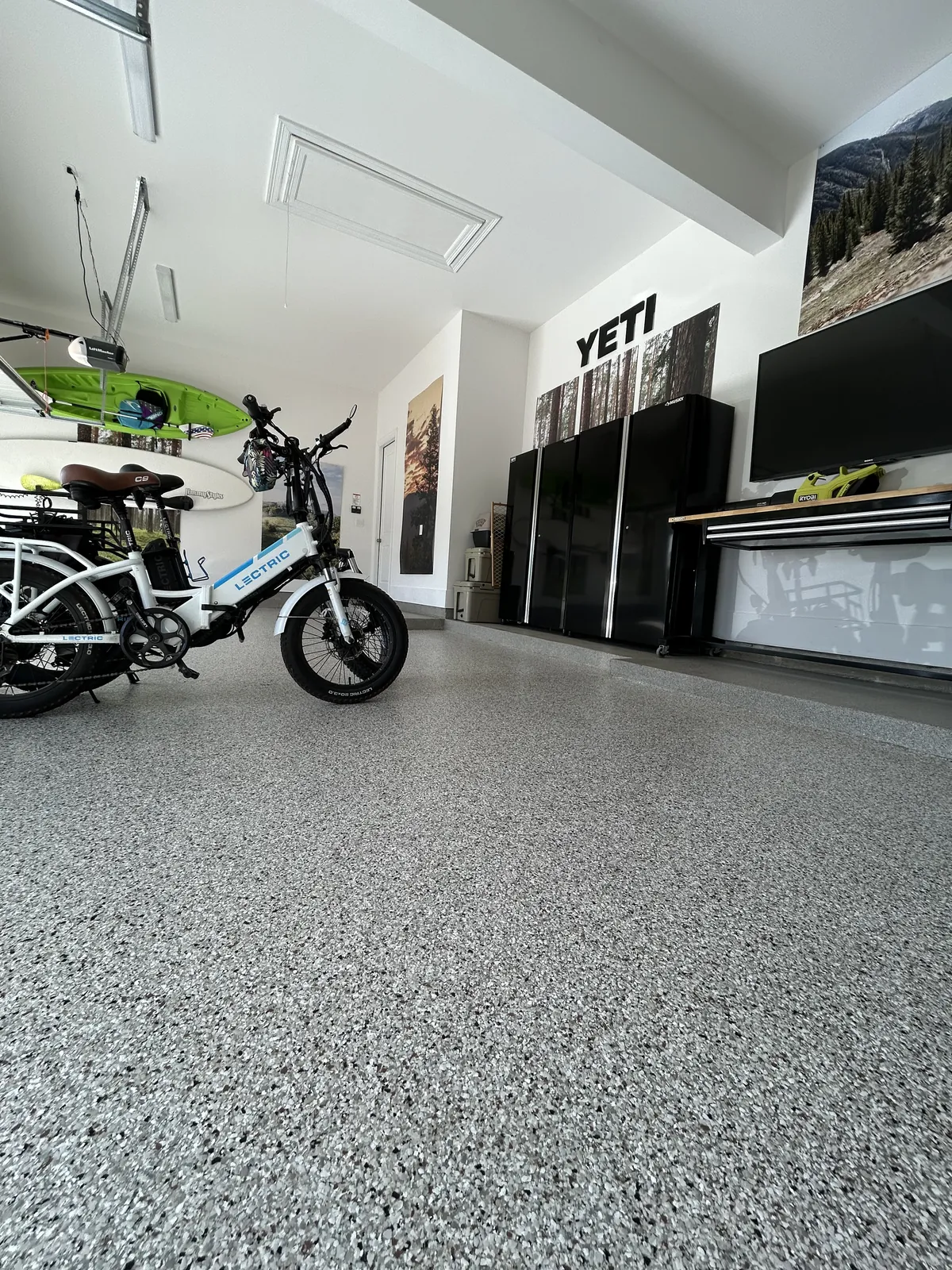
What daily life does to a floor
Inside a house the wear is small and constant. Chair legs scrape the same spot under the kitchen table. A dog runs the hallway and skids at the corner. Somebody drops a jar of pickles on the laundry room floor. A thin coat rolled over a smooth slab shows all of that quickly, as scratches first and then as chips.
So we build indoor floors with a real body coat and a topcoat chosen for scratch resistance, then match the sheen to how the room gets used. A high shine looks great the day it’s done and shows every paw print in the hall.
Color is the other daily-life call. Light floors show dust and dark dog hair, dark floors show light hair and every crumb, and flake hides grit better than any solid color. Metallic, quartz and solid colors all work indoors too; in a kitchen or living area the prep and the topcoat matter more than which one you pick.
A satin topcoat hides that daily wear far better, which is why we steer most living areas toward it.
Texas slabs and the moisture question
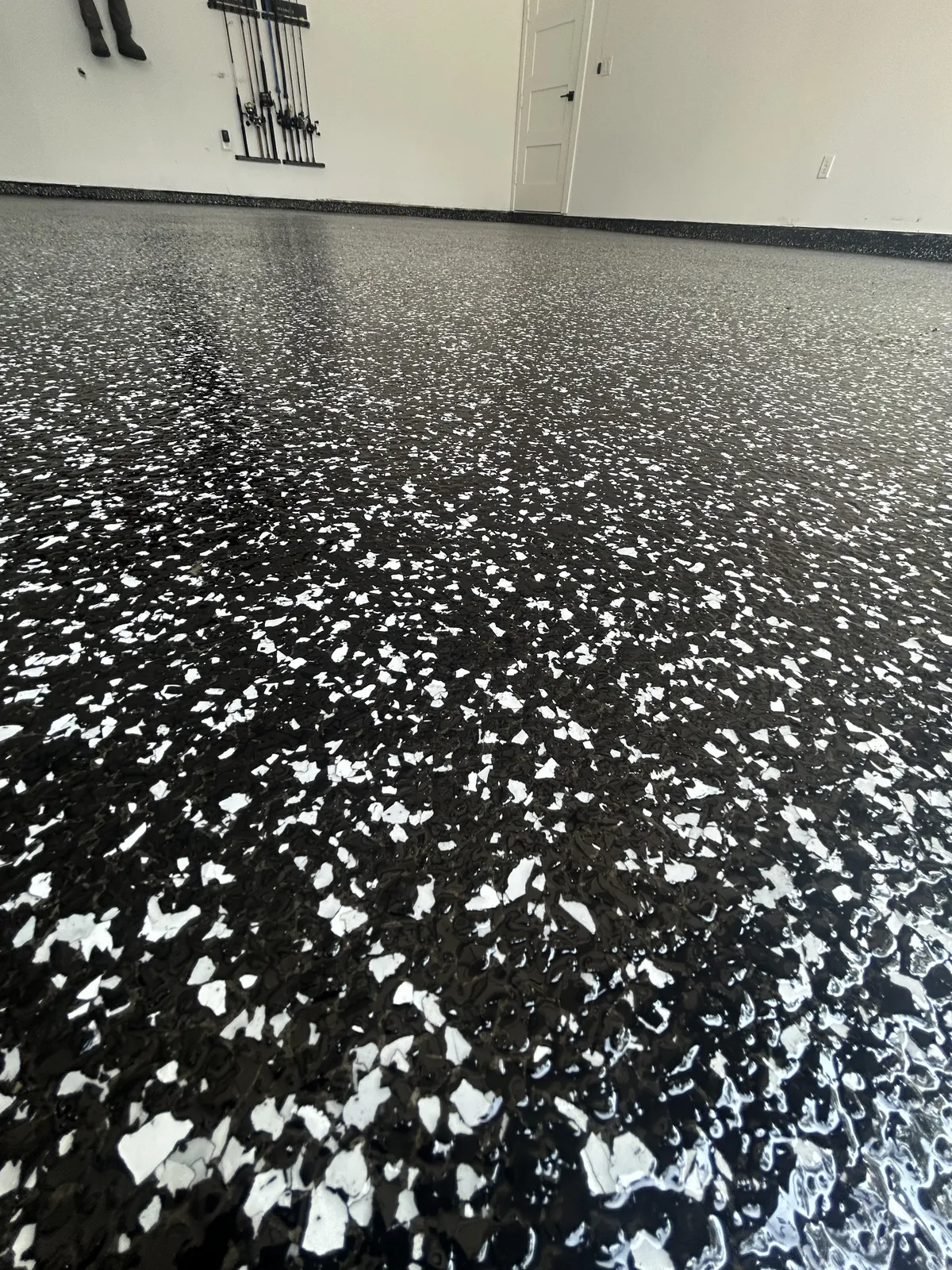
Most homes around Conroe and the north and west Houston area sit on a slab poured right on the ground, with no basement and no crawlspace. That slab is your subfloor, and it sits on the soil. In a humid climate, water vapor keeps moving up through the concrete, and a coating laid over it can trap that vapor until it blisters.
That’s why every residential job starts with moisture readings once the old flooring is up. Carpet and floating floors can sit over a damp slab for years without anyone knowing, because they let the vapor escape. If the reading is high, a moisture-mitigating primer goes down first, and if we don’t think a coating will hold on that slab, we’ll say so before any work starts.
The first few weeks on a new floor
The floor will look finished long before it’s fully cured. Feet come back first and furniture later, and heavy pieces should go back on felt pads instead of being slid across the new surface. We’ll give you the times for your floor once we know the product and the temperature in the house.
Epoxy feels hard and cool underfoot, which most people come to like in a Texas summer. It can get slick when wet, so in laundry rooms, mudrooms and by the back door we mix fine grit into the topcoat. Sunlight through a patio door is the other thing to watch: plain epoxy ambers in the sun, so a bright room gets a UV-stable topcoat.
The basics of residential epoxy flooring
- Looks like
- A hard, glossy or satin layer bonded to the slab, in a solid color, flake, quartz or metallic pour, with no grout lines anywhere.
- Holds up in
- Laundry rooms, mudrooms, kitchens, home gyms, game rooms and living areas in slab-on-grade homes where the concrete is already the subfloor.
- Wrong pick when
- A bedroom where you want something soft and warm underfoot is usually better off with carpet or wood over the slab.
- Prep it needs
- Old flooring and tack strips come up, the glue gets ground off, and the slab is moisture tested before any primer goes down.
- Compared with
- Most people compare it to tile and luxury vinyl plank, and inside a house it usually gets a satin topcoat instead of high gloss.
Is residential epoxy flooring right for your floor
A good fit
- A slab-on-grade house where carpet or tile is coming up anyway.
- Laundry rooms and mudrooms that take water, mud and spilled detergent.
- A home gym or game room on the ground floor.
- A house with pets and a floor that needs to wipe clean.
Where we steer people elsewhere
- Bedrooms where you want warmth underfoot are better with carpet or wood.
- A sunny patio or pool deck needs a UV-stable polyaspartic coating instead of epoxy.
- If you love the look of bare concrete, we’d point you to polished or stained concrete.
How a living area gets coated
Clear the room
Old carpet, tack strips, tile or vinyl come up, and we grind off the glue left behind. Baseboards usually get pulled or masked so the coating can run right to the wall.
Read the slab
We take moisture readings across the room and look for the cracks the old flooring was hiding. Clay soil moves slabs around here, so we mark every crack before grinding.
Grind and repair
Diamond grinding opens the troweled surface so the primer can soak in. Cracks get filled and low spots near doorways and walls get leveled.
Prime and build
Primer goes down first, a moisture-mitigating one if the readings call for it. Then comes the body coat in the color or finish you picked.
Topcoat and wait
A scratch-resistant topcoat goes on last, with grit added in wet rooms. Then the room stays empty until it’s cured enough for feet, and longer for furniture.
Part of Flake Epoxy Systems
Residential Epoxy Flooring is one of the services under flake epoxy systems. The overview compares them all.
- Workshop Floor Coatings
Floors for a home shop or detached barn that take sparks, dropped tools, rolling boxes and a slab that may lack a vapor barrier.
- Residential Floor Coatings
Floors around the house beyond the garage: rooms inside, the patio and porch, the pool deck, the driveway and the shop out back.
- Basement Floor Coatings
Coatings for below-grade rooms and any room on damp ground, where vapor and musty smells come first and the finish second.
- Home Gym Flooring
A coated slab for a home gym, with rubber where weights drop and grip where sweat lands.
Small print on residential epoxy flooring
Ask us directly: call or text (936) 445-0702 or write through the contact page.
Can epoxy go in a kitchen or living room?
Yes, if the slab tests dry enough and the old flooring comes up cleanly. Kitchens and living areas usually get a satin topcoat so everyday scratches stay hard to see. On a remodel the floor can go in before the cabinets, or we coat around the ones that stay.
Will my dog’s claws scratch it?
Claws leave light marks in the topcoat over time, the same as they do on wood. A satin finish hides them far better than high gloss. The marks stay in the top layer, and that layer can be scuffed and recoated later without redoing the whole floor.
Can you put epoxy over tile or vinyl?
We don’t coat over tile, vinyl or laminate. Those layers flex and shift, and the coating would crack along every joint. They come up first, the glue gets ground off, and the coating bonds straight to the concrete.
Do I have to move out while you work?
Usually not, though you’ll lose the use of that room for several days and the rest of the house needs a way around it. Grinding is loud, and we run vacuums on the grinder to keep the dust down. Some coatings smell while they cure, so we talk about ventilation and pets at the assessment.
Will the cracks in my slab show through?
A coating follows the floor, so an unrepaired crack shows up as a line. We fill cracks before the body coat goes down. On clay soil a slab can keep moving, and an active crack can come back through any coating, so we’ll point out the ones we think are still moving.
How do I clean an epoxy floor at home?
Sweep or dust mop, then a damp mop with warm water and a little mild cleaner. Wipe up spills when you see them. Skip abrasive pads and strong acidic cleaners like vinegar, which can dull the topcoat over time.
Have us look at the floor first
Tell us which rooms you’re thinking about and what’s on the floor now. We’ll come take moisture readings and tell you plainly whether epoxy is the right floor to live on.
- Call or text(936) 445-0702
- Emailprocoatepoxyflooring@gmail.com
- Based inConroe, Texas, working six counties
Want to see the work first? Browse the gallery, or find every way to reach us.