
Coated floors without losing a week of business
A business owner’s first question about a new floor is usually how long the doors stay shut. We plan the system and the schedule together, because the product we pick decides how fast the room comes back into use.
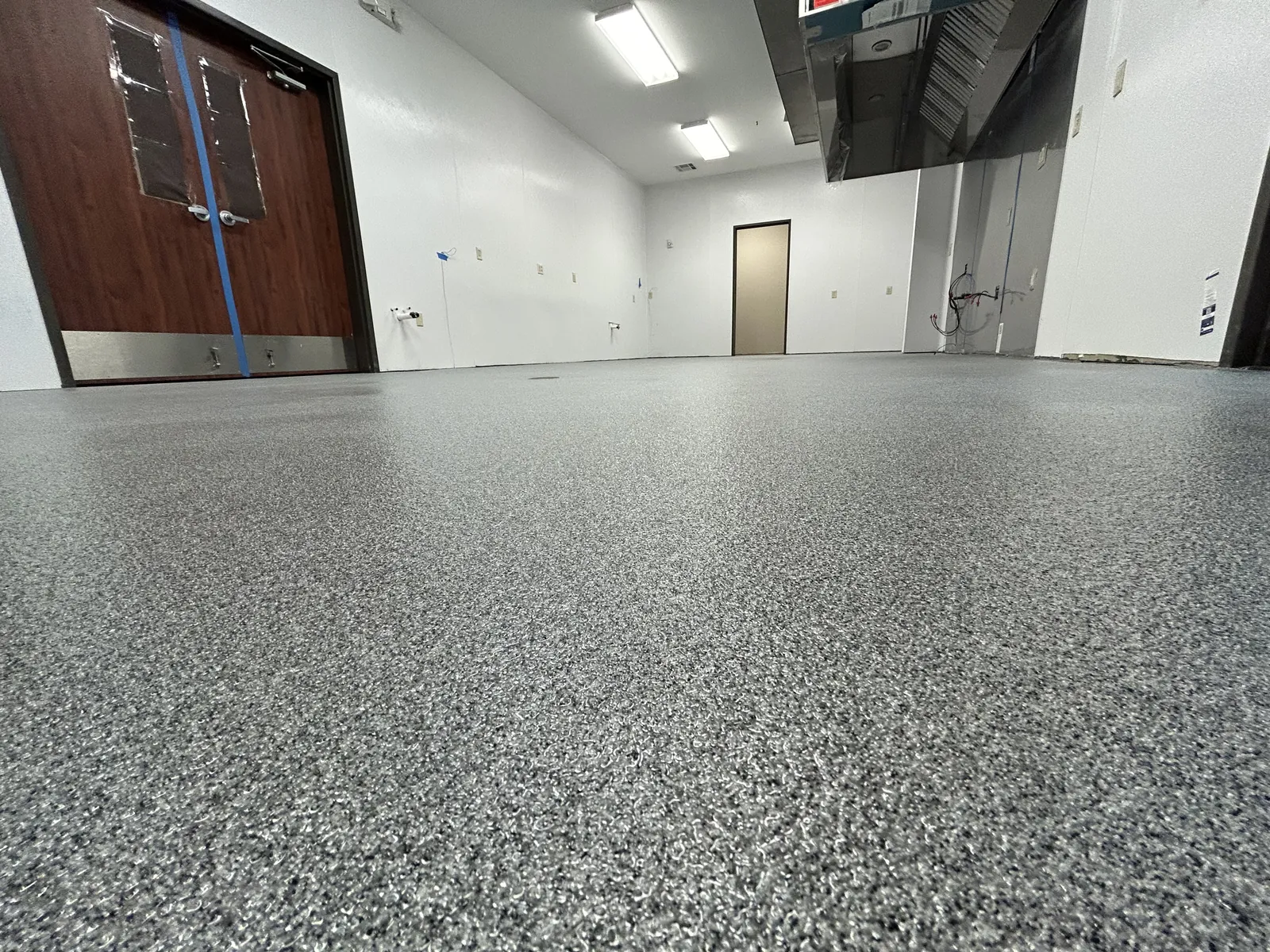
Planning around the hours you’re open
Every day a floor is closed costs a store sales and costs an office its routine. So the first thing we ask is when the space can sit empty, and for how long. A long weekend and a string of weeknights point toward different systems and different crew plans, and we’d rather know which one you have before we pick a product.
Cure time is where coatings differ most. Standard epoxy builds a thick, hard floor but gives the room back slowly. Polyaspartic topcoats usually cure much faster, and on some jobs that decides whether a store opens on Monday or midweek. A faster product also gives the crew less working time, so we weigh both before we commit to a schedule.
Where the layout allows, we split a floor into sections so part of the business keeps working while the rest cures. Grinding is loud and we run it with dust collection, and we talk through noise and smell before we start, especially in a strip center where the neighbors stay open.
Grit tracked in from a parking lot works like sandpaper on any topcoat, so entries get the toughest top layer we can give them, plus walk-off mats.
Where foot traffic wears a floor first
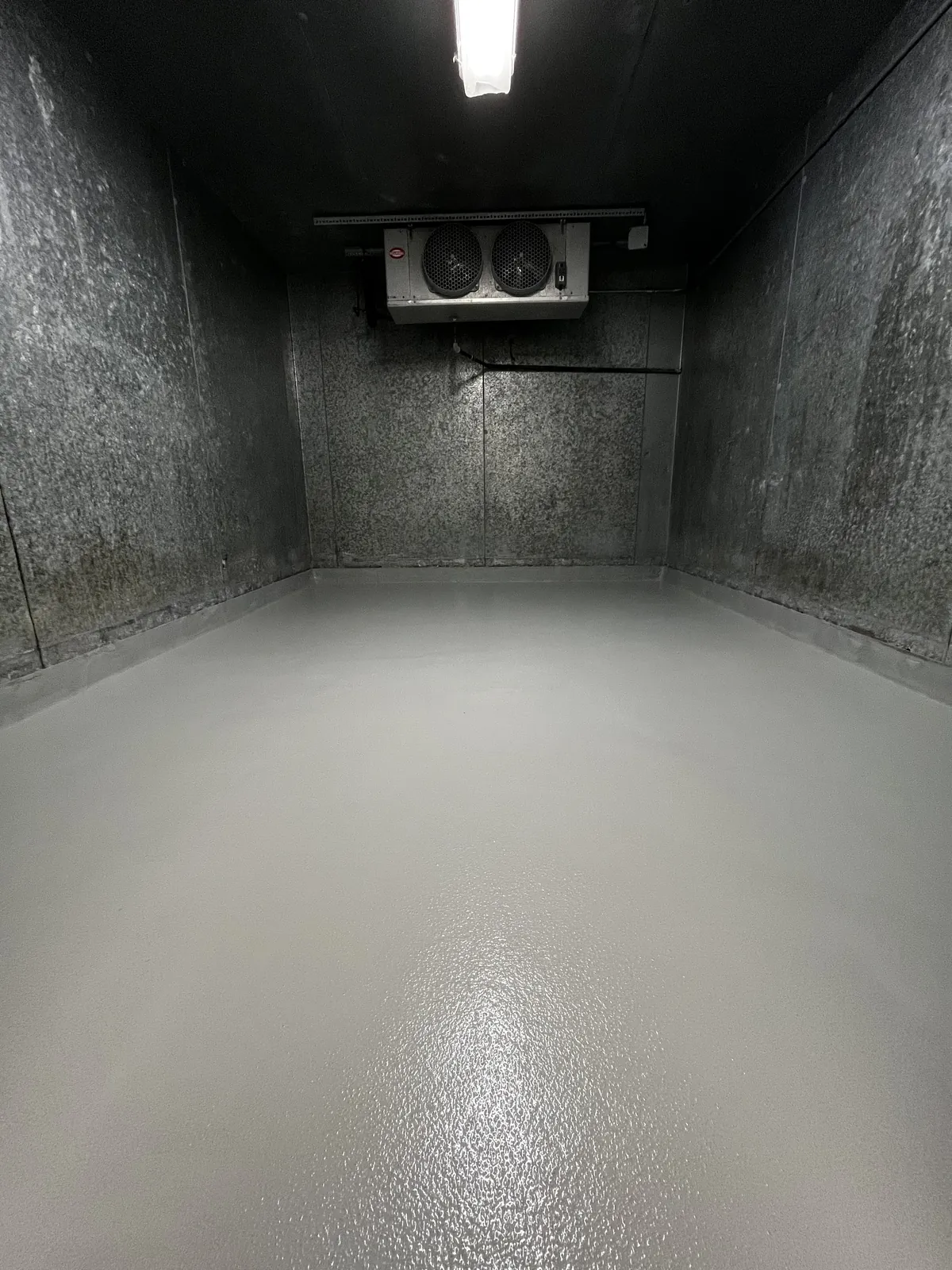
Traffic doesn’t spread evenly across a room. It funnels through the front door, the checkout and the turn into the back hallway, and those lanes wear first. Restrooms and drink stations add water to the mix.
Carts, hand trucks and rolling chairs are harder on a floor than shoes. Their wheels put the weight on a small spot and pivot in place. We build commercial floors thicker than a typical home floor and pick a topcoat for abrasion, and where water or spilled drinks land we add grit so the floor keeps its grip when wet.
Cleaning crews and the first recoat
A coated floor has no grout lines, which makes life easy for a cleaning crew. Most crews can run an auto-scrubber on it with a neutral cleaner. Harsh degreasers and the wrong scrubber pads dull a topcoat, so we’ll tell your crew what to use before they start. Dry dust mopping between scrubs matters more than people expect, because that tracked-in grit is what scratches the shine.
When the traffic lanes do wear down, the usual fix is a light sanding and a fresh topcoat over the existing floor. That’s a much smaller job than tearing the floor out, and the closure is shorter too. Planning for it from the first install makes the second one easy to schedule.
The basics of commercial epoxy flooring
- Looks like
- A hard, even coated surface in one color, flake or quartz, with painted lines, logos or color zones set into it where you want them.
- Holds up in
- Retail floors, offices, clinics, salons, break rooms, gyms and back-of-house hallways that see steady foot traffic and rolling carts.
- Wrong pick when
- A restaurant cook line under constant hot water and grease does better with polyurethane cement than with epoxy.
- Prep it needs
- Old coatings, VCT tile and adhesive come off, the slab gets ground or shot blasted, and moisture gets tested before priming.
- Compared with
- Owners usually weigh it against polished concrete and vinyl tile, and a faster-curing polyaspartic topcoat often goes on top to shorten the closure.
Choosing commercial epoxy flooring with your eyes open
A good fit
- A store or office that can close for a long weekend or a few nights.
- Break rooms and hallways that see carts and spilled coffee.
- Clinics and salons that want a floor that mops clean.
- Old VCT tile that is chipped and coming up anyway.
Where we steer people elsewhere
- A restaurant cook line with hot water washdowns needs polyurethane cement.
- Forklift aisles in a warehouse do better with industrial epoxy or polished concrete.
- Outdoor walkways in full sun need a UV-stable polyaspartic coating.
How we run a commercial job
Walk the space
We walk the floor with you and mark the traffic lanes, the entries and any spots where water collects. We also ask for the hours the space can sit empty.
Set the schedule
We match the system to the closure you can give us, with faster-curing topcoats for short windows and sections when the layout allows. You’ll know the plan before we start.
Remove and grind
Old tile, adhesive or worn coating comes off, then we diamond grind, or shot blast the large open areas. Dust collection runs the whole time.
Repair and test
Cracks, spalls and old anchor holes from removed fixtures get filled, and moisture readings tell us which primer goes down. A coating that fails in a store usually traces back to one of these two jobs.
Coat the floor
The body coat and topcoat go down, with lines, grit or color zones where you need them. Entries and the checkout lane get the heaviest topcoat on the floor.
Reopen in order
Foot traffic comes back first, then carts, then heavy fixtures and shelving. We tell you the time for each so nobody rolls a loaded rack across a soft topcoat.
Part of Solid Color Systems
Commercial Epoxy Flooring is one of the services under solid color systems. The overview compares them all.
- Industrial Floor Coatings
For production floors that get hit, scraped and hosed down every shift, where the coating thickness and the install schedule both come from how the plant runs.
- Protective Concrete Coatings
For bare slabs in shops, storage rooms and utility spaces that are wearing down or staining, where a sealer or thin coating adds a sacrificial surface.
- Polyurethane Floor Coatings
For the final clear coat on floors that get scraped by chair legs, carts and boots, protecting the epoxy beneath it and keeping a sheen longer.
- Epoxy Floor Sealing
A clear epoxy coat over bare concrete or a refresh over a worn clear layer on an existing epoxy floor, kept out of strong sun.
What we hear about commercial epoxy flooring
Not answered here? Ask us on the contact page or call or text (936) 445-0702.
Can you work nights or weekends?
Often, yes. Grinding is loud, so we check with you about the building and any neighbors first. We plan the system around the window you have, since a short window may call for a faster-curing topcoat.
Can part of the store stay open while you work?
Sometimes. If the layout lets us close one section and keep a path through the rest, we can coat in stages. Dust and smell are the limits, and we’ll tell you at the assessment whether staging makes sense for your space.
What happens to the VCT tile we have now?
It comes up, and so does the adhesive under it. A coating laid over tile cracks along the joints. Once the glue is ground off, we can test the slab underneath, which the tile has been covering for years.
Will the floor be slippery for customers?
A smooth gloss coat can be slick when wet. We add fine grit to the topcoat at entries, restrooms and anywhere drinks get spilled. Grit trades a little shine for a lot more grip, and you can choose how much goes in.
Can you put our logo or colors in the floor?
Colored zones, painted lines and simple logos can go into the coating before the topcoat seals them in. Detailed artwork takes more time, which matters when the closure is short. We’ll show you what fits your window.
How long will a commercial epoxy floor last?
It depends on the traffic, the grit coming in the door and how the floor is cleaned. The busiest lanes always show wear first. Nobody can honestly give a floor a lifespan without seeing the room, so we’ll tell you what to expect after the assessment.
Tell us when the doors can close
Send us the size of the space and the window you can give us. We’ll come test the slab and build a plan around your hours.
- Call or text(936) 445-0702
- Emailprocoatepoxyflooring@gmail.com
- Based inConroe, Texas, working six counties
Want to see the work first? Browse the gallery, or find every way to reach us.