
A patio is the hardest place we coat around a house, because it faces weather an indoor floor never sees. Afternoon sun bakes it, storms flood it, and people walk across it barefoot with a wet towel over one shoulder.
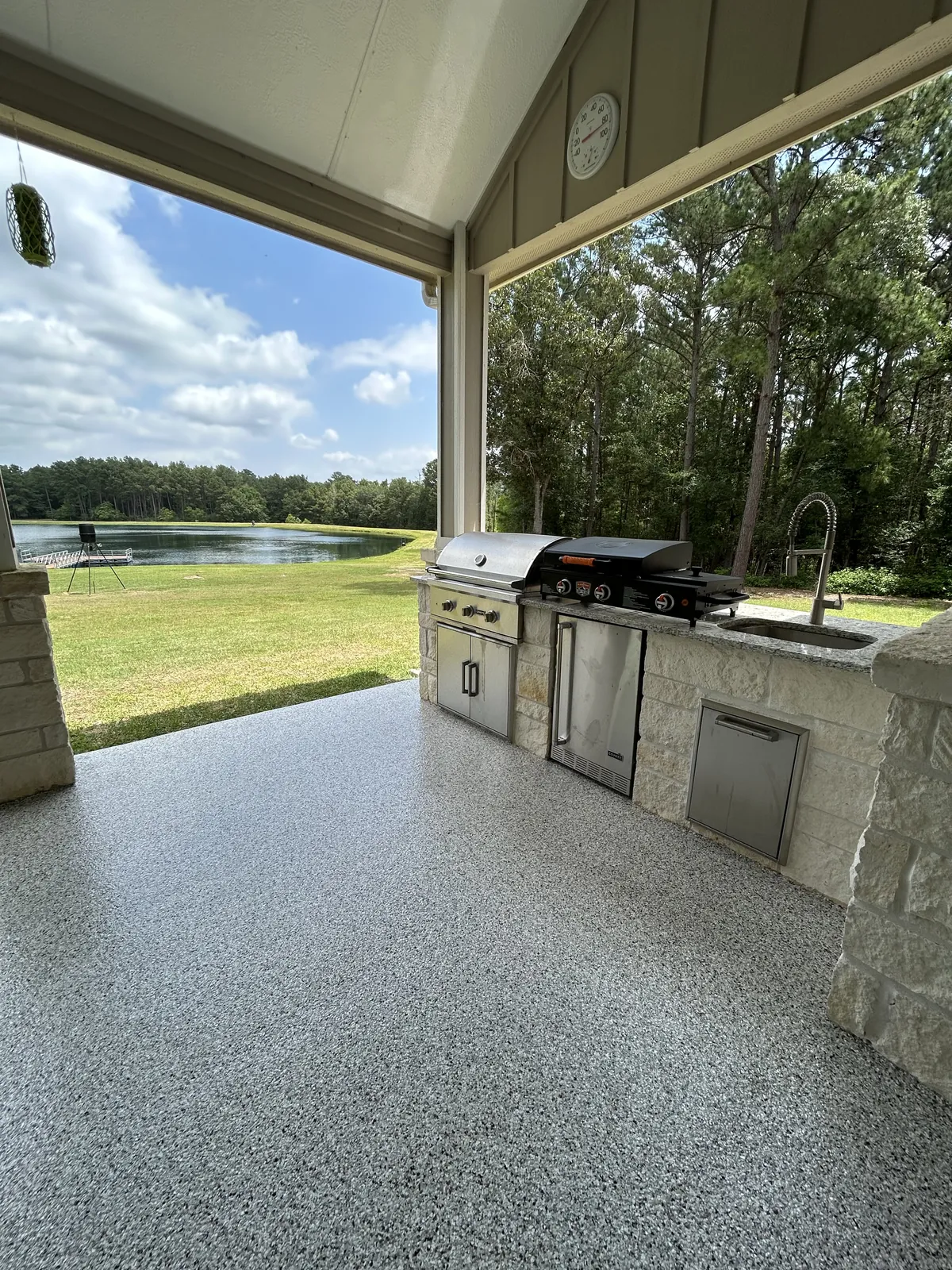
A slab that bakes all afternoon
An open slab facing west can get too hot to stand on by late afternoon, and that heat changes how a coating goes down. Resin spread on hot concrete starts to set sooner, which shortens the time we have to roll it out evenly and broadcast into it. On a big patio that can leave lap marks where one section started to set before the next one met it.
Hot concrete also pushes air. As a slab warms, the air in its pores expands and rises, and if that happens under a fresh coat it leaves pinholes and small bubbles across the surface. So we look at when the sun reaches a patio and how long it stays, and plan the coating for a part of the day when the slab is cooling instead of heating up.
A shaded corner by the house and a sunny strip out by the yard can behave like two different floors, even when they were poured the same day. We read the whole patio before deciding how to run it.
Colors you can walk on barefoot
Dark colors soak up heat. A deep charcoal patio looks sharp in a photo and can be uncomfortable under bare feet on a hot afternoon, especially around a pool or on the steps down from the back door. Lighter blends, tans and soft grays stay noticeably cooler to the touch, and they hide the pale film of dust and pollen that settles on every outdoor surface.
Glare is the other side of it. A very light, high-gloss patio can bounce a lot of sun back at the house and into your eyes from a lounge chair. A satin topcoat or a mid-tone blend cuts the glare without making the slab hotter. We talk this through standing on the patio, since how a color reads in full sun is hard to judge from inside the house.
Color also changes how dirt shows outside. Red clay, leaf stains and the gray film sprinklers leave behind disappear into mid-tone tans and browns far better than into a bright white or a solid dark coat.
The topcoat does the heavy lifting
Plain epoxy is an indoor material. Left in the sun it yellows and chalks, sooner than most people expect, no matter how good the floor looked when it was new. Outside, the layer that faces the sky has to be UV-stable, which usually means a polyaspartic or another aliphatic topcoat. Our UV-resistant coatings page goes into why.
The topcoat is also where the grip goes. A patio gets wet from rain, sprinklers, hoses and swimmers, and a smooth gloss coat is slippery the moment water sits on it. We mix grit into the topcoat at a texture that matches how the patio gets used: a little for a covered dining area, more around a pool or on a ramp. Anti-slip coatings trade some ease of cleaning for footing, and outside that is almost always the right trade.
The layers under the topcoat never see daylight, so they can be built for bond and thickness instead of sun. What matters is that the top layer stays whole. A chip in the topcoat lets sun reach what is underneath, which is one more reason to fix small damage early.
Storm water and the slope
Patios are supposed to slope away from the house so rain runs off the edge. Many older ones have settled, and water now sits in a low spot by the door or creeps back toward the foundation. A coating does not fix a slope. It follows the shape of the slab under it, so a puddle on bare concrete becomes a shinier puddle on a coated one. If the low spot needs work, that happens during prep, before anything goes down.
Water also comes from below. A patio poured on the ground with no barrier under it can push moisture up after heavy rain, and a coating that seals the top traps it. On some patios a coating is the wrong answer and a penetrating sealer that lets the slab breathe makes more sense. Our patio coatings page explains how we choose between them.
Edges take a beating too. Where the slab meets grass or a flower bed, sprinklers soak it every morning and dirt washes up onto it. We grind that edge clean and stop the coating at a crisp line, since a ragged edge is where peeling tends to start.
Joints, cracks and clay
The saw cuts across a patio are there on purpose. They give the slab a place to crack as it shrinks and as the clay under it swells and dries out. We keep those joints open through the coating instead of bridging over them, because a coating stretched across a moving joint will usually crack right along it, and that crack looks worse than the joint ever did.
Cracks that wander outside the joints get filled and repaired during prep. Some of them will keep moving as the ground does, and we will tell you which ones we expect to show again. A straight answer about cracks at the start is better than being surprised by a line across a new floor later.
The seam where a patio meets the house foundation gets the same care. The slab and the house move differently, so we leave that line able to flex instead of locking the two together under one stiff coat.
Covered porches play by other rules
A patio under a roof gets far less sun, so heat and fading matter less and a wider range of colors and finishes holds up. Shade brings its own problem, though. Damp, shaded concrete grows mildew and algae, and a coating over a green, slick slab has to start with a deep clean and a grind back to sound concrete.
Many back yards have both: a covered porch by the house that steps down to an open slab. We can run one system across both, or keep the color and change the topcoat where the roof ends. Have a look at finished patios and porches in our gallery, then let us come out in daylight and see where the sun actually lands.
Questions
Will a coated patio be hot to walk on?
Any concrete in full sun gets hot, coated or not. Lighter colors and a satin finish stay cooler than dark, glossy ones. If the patio wraps around a pool, color deserves more thought than almost anything else.
Can you coat over a stained or sealed patio?
Usually only after the old sealer comes off, since a new coating will not bond well to it. Acid stain soaked into the concrete can sometimes stay underneath, depending on what was put over it. We check what is on the surface at the visit.
What about grease from the grill?
Grease that sits can stain some coatings and soften others. A mat under the grill and a quick wipe after cooking keep that spot clean. A chemical-resistant topcoat helps, but nothing on a patio likes hot grease left for days.
Do furniture legs scratch a patio coating?
Metal chair legs dragged across a coating will scuff it over time, and so will grit trapped under them. Felt or rubber feet help, and grit in the topcoat hides minor scuffs better than a smooth gloss does.
We look at the slab and read its moisture before anyone picks a finish. Call or text (936) 445-0702, email procoatepoxyflooring@gmail.com, or see the gallery first.