
Magnolia slabs, from the attached garage to the barn
A lot of Magnolia properties come with a detached shop or a pole barn along with the house. Those floors take tractors, trailers and fuel, and they call for a heavier system than anything sold as a garage kit.
Barn and shop slabs work harder
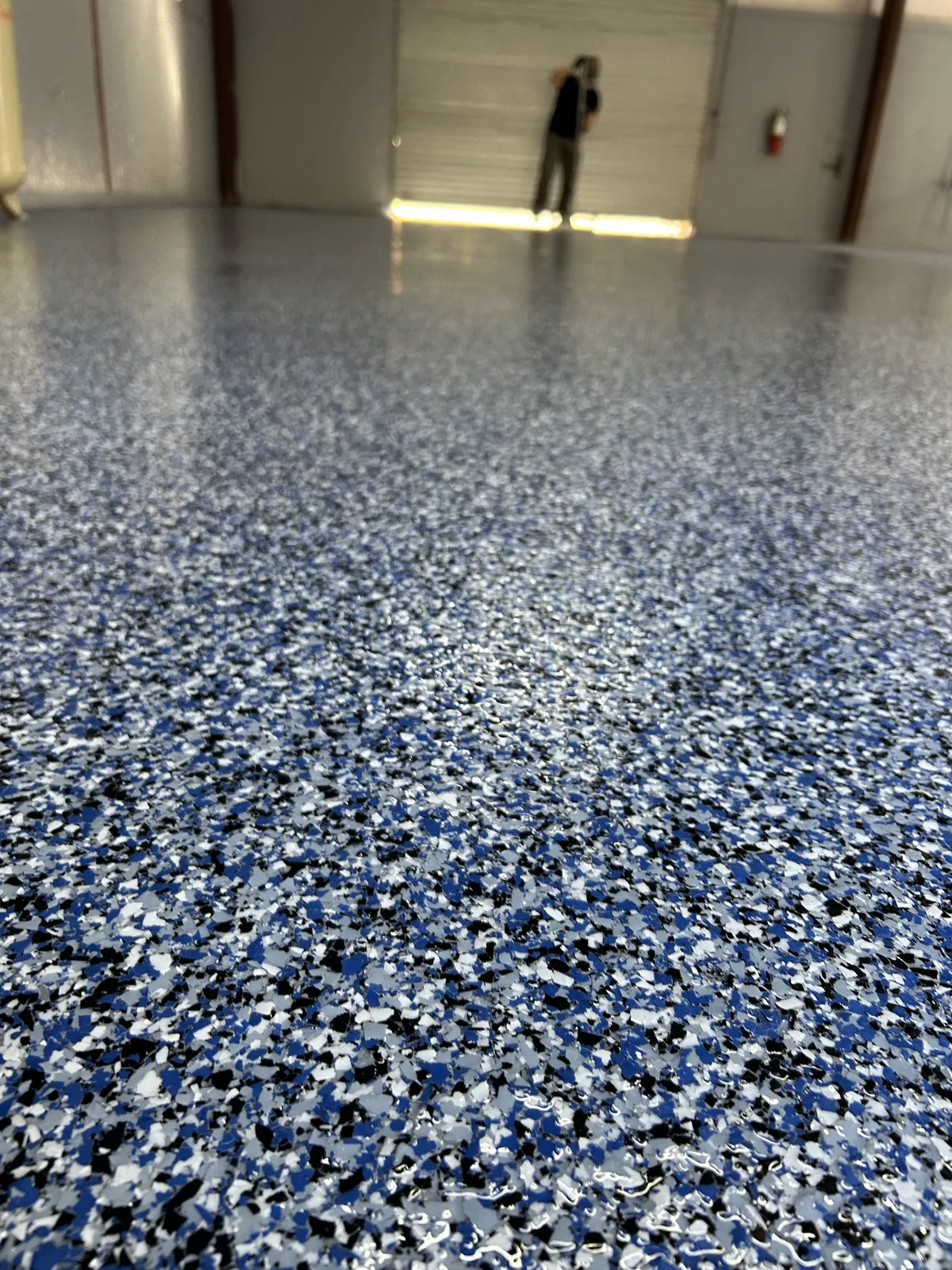
A shop floor on acreage gets used in ways a garage rarely sees. Tractors and skid steers turn on it, trailers get dropped onto their jacks, and oil changes and mower repairs happen right on the slab. Fertilizer, diesel and the odd spilled herbicide end up on the concrete sooner or later, and bare concrete soaks them in. A barn slab that started out clean rarely stays that way for long.
That is why we steer shop and barn floors toward a thicker, chemical-resistant system over a decorative garage finish. It goes down over a diamond-ground or shot-blasted slab, gets a heavier build so a dropped wrench does not chip straight through, and takes a topcoat that lets you squeegee a spill off before it stains. Some owners add a light flake broadcast for texture, which also hides scuffs between cleanings.
A big open barn floor is also where shot blasting pays off. It profiles a large slab quickly and evenly, and on concrete with years of oil soaked into it, we may need to degrease and grind deeper before any coating will bond. A few oil spots are routine. A floor gone black with it takes more work, and we will say how much at the visit.
Put a sealed coating on top and the vapor coming up has nowhere to go but into the bond.
Moisture under a barn slab
A good number of barn and shop slabs were poured without a vapor barrier under them, especially older ones and ones built on a budget. That leaves nothing between the concrete and the damp ground, and in this climate the ground stays damp much of the year.
So the moisture reading is the first thing we take on any outbuilding. A slab that reads high gets a moisture-mitigating primer under the system, and in some cases the right answer is a breathable penetrating sealer that hardens and protects the surface without trapping anything. The reading also helps sort out whether a damp patch is coming up through the slab or in from a leaky roof or a door left open in a storm.
Barn floors also tend to be wavier than a garage slab, with low spots where wash-down water collects. We level the worst of those before coating, because a puddle that sits on a coated floor becomes a slip hazard and, over time, a stain. If there is a floor drain, we coat neatly down into it so water still finds its way out. In a barn aisle, animal waste and wash water are rough on bare concrete, one more argument for sealing it.
Porches and garages closer to the house
Many homes out here have a covered porch or wide front steps, and that concrete takes afternoon sun, blowing rain and a steady stream of boots. A porch coating needs to stay grippy when it is wet, so we use a UV-stable product with fine grit in the topcoat and a color that does not show every bit of tracked-in dirt. Steps get extra attention at the front edge, where wear and slips both start.
The attached garage is the more familiar floor. On newer homes in the subdivisions around town, the slab is usually smooth and fairly young, so it gets ground, tested and then coated with a flake or solid-color epoxy system under a durable topcoat. On an older house, we expect to pull up old paint or a tired coating first. If the garage doubles as the shop, we build it like one, with the heavier system from the barn side of the property.
Floors that suit Magnolia
Four we would put on the shortlist here, before we have seen your slab.
I have a long concrete porch that runs along my workshop. The old surface coating on it was an eyesore. The new flake epoxy flooring that Matt and his team applied looks awesome. It is obvious that they know their products and how to apply it properly.
Chris, Google review
- Workshop Floor Coatings
A detached shop takes dropped tools, jack stands and oil, so it gets a thick build over a ground slab and a topcoat that wipes clean.
- Chemical-Resistant Floor Coatings
Pole barns where fuel, fertilizer and equipment fluids hit the floor need a chemical-resistant coating, laid over a slab we have tested for moisture first.
- Porch Coatings
Front steps and covered porches need a coat that grips when wet and holds its color in the sun, with a finish that hoses clean.
- Garage Floor Epoxy
Newer subdivision garages around Magnolia usually have smooth slabs that need grinding, then an epoxy system that stands up to hot tires and oil drips.
More towns in Montgomery County
The Montgomery County page lists every town we cover there.
- WoodlochSmall town
- ConroeOur home base
- MontgomeryOlder town, west county
- WillisNorth of Conroe
Asking about floors in Magnolia
Something else on your mind? Call or text (936) 445-0702, or use the contact page.
Can a coating handle a tractor parked on it?
A thick industrial system over a properly ground slab can take a parked tractor and everyday traffic. What hurts any coating is a steel bucket or blade set down hard, or tight turns with tracked equipment. A rubber mat where the bucket rests saves a lot of wear. Tell us what you plan to park there and we will build the floor for it.
Does a barn need a different system than the garage?
Usually, yes: a barn floor tends to be bigger than a garage slab, often damper underneath, and it takes harsher chemicals. We often shot blast it, pay closer attention to the moisture reading and build the coating thicker. A garage can carry a lighter, more decorative system. Some properties end up with one of each, which is fine.
Will a coated porch get slick when it rains?
Much less with grit in it. We broadcast a fine anti-slip aggregate into the topcoat on porches and steps, and we can go coarser on a spot that stays wet or sits at the bottom of the steps. Smooth, high-gloss finishes belong indoors. On a porch that holds water after a storm, we also look at leveling the low spot so it drains.
How long will my shop or barn be out of use?
That depends on the size of the floor, how much repair it needs and the system we choose. A big barn slab with oil damage takes longer to prep than a two-car garage. At the assessment we give you a working timeline, including how long to keep equipment off the new floor. Faster-curing products can shorten the wait, though they do not suit every barn floor.
Is a sealer enough for a barn floor?
For a barn that mostly stores hay or sees light traffic, a penetrating sealer or densifier can be enough, and with no coating on it, there is nothing to peel. Once fuel, oil and heavy equipment are in the picture, a coating protects the concrete far better. A densifier also cuts down on the concrete dust that settles on stored equipment. We will tell you which side of that line your barn sits on.
Walk us out to the barn
Call or text (936) 445-0702 and tell us which building and what lives in it. We will look at the slab, test it for moisture and tell you what it needs before it can take a coating.
- Call or text(936) 445-0702
- Emailprocoatepoxyflooring@gmail.com
- Based inConroe, Texas, working six counties
Want to see the work first? Browse the gallery, or find every way to reach us.