
Roman Forest slabs in the shade of tall pines
Roman Forest is a small city tucked into the pine woods off US 59, on the east side of Montgomery County. Where tall pines shade a garage apron or a back patio, the concrete under them stays damp long after a rain, and that changes what we test and what we put down.
Where the shade keeps a slab wet
Sun does a lot of quiet work on a slab. It warms the concrete, drives off surface water and dries out a garage floor after the car drips on it. Under thick pine cover that drying happens slowly, so a shaded apron, a carport or a garage with the door often open can stay damp for days after a storm. Damp concrete is a poor surface to coat, and it often holds more water underneath than the top lets on.
We take readings in the shadiest corner of the slab and in the part that does get sun, because the two can read very differently on one floor. If the numbers run high, we wait for a dry stretch, plan a moisture-mitigating primer, or do both. On some lots the shaded half needs the mitigating primer and the sunny half does not, and we use one system across both so the floor wears evenly. Coating a slab that is still pushing water is how blisters end up in the back corner where nobody notices them until the film starts to peel.
Timing matters more under the trees than on an open lot. A coating needs a dry slab and the right temperature while it goes down, and shaded concrete warms later in the morning and cools sooner in the afternoon. We plan the work around a forecast with a few dry days in a row, then check the slab again on the morning we start. If it rained hard overnight, we would rather move the day than coat a wet floor.
Grit does make a floor a little harder to mop, which is a fair trade on steps that stay wet.
When shaded concrete turns slick
Shade and damp together grow things. A green or black film can start on bare concrete that stays wet, especially on the north side of the house, under eaves and anywhere needles pile up and hold water. On a walkway or patio that film gets slippery after a rain, and on a garage apron it tracks inside on every tire.
For outdoor concrete under trees we lean toward finishes with grip. On a patio that needs color, that means a coating with fine grit broadcast into the topcoat. On walks and plain patios, a penetrating sealer keeps water from soaking in, which gives the film less to live on, and it leaves the surface no slicker than bare concrete. We clean the growth off and let the slab dry before either one goes down.
Pine needles and pollen also stain. Needles left sitting wet on bare concrete can leave brown marks, and a heavy coat of yellow pollen settles into every pore. A sealed or coated surface keeps that on top, where a leaf blower and a garden hose handle it instead of a pressure washer every few months. Pressure washing bare concrete over and over also roughens it, which gives the next round of growth more to hold.
Garage floors on a cooler, darker lot
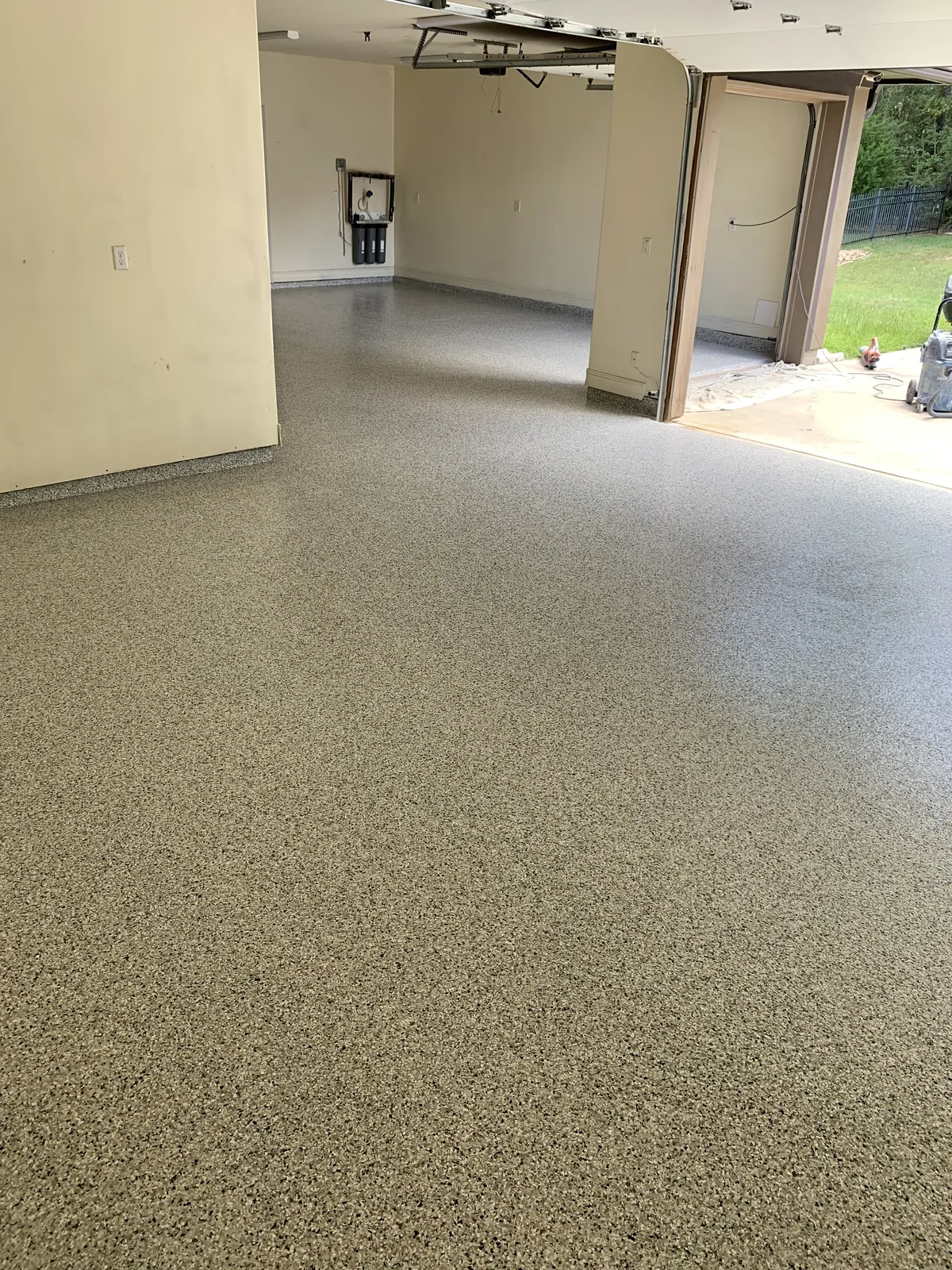
A garage shaded by trees runs a little cooler, which is easier on a coating, but it also tends to be darker and damper inside. A light flake blend, or a light solid color with a sprinkle of flake, brightens the room and shows a spill or a dropped screw before it gets ground in. We still finish with a UV-stable topcoat, since the strip by the door catches whatever sun gets through the branches.
Under the coating, the slab gets the same work as any other floor we do: a full diamond grind, crack filling where the clay has moved it, primer and a body coat at proper thickness. Shade does not change that part of the job. It just means we read the moisture with more care and pick a primer that suits what the meter tells us. Big pines close to the house can also lift or crack a slab as their roots grow, so cracks near the trees get a closer look.
Floors that suit Roman Forest
Four we would put on the shortlist here, before we have seen your slab.
Very professional team. Amazing quality of workmanship. Would definitely work with ProCoat again!
James Howard, Google review
- Concrete Moisture Testing
Shaded slabs can read much wetter than sunny ones on the same property, so a reading in each area decides the primer before anything is mixed.
- Anti-Slip Floor Coatings
Patios and steps under the pines stay damp, and grit broadcast into the topcoat gives shoes something to hold when the surface is wet.
- Patio Sealing
Plain patios and walks that grow a green film in the shade take a penetrating sealer that keeps water out without making them slick.
- Garage Floor Epoxy
A shaded garage sees little direct sun, which suits an epoxy system, finished with a UV-stable topcoat for the strip where light still reaches.
More towns in Montgomery County
The Montgomery County page lists every town we cover there.
- SplendoraNorth on US 59
- Patton VillageNext to Splendora
- Cut and ShootJust east of Conroe
- PinehurstNear Magnolia
Asking about floors in Roman Forest
Ask us directly: call or text (936) 445-0702 or write through the contact page.
Why does my shaded patio stay slippery after it rains?
Concrete that stays wet in the shade grows a thin film of algae or mildew, and that film is what turns slick. Cleaning it off helps for a while. Sealing the patio or adding a gritty coating keeps water from soaking in and gives shoes more grip, which slows the regrowth. Trimming low branches to let in more light helps the slab dry between rains.
Do pine trees make a coating harder to install?
They mostly make the timing harder. The slab dries slower under trees, and needles and pollen can land on a wet coating if the wind picks up. We clean the area, cover what we can and pick a dry, calm stretch. On a garage floor with the door shut, the trees barely matter.
Will sap from the pines hurt a coated floor?
Sap that drips onto a cured coating usually sits on top and comes off with a plastic scraper and a gentle cleaner. On bare concrete it soaks in and stains. If sap or needles land on a coating that is still curing, they can get stuck in the film, which is why we keep the garage door down while it cures.
Is a sealer or a coating better for a walkway under trees?
For a plain walkway, a penetrating sealer is usually the better fit. It keeps water and stains out and lets the concrete breathe, and the surface feels the same underfoot. A coating makes sense if you want color, and then it needs grit in the topcoat so it is not slick when wet. We can also seal the walk and coat the patio beside it if you want both.
How often does a sealer need redoing on a shaded walk?
It varies. Shade spares a sealer some sun, but constant damp and regular scrubbing wear it in their own way. Most outdoor sealers want a fresh coat every few years. A simple test is to splash water on the surface: if it beads up, the sealer is still working, and if it darkens and soaks in, it is time.
Let us read the shady side first
Call or text (936) 445-0702 and tell us which parts of the property stay in shade. We will come out, take readings on the damp spots and the dry ones, and walk you through what each surface needs.
- Call or text(936) 445-0702
- Emailprocoatepoxyflooring@gmail.com
- Based inConroe, Texas, working six counties
Want to see the work first? Browse the gallery, or find every way to reach us.