
Splendora shop floors built for tractors and trucks
Splendora sits in the pine woods on the east side of Montgomery County along US 59, and on acreage out here the slab that takes the worst of it is often the one in the shop behind the house. A pickup, a tractor and whatever they drip all land on that concrete, so we plan the floor around what rolls and leaks across it.
The shop slab behind the house
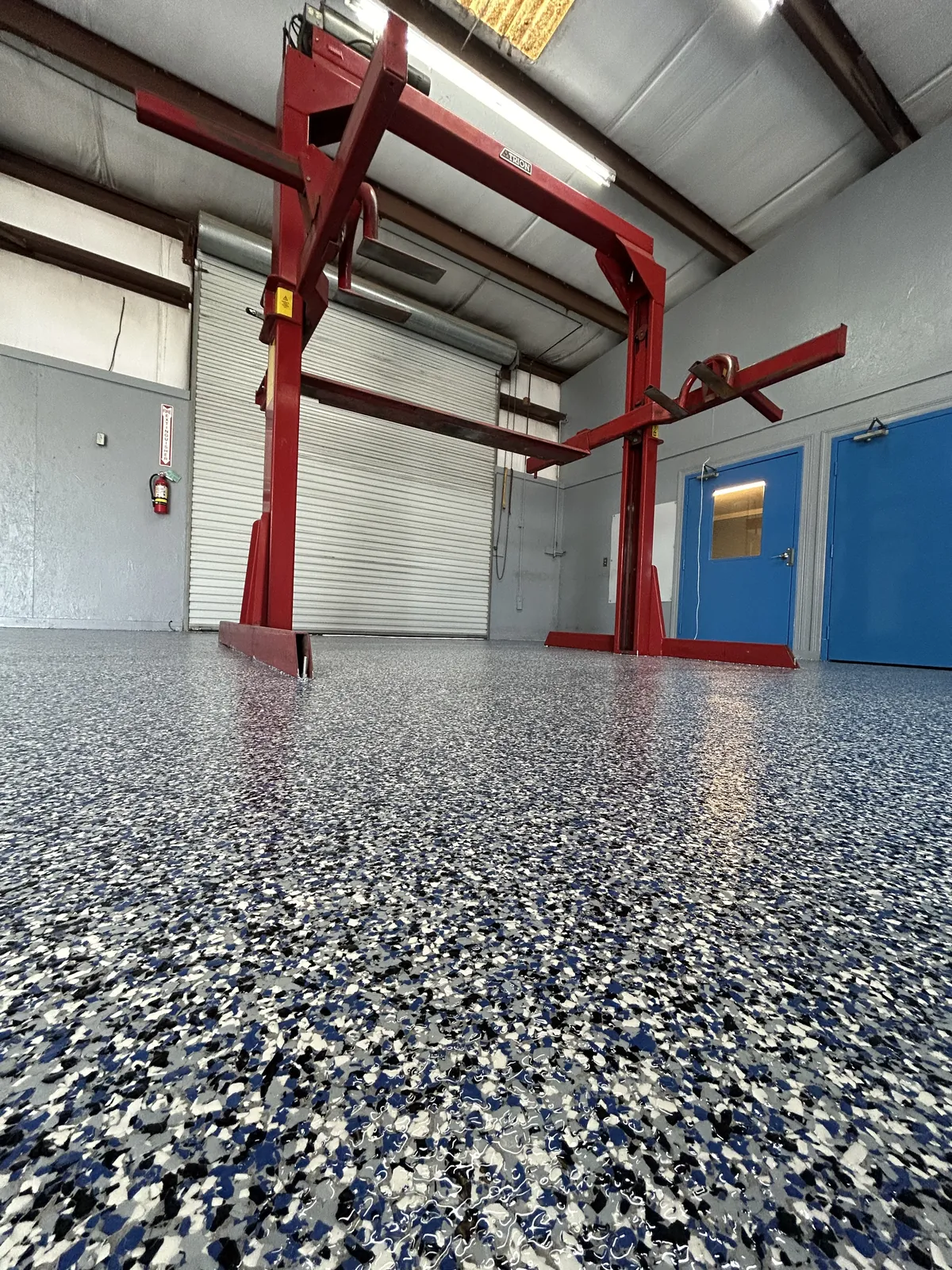
Many acreage shops go up fast. The metal building gets bolted to a slab poured to hold it down and park things on, and a finish is an afterthought. Years later that concrete has oil soaked into it, rust rings where a trailer jack sat, and a fine gray dust that comes up every time you sweep. Dust like that means the top of the slab is weak and breaking down, and a coating laid over it would bond to the crumbling layer and nothing deeper.
So the first job on a shop floor is getting down to good concrete. On a big open slab we often shot blast, which throws steel shot at the surface and lifts the weak top layer and much of the oil in one pass. Shot blasting also leaves a profile the primer can grip, so the same pass does two jobs. Edges, corners and the concrete around the building posts get diamond ground. A spot that keeps bleeding oil back up after cleaning gets cut out and patched before any primer goes down.
Then we look at the cracks. Clay soil swells when it rains and shrinks in a dry spell, and a big shop slab usually carries a few cracks from that movement by the time we see it. We fill and bridge them so the coating does not split open over the top, and we tell you which ones are likely to keep moving. A crack that is still active will show through any coating in time, and it is better to hear that before the job than after.
Hot spatter can scorch or pit a resin floor, and grinding sparks leave small burn marks wherever they land.
Fluids that soften a garage coating
A shop floor sees spills a house garage rarely does. Diesel, hydraulic fluid from a weeping tractor line, brake fluid, gear oil and the odd splash of battery acid all end up on the concrete. A basic garage epoxy can stain or soften under some of those if they sit, so a working shop usually gets a chemical-resistant system with a topcoat chosen for the fluids you actually use.
Weight matters as much as the fluids. A loaded tractor parked in one spot, a jack stand under an axle and a floor jack rolled across the same strip every week all press hard on a small area. Rubber pads under jack stands help too. We usually build a thicker body coat on a shop floor than on a house garage, and we talk through where the heavy things sit so the hardest wear lands on the best-prepared part of the slab.
Welding is the one people forget. If you weld in the shop, keep a steel plate or a welding blanket under the bench, or leave that corner as densified concrete with no resin on top to burn. A light gray coating everywhere else makes a dropped bolt or a fresh drip easy to spot.
Bare concrete that stops shedding dust
Not every shop wants a coating. If the building mostly holds equipment, feed and hay, and nobody cares about color, a densifier is often the better fit. It works its way into the freshly ground concrete and hardens the top, so the slab stops turning to powder under boots and tires. It also leaves a low sheen that sweeps clean. Spills still soak into densified concrete faster than into a coating, so we add a penetrating sealer where oil is likely to land.
The apron at the big roll-up door is its own problem. Rain blows in, sun bakes the front few feet, and tires carry in mud and grit from the drive. Grit is what wears a floor down fastest at a shop door, so a mat inside the opening earns its spot. We either stop the coating at a clean edge short of the threshold or carry a UV-stable topcoat right to the door, so the strip that gets sunlight does not yellow and the strip that gets rain has nothing loose to lift.
Floors that suit Splendora
Four we would put on the shortlist here, before we have seen your slab.
I have a long concrete porch that runs along my workshop. The old surface coating on it was an eyesore. The new flake epoxy flooring that Matt and his team applied looks awesome. It is obvious that they know their products and how to apply it properly.
Chris, Google review
- Workshop Floor Coatings
Shops on acreage get a thicker coating built to take a parked tractor, rolling jacks and tools dragged across the slab every day.
- Chemical-Resistant Floor Coatings
Where diesel, hydraulic fluid and brake fluid hit the floor, a chemical-resistant topcoat holds those spills on the surface until you wipe them up.
- Shot Blasting
Large open shop slabs with years of oil in them strip faster with shot blasting, which lifts the weak top layer down to sound concrete.
- Concrete Densifier Application
Equipment barns that need no color can be densified instead, which hardens the surface and cuts the dust that coats stored gear.
More towns in Montgomery County
The Montgomery County page lists every town we cover there.
- ShenandoahAlong I-45
- Panorama VillageGolf community near Conroe
- Patton VillageNext to Splendora
- Roman ForestEast side, pine woods
Your Splendora floor questions
Something else on your mind? Call or text (936) 445-0702, or use the contact page.
Can you coat a shop floor that has had oil on it for years?
Usually, once the oil is out. We grind or shot blast through the stained layer, then scrub what is left with a degreaser and let it dry. Oil that keeps wicking back to the surface means that spot gets cut out and filled with new concrete, since a coating laid over live oil lets go right there.
Will a coating hold up to a tractor parked on it?
A shop system built at the right thickness handles parked equipment well. Steel tracks, chains and loaded bucket edges dragged across it are a different story and will scratch any resin floor. We ask what lives in the shop and set the build and topcoat to match, and we will say so if part of the floor is better left as densified concrete.
My metal building has no insulation. Does that change anything?
It can. An uninsulated shop runs hot in summer, and the slab can sweat when humid air meets cooler concrete. We plan the work for a stretch when the slab is dry, check the moisture reading on the day we start, and choose products that tolerate the heat while they cure.
Can you do the house garage on the same trip as the shop?
We can look at both on one visit. A house garage usually gets a lighter flake or polyaspartic system, while the shop gets a heavier chemical-resistant build, so they are two separate plans. Lining them up back to back means one setup instead of two. The shop usually takes longer, so we often start there.
How long will the shop be out of use?
Plan on clearing the floor and keeping it clear until the coating has cured enough to drive on, which depends on the product and the temperature. Polyaspartic topcoats return to service sooner, epoxy builds take longer, and heavy equipment always waits the longest. We give you a timeline at the assessment once we know the system.
Show us the shop out back
Call or text (936) 445-0702 and tell us what parks in the shop and what drips from it. We will come out, take a moisture reading on the slab and lay out the prep and the system we would use.
- Call or text(936) 445-0702
- Emailprocoatepoxyflooring@gmail.com
- Based inConroe, Texas, working six counties
Want to see the work first? Browse the gallery, or find every way to reach us.