
Freeport floors that live with salt and chemicals
Freeport is a Gulf port city in Brazoria County, with large chemical plants and plenty of marine work along the water. Floors here take spills, salt, wet boots and forklift wheels, so we pick each system by what is going to land on it.
Plant floors and what spills on them
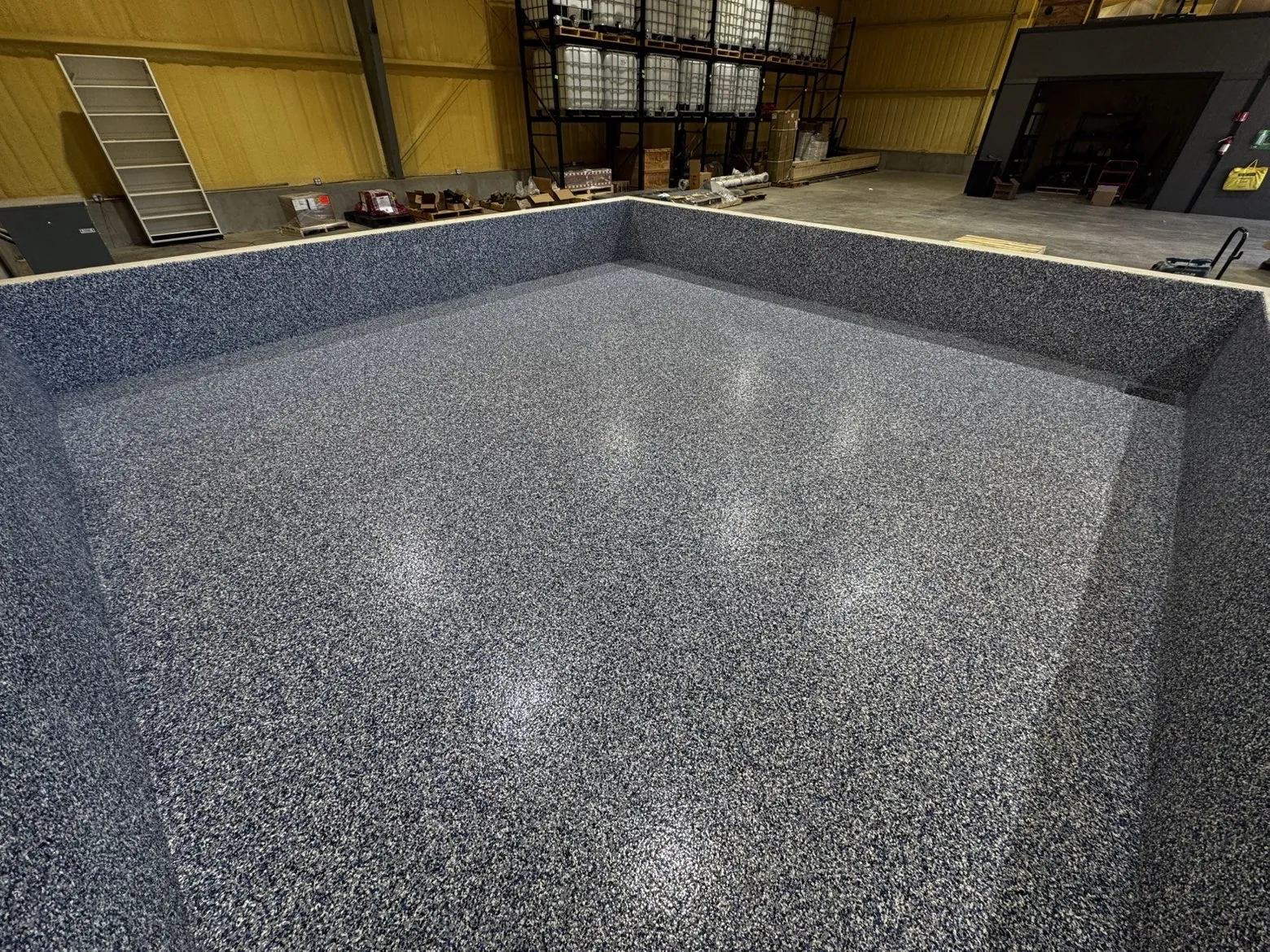
A plant floor gets judged by what it survives. In a city with large chemical plants, that list can include solvents, acids, caustic cleaners, hydraulic oil and hot water washdowns, sometimes in the same room. Bare concrete soaks most of it up, and some of it eats into the cement paste until the surface turns soft and sandy. A standard garage epoxy shrugs off some of those and softens under others. So the first thing we ask in a plant, a contractor’s yard building or a maintenance shop is plain: what gets spilled here, and how long does it sit before anyone cleans it?
The answer picks the resin. Some chemicals call for a novolac or another chemical-resistant epoxy. Rooms with hot washdowns usually do better on polyurethane cement, which handles heat that would soften a standard epoxy. A dry parts room may only need a thick industrial coating. Every system has a data sheet listing what it resists and for how long, and we read that against your actual chemical list. A coating rated for splash may not survive a puddle left over a weekend, and that difference is worth knowing before the floor goes down.
Prep counts for even more on these floors. Older industrial slabs often have oil soaked deep into the concrete, and nothing bonds well over it. We grind or shot blast down to clean concrete, treat the oil-soaked areas, cut out and patch spalled joints, and take moisture readings before any primer goes down. Joints and trench drains get extra care, since liquid collects there and that is usually where a coating lets go first.
Marine work brings its own kind of floor trouble.
Boat bays, trailers and salt water
Boats come in wet, trailers drip salt water, and bays get hosed out at the end of the day. Salt left to dry on bare concrete crystallizes in the pores and can scale the top away a little at a time, and chloride working down toward the rebar is bad news for the slab itself. A floor that sheds water and gets rinsed holds up far longer than one that drinks it in.
For a boat shop or a marine service bay, we usually look at a thick epoxy or polyurea system with a chemical-resistant topcoat and grit where people walk. Fuel, gear oil and bottom paint residue all end up on these floors, and a coating that keeps them on top turns cleanup into a squeegee job. A light color helps as well, because a dropped fastener shows up instead of vanishing into gray concrete.
Slope matters in a wet bay. If water ponds in the same corner after every washdown, a coating only makes that puddle shinier. Where a floor has settled or was poured with low spots, we level it first so water runs toward the drain or out the door. It is less fun than choosing a color, but it is the part that keeps the floor working day to day.
House garages in the salt air
Plenty of Freeport floors are ordinary house slabs. Salt air, humidity and heavy summer storms reach them too, and the clay soil under the county swells when it is wet and shrinks when it dries, which is how hairline cracks end up running across a garage. Vapor moves up through slab-on-grade concrete all year, so a moisture reading comes before any talk about flake blends or colors. A slab that reads high gets a moisture-mitigating primer before anything else.
For a house garage near the coast, a flake system with a UV-stable topcoat handles road salt, sand on the tires and hot tire pickup far better than garage paint, and the flake hides the grit that settles between sweeps. Cracks get opened up and filled first so they don’t show back through the finish. If the garage has taken storm water, tell us when you call, since a slab that sat under water needs time to dry back down before we test it.
Floors that suit Freeport
Four we would put on the shortlist here, before we have seen your slab.
Very professional team. Amazing quality of workmanship. Would definitely work with ProCoat again!
James Howard, Google review
- Chemical-Resistant Flooring
Plant rooms and maintenance shops that see solvents, acids or caustic cleaners need a system rated for those exact chemicals, picked from the spill list.
- Polyurethane Cement Flooring
Rooms with hot water washdowns hold up better on polyurethane cement, which takes the heat and goes down without seams for liquid to sit in.
- Anti-Slip Floor Coatings
Boat shops and wet bays, where salt water and oil end up underfoot, are safer with grit broadcast into the topcoat.
- Garage Floor Flake Systems
House garages in the salt air take road salt, beach sand and hot tires better under a flake system with a UV-stable topcoat.
More towns in Brazoria County
The Brazoria County page lists every town we cover there.
- AngletonCounty seat
- Lake JacksonBrazosport area
- CluteNorth of Freeport
- BrazoriaWest side, near the rivers
Floors in Freeport, asked plainly
Ask us directly: call or text (936) 445-0702 or write through the contact page.
Which coating holds up to the chemicals in a plant?
That depends on the chemical, how strong it is and how long it sits. We ask for the list of what gets spilled or washed down, then match it to a system whose data sheet covers it, which could be a chemical-resistant epoxy, a polyurethane cement or something else. A floor that sees the odd drip of oil needs far less than one that sits under acid.
Can a plant or shop keep running while you work?
Often, yes. We can split the floor into sections so part of the building keeps working while we coat the rest. Faster-curing products help where downtime is tight, though they give the crew less working time and don’t suit every chemical exposure. We go over the schedule at the assessment so nobody is surprised by how long an area stays closed.
Can salt from the road get into a closed garage?
It can. Salt rides in on the car after a drive along the coast and dries on bare concrete, where it works into the pores. A sealed or coated floor keeps it on top, so a rinse with the hose carries it out the door. We still test moisture first, because a damp slab under a coating causes more trouble than salt ever will.
What about oil soaked into an old shop floor?
Grinding takes off the top, but oil can sit deeper than that in an old slab. We clean and treat the soaked areas, and where it runs too deep we may cut out and patch the worst spots. Coating straight over oil is one of the most common reasons a floor peels early, so this step never gets skipped.
Should a boat shop floor be glossy or textured?
Textured, at least where people walk. A wet, glossy floor with a little fuel on it is slick, so we broadcast grit into the topcoat in walkways and work areas. Some owners keep a smoother finish under racks or in storage corners where nobody stands, since those spots wipe down more easily.
Have us read a Freeport slab
Call or text (936) 445-0702 and tell us what the floor is and what lands on it. We’ll come to Freeport, test the slab and tell you which system will hold up to the work.
- Call or text(936) 445-0702
- Emailprocoatepoxyflooring@gmail.com
- Based inConroe, Texas, working six counties
Want to see the work first? Browse the gallery, or find every way to reach us.