
Fresh floors over Jacinto City’s tired old slabs
Removal comes before anything else on most floors in Jacinto City, next door to Galena Park near the Ship Channel. Concrete that has been in service a while is usually covered in something by the time anyone calls about it: tile in a storefront, carpet glue in a back office, paint on a garage floor.
Storefronts with tile glue underneath
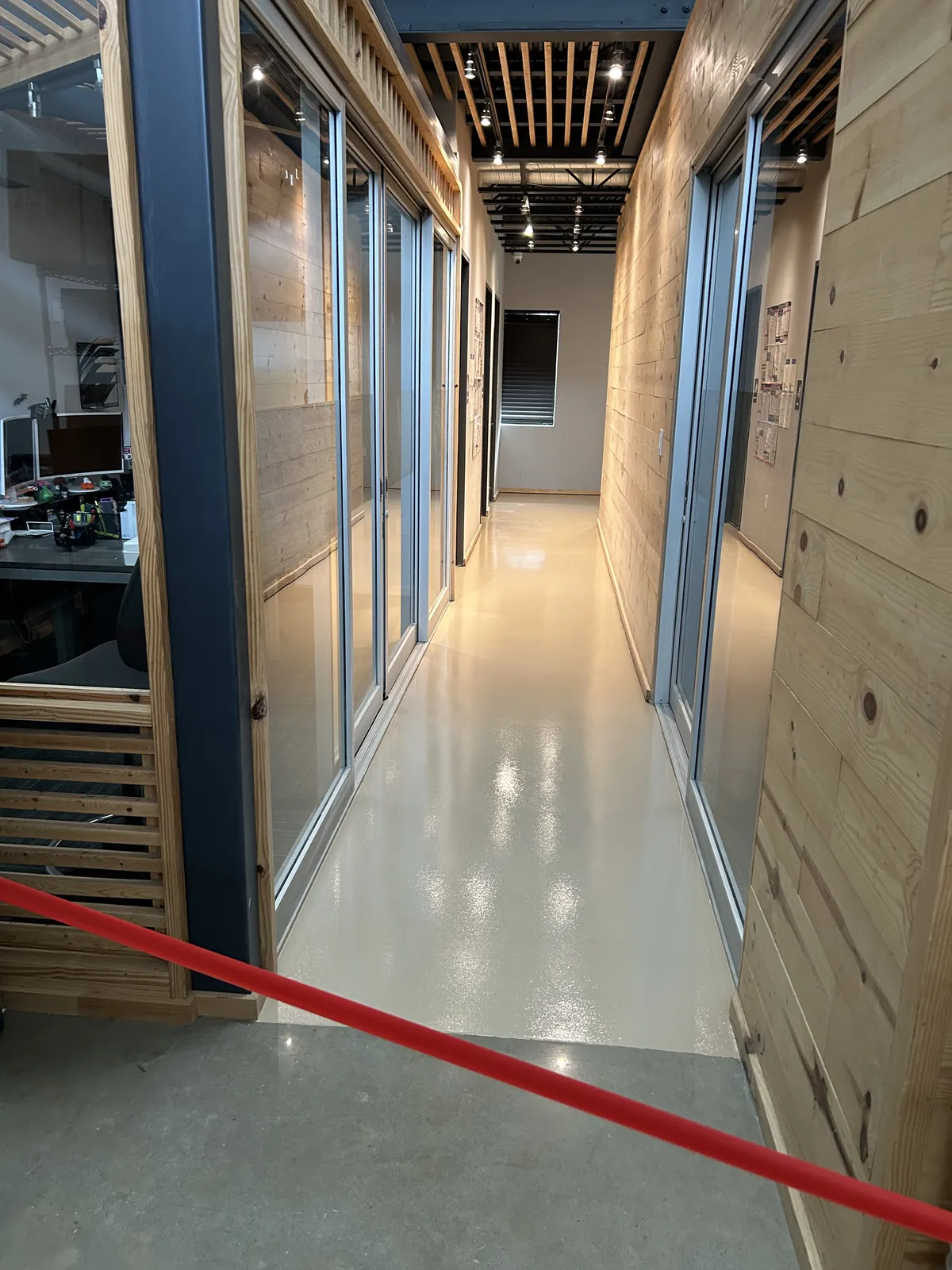
A small shop or office that has been through a few tenants usually has layers on the floor. Pull up the old vinyl tile or carpet and you find black mastic, gray thinset or a patchwork of adhesives, and none of them make a good base for anything new. Laying a coating over glue is like painting over grease: it looks fine for a while, then it lets go wherever the glue softens.
So the removal comes first. Old black cutback mastic should be tested before anyone grinds it, since some of it from decades back contains asbestos. After that we grind the adhesive off until the concrete is clean and open. Once the slab is bare we can see what we actually have: cracks, old patches, low spots where the tile setter built up thinset to hide a dip. Sometimes the patches tell us more about the floor than the tile did.
From there the choice is about the room. A retail floor that customers walk all day does well as polished concrete, which has nothing to peel and cleans with a damp mop, or as a quartz broadcast that gives shoes a fine grip near the door. An office might want a satin polish that does not glare under the lights. Either way the floor gets leveled first, because a coating or a polish follows every dip in the slab.
We add a fine grit so wet shoes and paws do not skate, since a porch is often where everyone stands shaking off an umbrella.
Front porches that face the afternoon sun
A porch slab gets the worst of the Texas sun and the rain that blows in under the roof during summer storms. Plain epoxy out there turns yellow and chalky, and dark paint gets hot enough underfoot that people stop going barefoot. The steps and the edge where the porch meets the walk also catch the clay soil moving, so they crack and pull away from the house more than the middle of the slab does.
For porches we use a UV-stable coating, usually polyaspartic, which holds its color in direct sun and cures much faster than epoxy. Lighter colors stay cooler underfoot. Cracked steps get repaired before the coating, and a crack that keeps moving may show through again, which we say before the work starts.
A front walk or a patio out back is a different call. Bare concrete there usually does better with a penetrating sealer than a coating, because nothing sits on top to peel or hold moisture against the slab. If you want color out there, a water-based stain soaks in under the sealer and keeps the surface feeling like concrete. Where the walk has heaved and left a lip, we grind the lip down so nobody catches a toe on it.
Garages with puddles in the same spots
A lot of garage floors settle over the years, and the water off a wet car always runs to the same low corner. Coat that floor as it is and the puddle just gets glossier. We check how the slab sits during the assessment and fill the low spots with self-leveling compound or a patch before the color goes down, along with any cracks and the paint or coating that is already peeling. A garage that takes water in a heavy storm needs a moisture reading too, since the slab can hold water long after it looks dry.
For the coating itself, a polyaspartic system over flake fits a lot of these garages. It cures much faster than epoxy, so the garage is usually back in use sooner, and it keeps its color in a garage that sits open to the sun. On a hot, humid day it also sets quickly, which means we work in smaller sections and keep an eye on the slab’s surface moisture. We will give you a real time for driving back in once we know the product and the weather.
Floors that suit Jacinto City
Four we would put on the shortlist here, before we have seen your slab.
I have a long concrete porch that runs along my workshop. The old surface coating on it was an eyesore. The new flake epoxy flooring that Matt and his team applied looks awesome. It is obvious that they know their products and how to apply it properly.
Chris, Google review
- Retail Store Flooring
Storefront slabs that carried tile or carpet need the glue off first, then a polish or quartz floor handles all-day foot traffic.
- Flooring Adhesive Removal
Black mastic, thinset and carpet glue make a poor base for any coating, so they are ground off until the concrete underneath is clean and open.
- Porch Coatings
Porches that face the afternoon sun need a UV-stable coat with fine grit, since plain epoxy yellows out there and dark paint gets hot underfoot.
- Polyaspartic Garage Floors
Garages that need to be back in use quickly suit a polyaspartic system, laid after the low spots and cracks are fixed so water stops pooling.
More towns in Harris County
The Harris County page lists every town we cover there.
- HighlandsNear the San Jacinto River
- Galena ParkOn the Ship Channel
- South HoustonNear Hobby Airport
- WebsterClear Lake, I-45
Jacinto City floor questions
Ask us directly: call or text (936) 445-0702 or write through the contact page.
Can you coat over old vinyl tile?
We do not recommend it. Tile and the glue under it can move, soften in heat and let go, taking the coating with them. The better plan is to pull the tile, have any old black mastic tested, grind the adhesive off and coat or polish the bare slab. The slab underneath is often in better shape than people expect.
Why do the porch steps crack before the rest of the slab?
Steps and edges are where clay movement tends to show first, since the soil there swells after rain and shrinks in dry spells. They also take the weight of every foot coming up off the walk. We fill and rebuild those cracks before coating, and we will tell you if a crack looks like it is still moving.
Is polished concrete a good choice for a small shop?
Often, yes. Once the old flooring and glue are off, polishing gives a durable surface with nothing to peel, and a satin finish hides scuffs without glaring. It does show the slab’s history, so old patches and stains stay visible. If that bothers you, a quartz or solid-color coating covers them. A densifier and sealer keep the polished surface easier to clean.
How long before I can park in a new polyaspartic garage?
It depends on the product, the temperature and the humidity that day. Polyaspartic usually takes foot traffic much sooner than epoxy, but a car needs more time than foot traffic. We give you a time for your floor after we know the system and the conditions, and we would rather you wait an extra day than lift a fresh coat with hot tires.
Should my patio get the same coating as my porch?
Not always. A covered porch takes a UV-stable coating well, but an open patio sitting on damp ground is often better off with a penetrating sealer, which lets the slab breathe and leaves nothing to peel. Shade matters too, since a patio under trees stays wetter. We test the concrete at both and can bring the colors close with a stain if you want them to look related.
Tell us what is stuck to the slab
Call or text (936) 445-0702 with what covers the floor now: tile, glue, paint or nothing at all. We will come take moisture readings and look over the cracks and low spots, then tell you what has to come up, what we would put down and how long the room will be out of use.
- Call or text(936) 445-0702
- Emailprocoatepoxyflooring@gmail.com
- Based inConroe, Texas, working six counties
Want to see the work first? Browse the gallery, or find every way to reach us.